
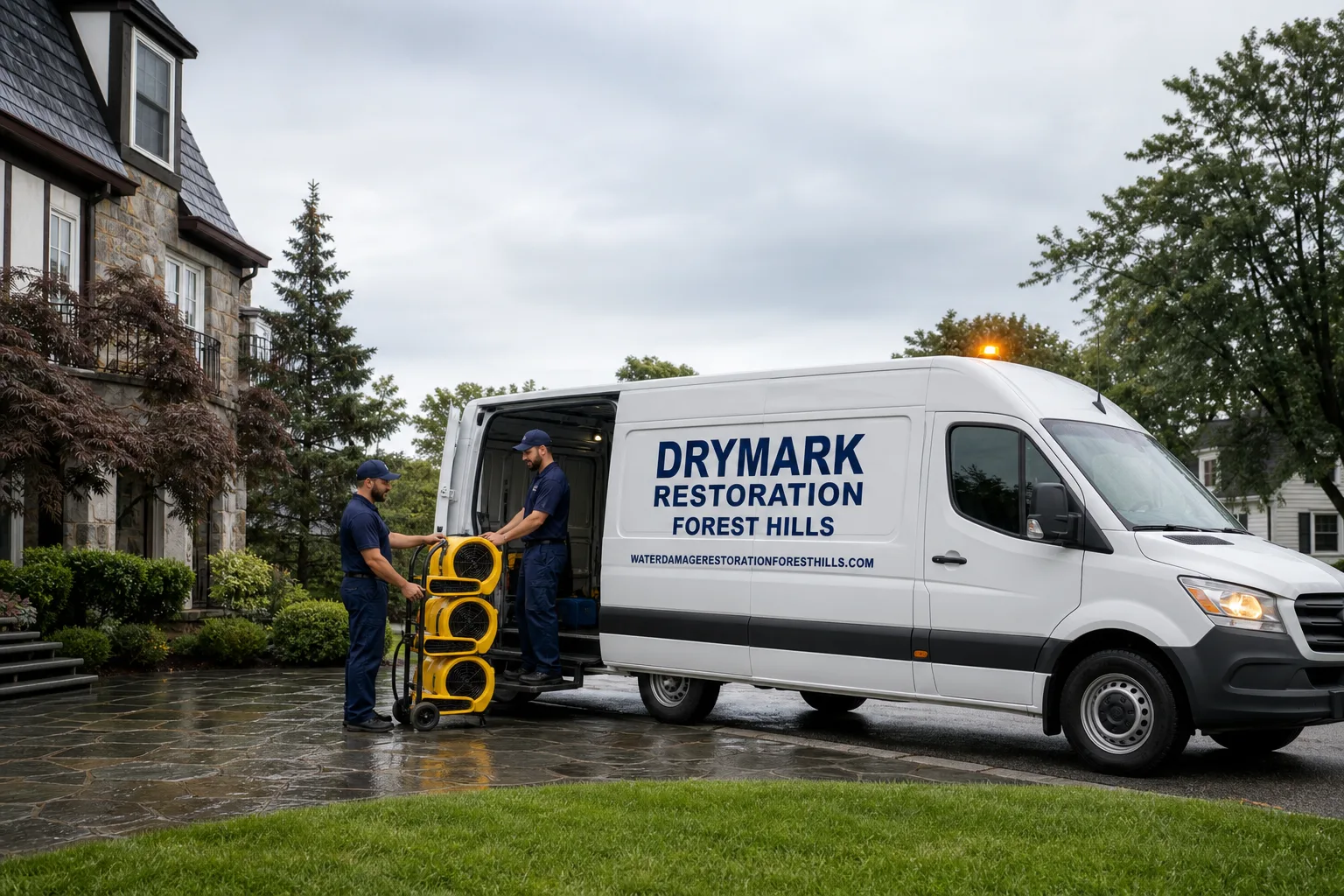
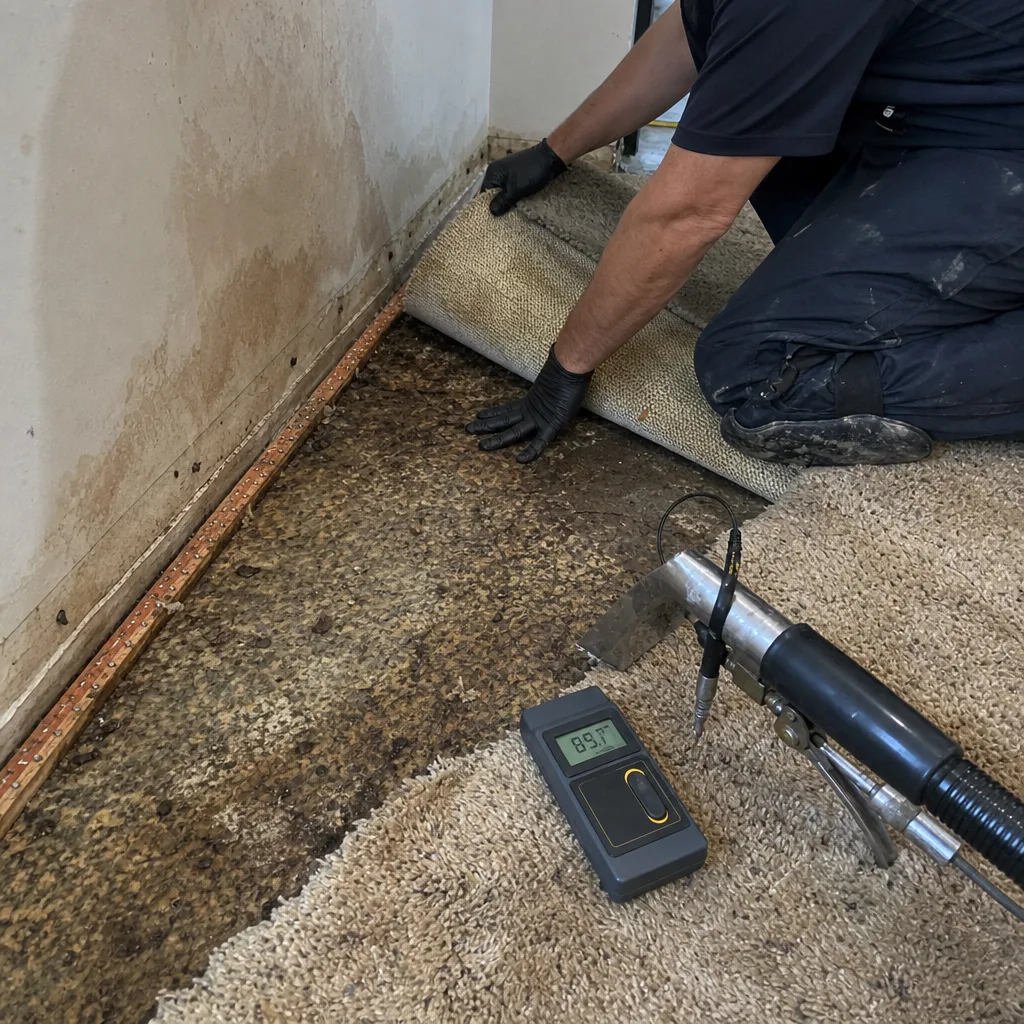
Free visual inspection and a written scope of work before any mitigation begins - photos, moisture readings, and drying logs go in your claim file
The scope we write is the scope we bill. Anything new gets shown to you, in writing, before we touch it.
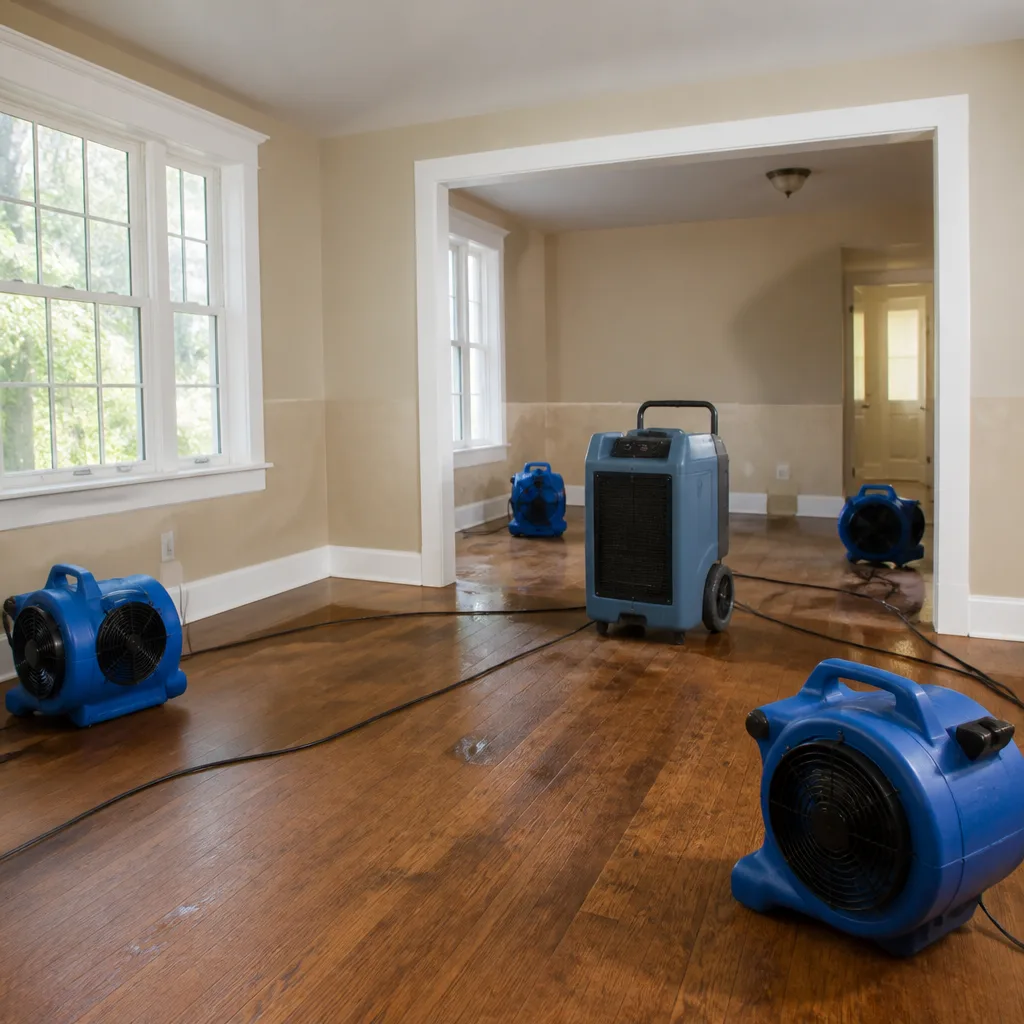
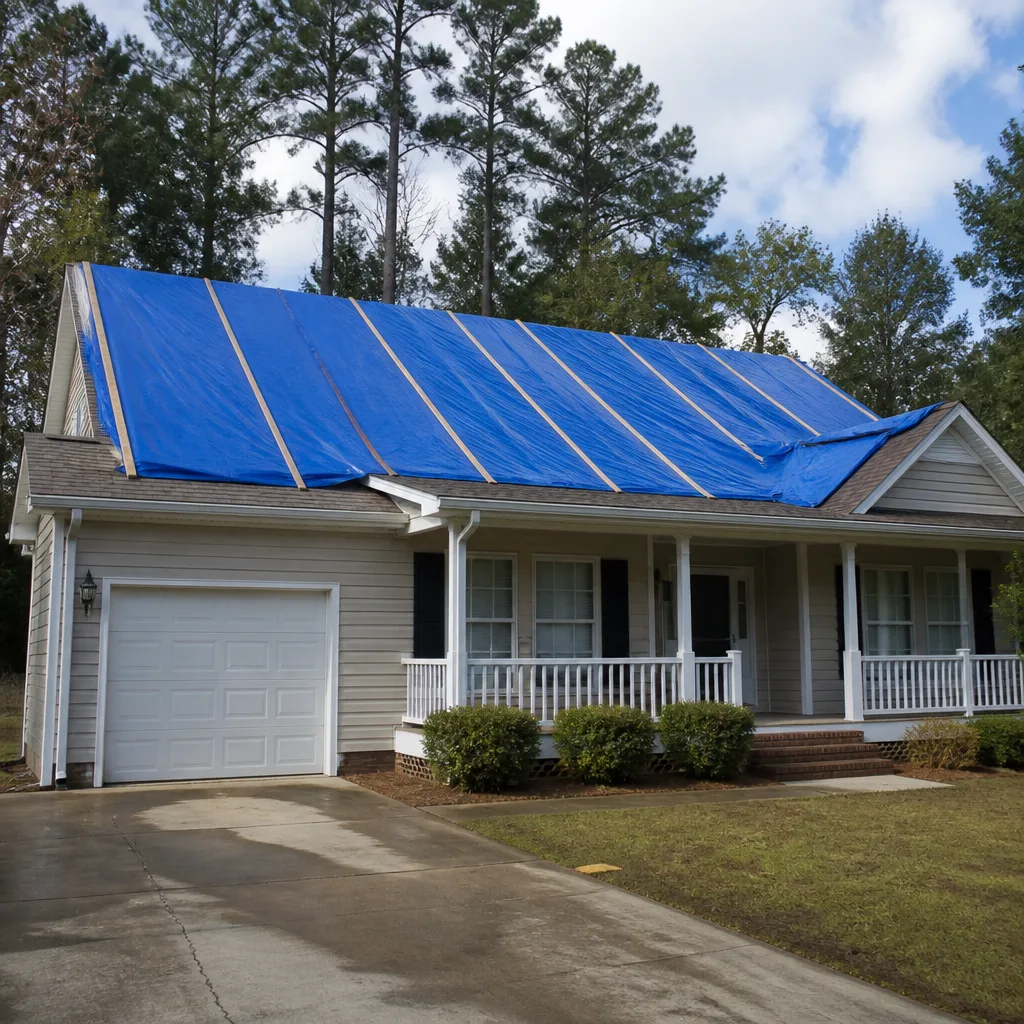
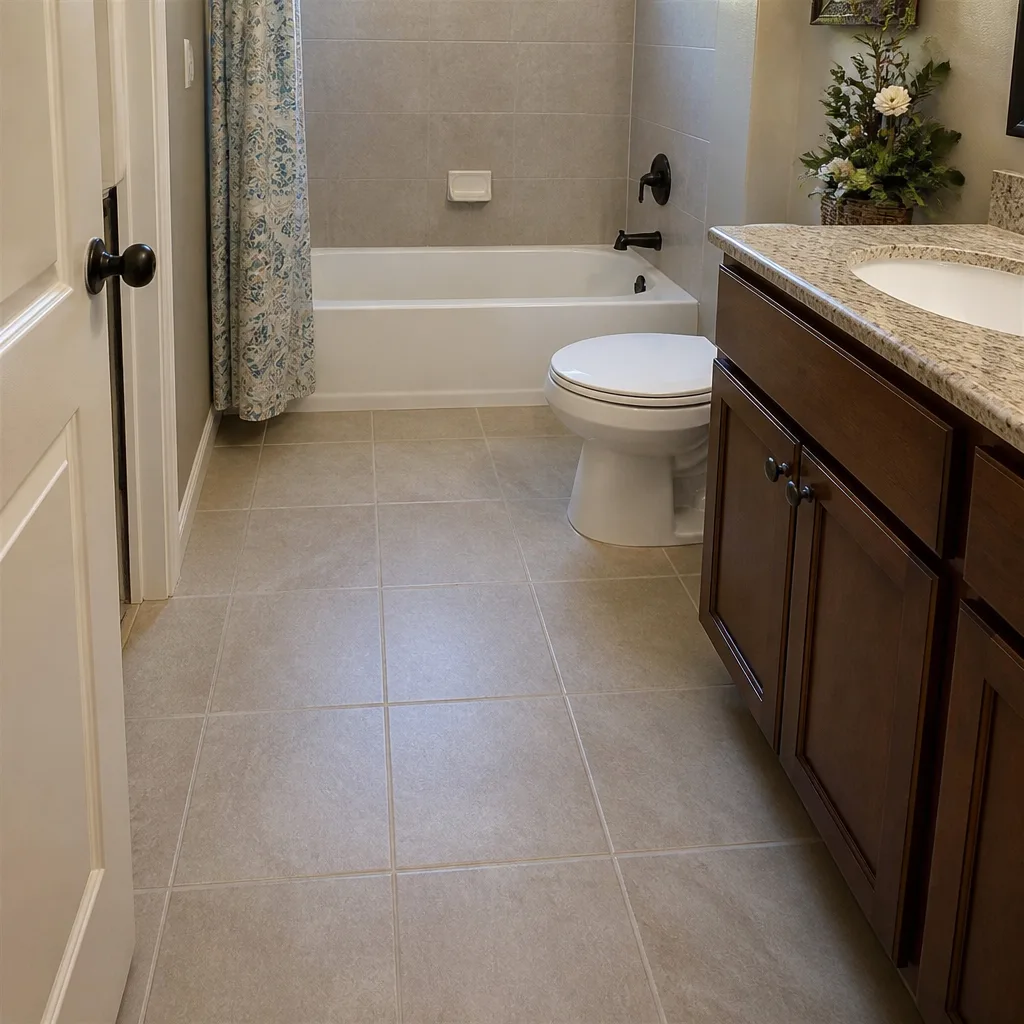
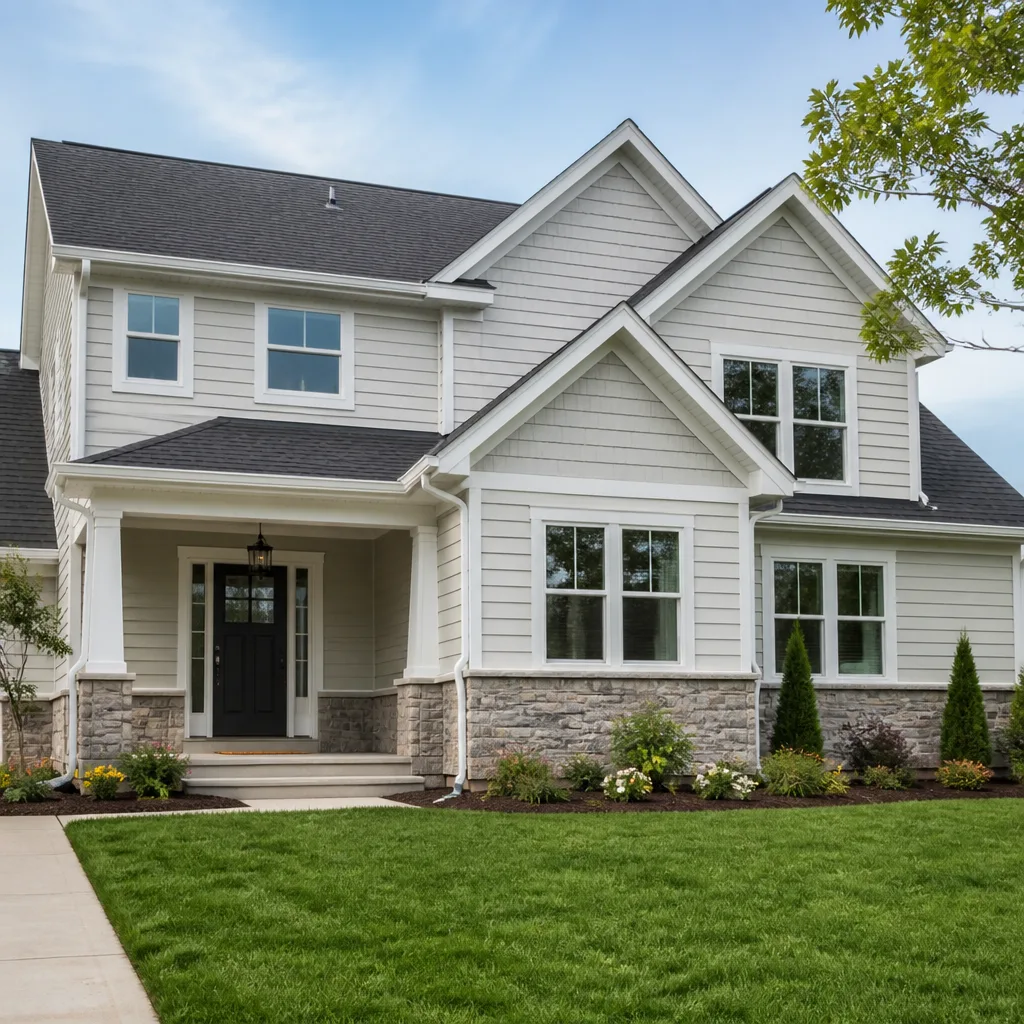
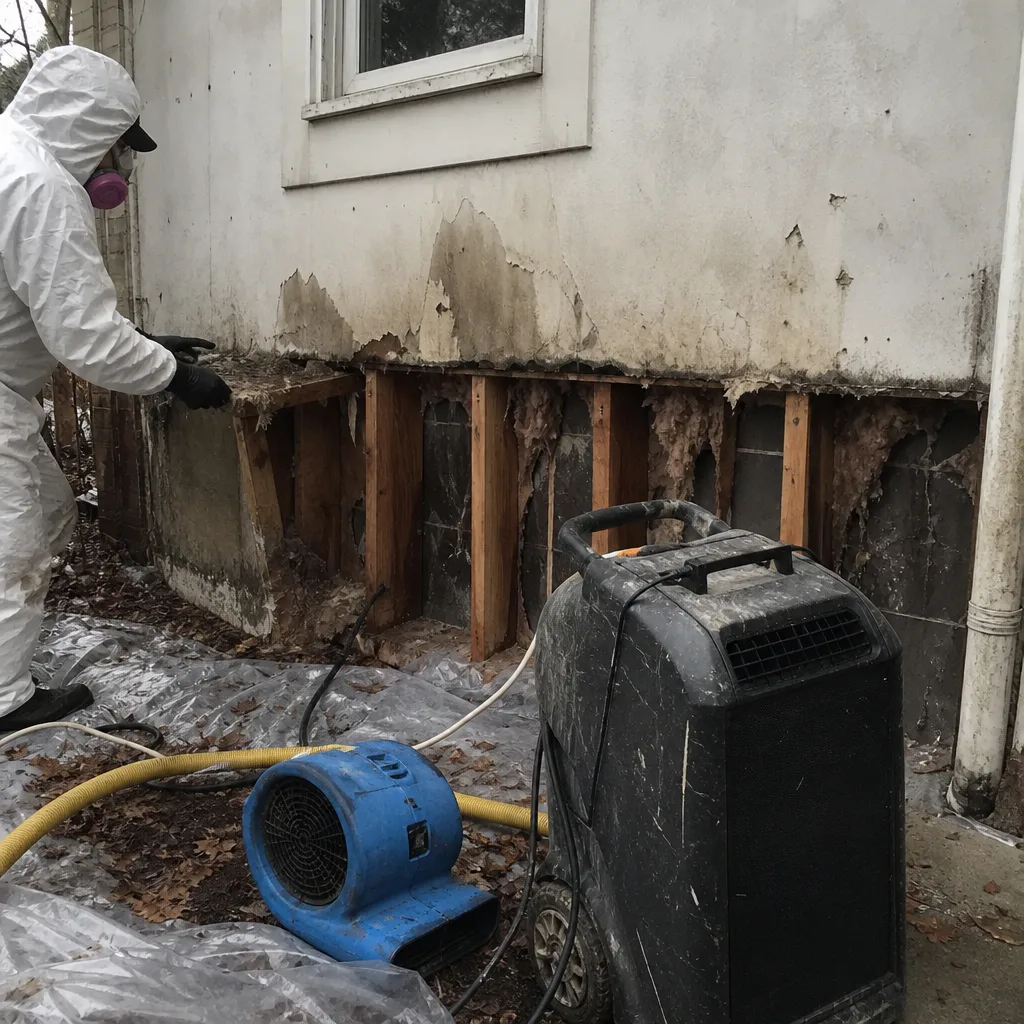 Before
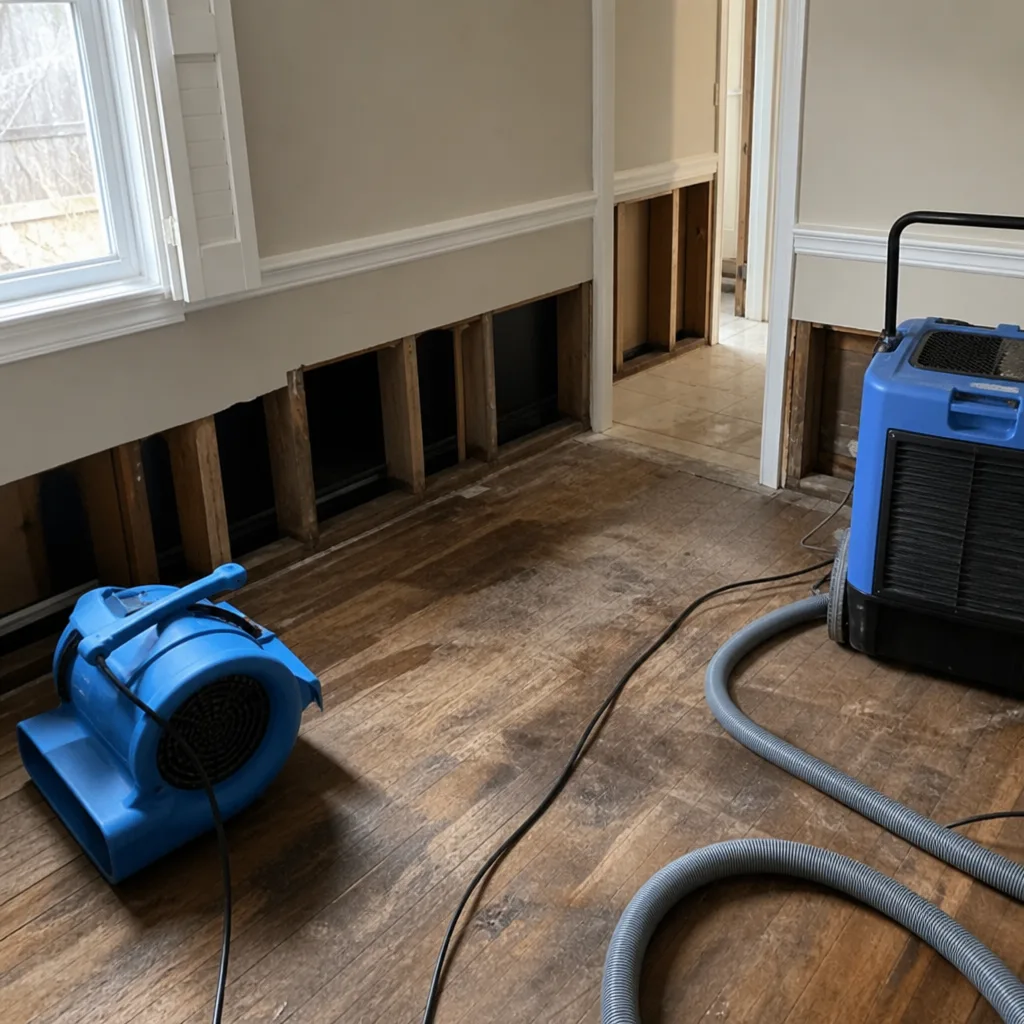 After
After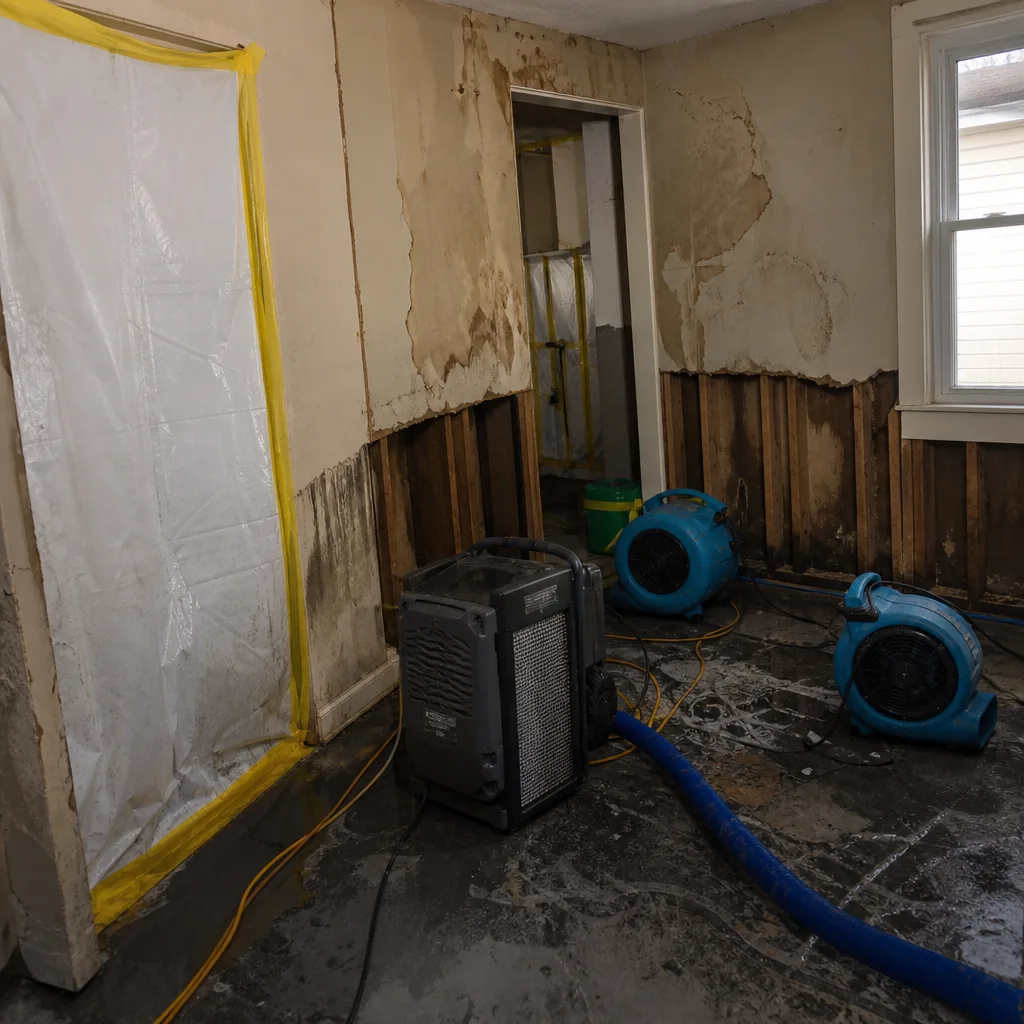 Before
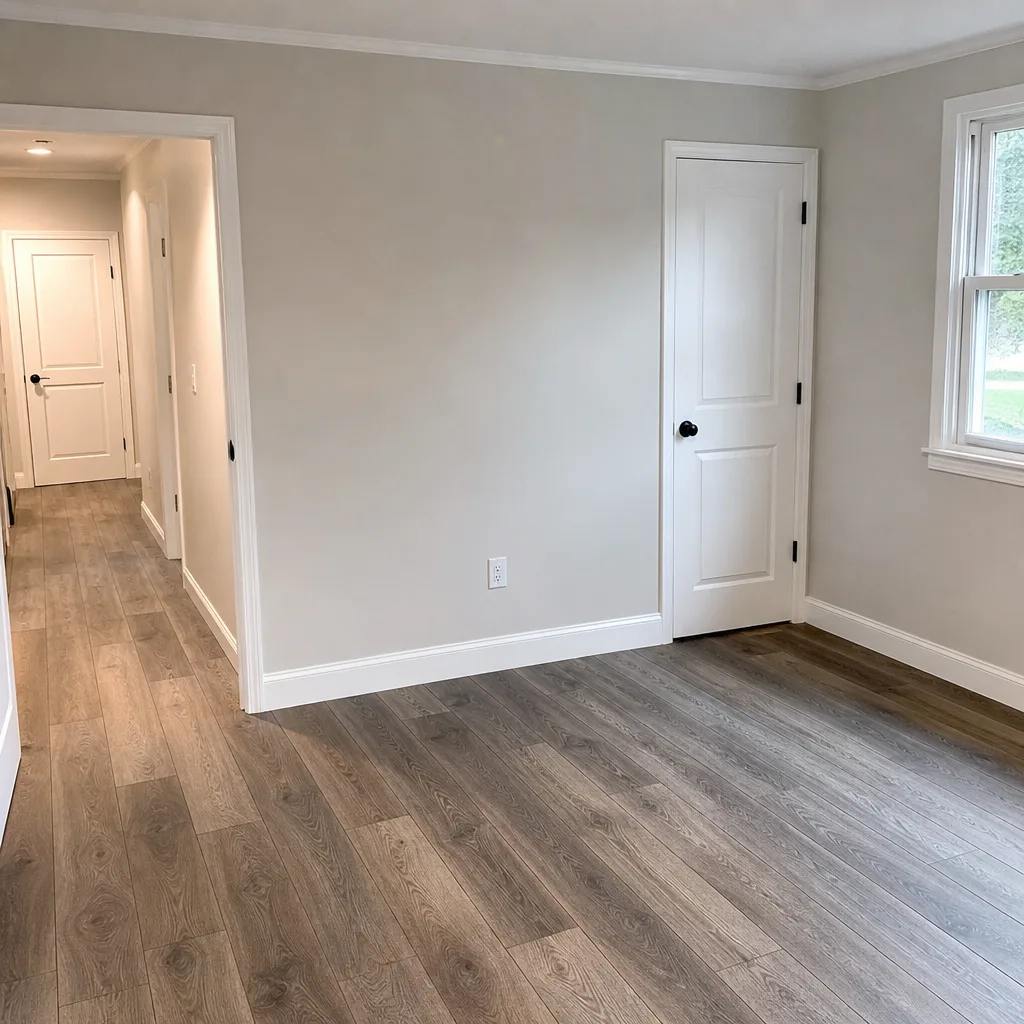 After
After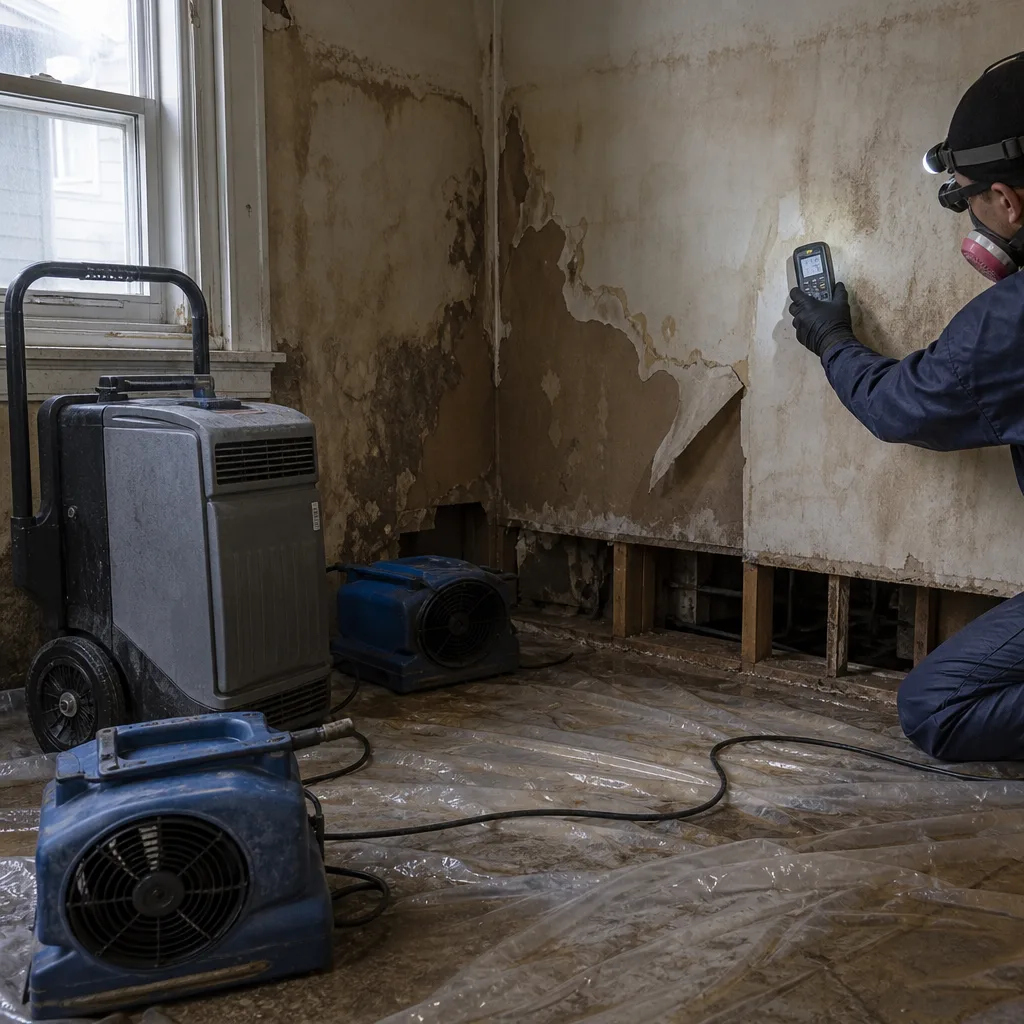 Before
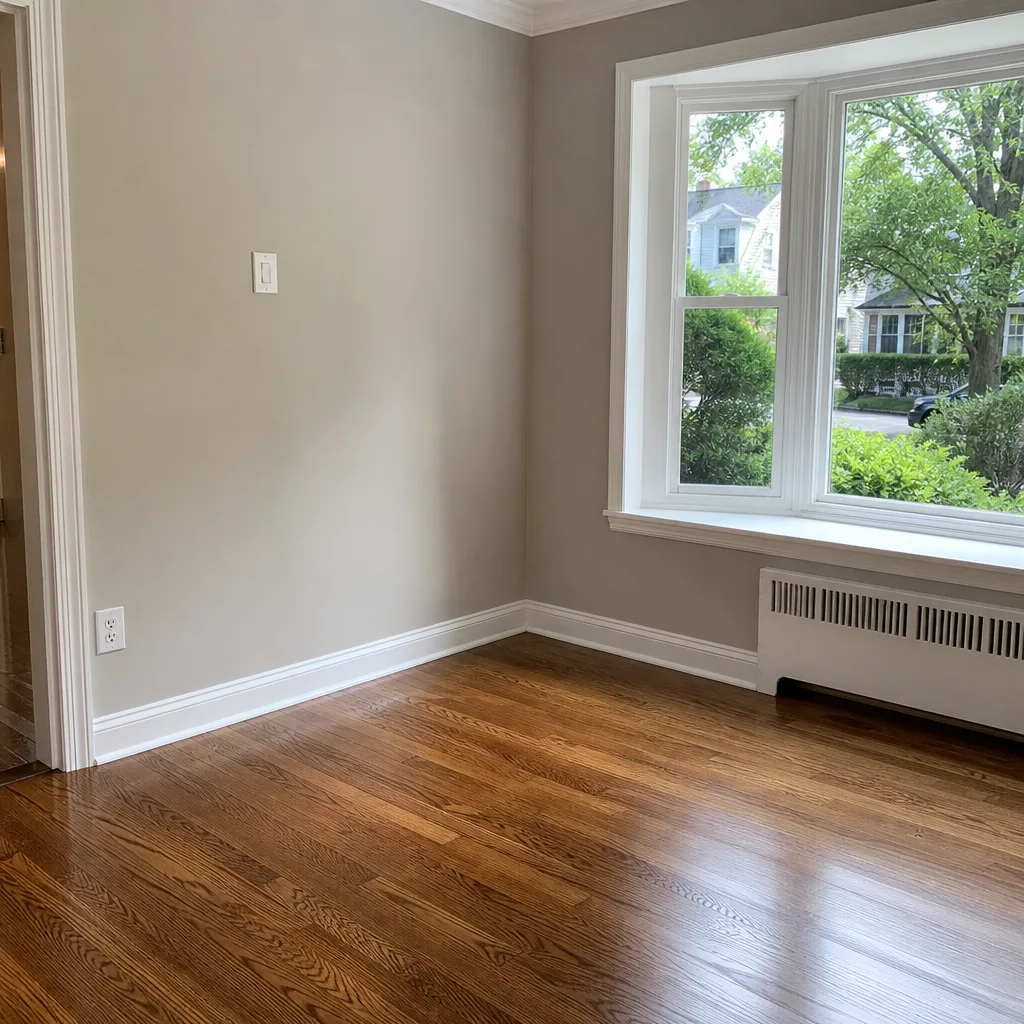 After
AfterFast, Reliable Fire & Smoke Damage Restoration Across Flushing
Fire and smoke damage restoration in Flushing typically costs $3,200-$8,500 for a moderate residential loss, with emergency board-up and tarping starting at $850-$1,400 and full structural fire repair running $150-$280 per square foot. Our crews dispatch to Flushing within 60-90 minutes of a signed work authorization, and every job opens with a written price before anyone touches your property. Call (516) 687-6900 - a live person answers, 24 hours a day, 7 days a week.
We’ve restored fire and smoke damage in Flushing’s attached brick rowhouses off Roosevelt Avenue, the two-family conversions near Kissena Boulevard, and the mid-rise co-ops along the creek corridor. The shared-wall construction here isn’t a footnote - it’s the defining variable in how smoke moves, how fire spreads, and how we scope the work. Our Fire & Smoke Damage Restoration team documents every joist bay, every party-wall void, and every moisture reading to IICRC and RIA standards because sloppy documentation in a shared-wall building costs both you and your neighbor your claim.
Why DryMark Restoration Forest Hills Is Flushing’s Preferred Fire & Smoke Damage Restoration Company
Back to Dry Restoration, led by Alicia Brennan, has operated under The Haven Standard since 2011. We’ve restored 12,000+ homes, every one with a written price before work started and a photo record when the crew left. In Flushing, that discipline matters more than most places.
Our response time to Flushing averages under 90 minutes from initial call to crew arrival - critical when charred framing is exposed to weather off Flushing Bay and every hour of delay risks secondary water damage from rain or tidal surge. Dispatch and scheduling are coordinated from our New York City office; crews serve Flushing locally with equipment staged for the neighborhood’s specific building stock.
Flushing customers tell us the difference is in the documentation: the photo record on every visit, the daily drying log with psychrometric data (temperature, relative humidity, and vapor pressure differential - the measurable force that drives moisture out of materials), and the written scope signed before work begins. Haven Standard, Clause 1. No exceptions.
We also offer a Free Second Opinion on any competitor’s written estimate. Bring another company’s quote and we’ll review it at no charge. If their scope missed the party-wall voids or the below-grade smoke migration, we’ll show you exactly where.
Our Fire & Smoke Damage Restoration Services in Flushing
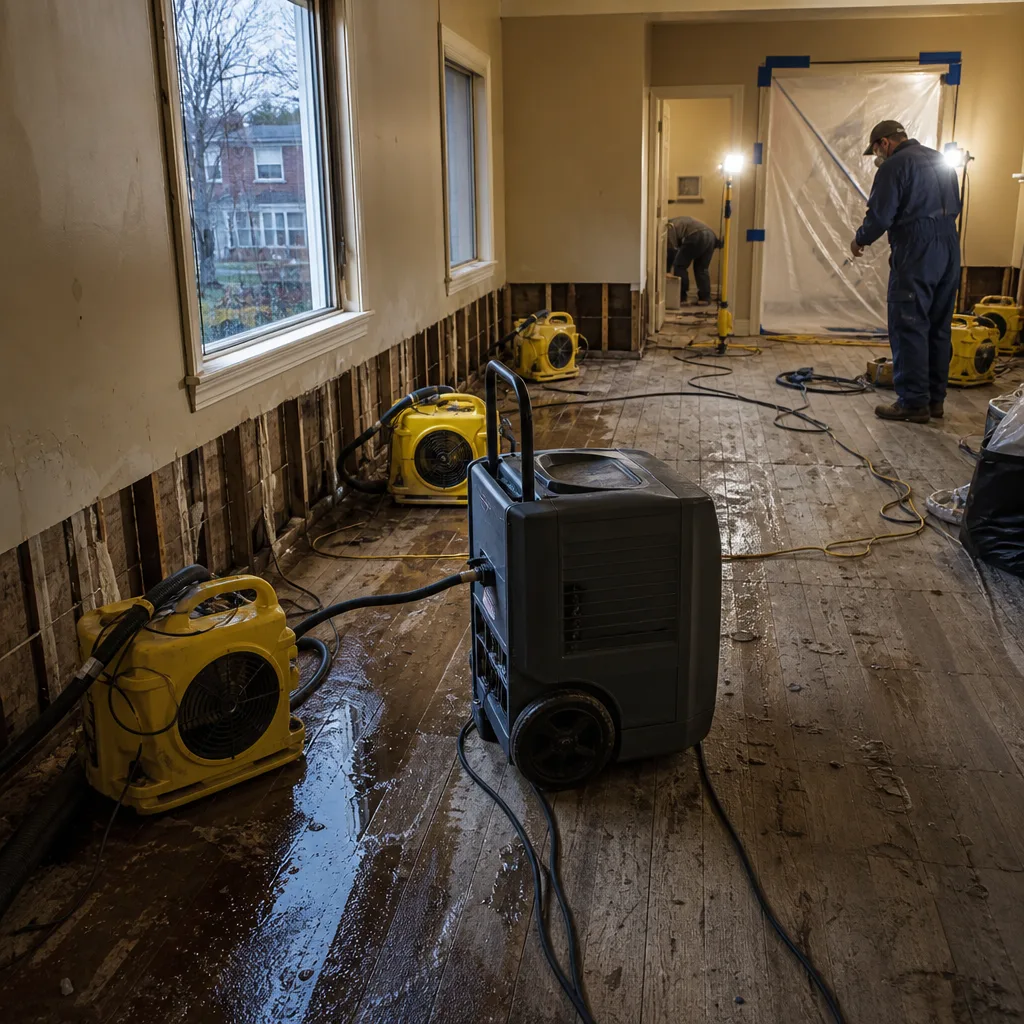
Emergency Board-Up & Tarping
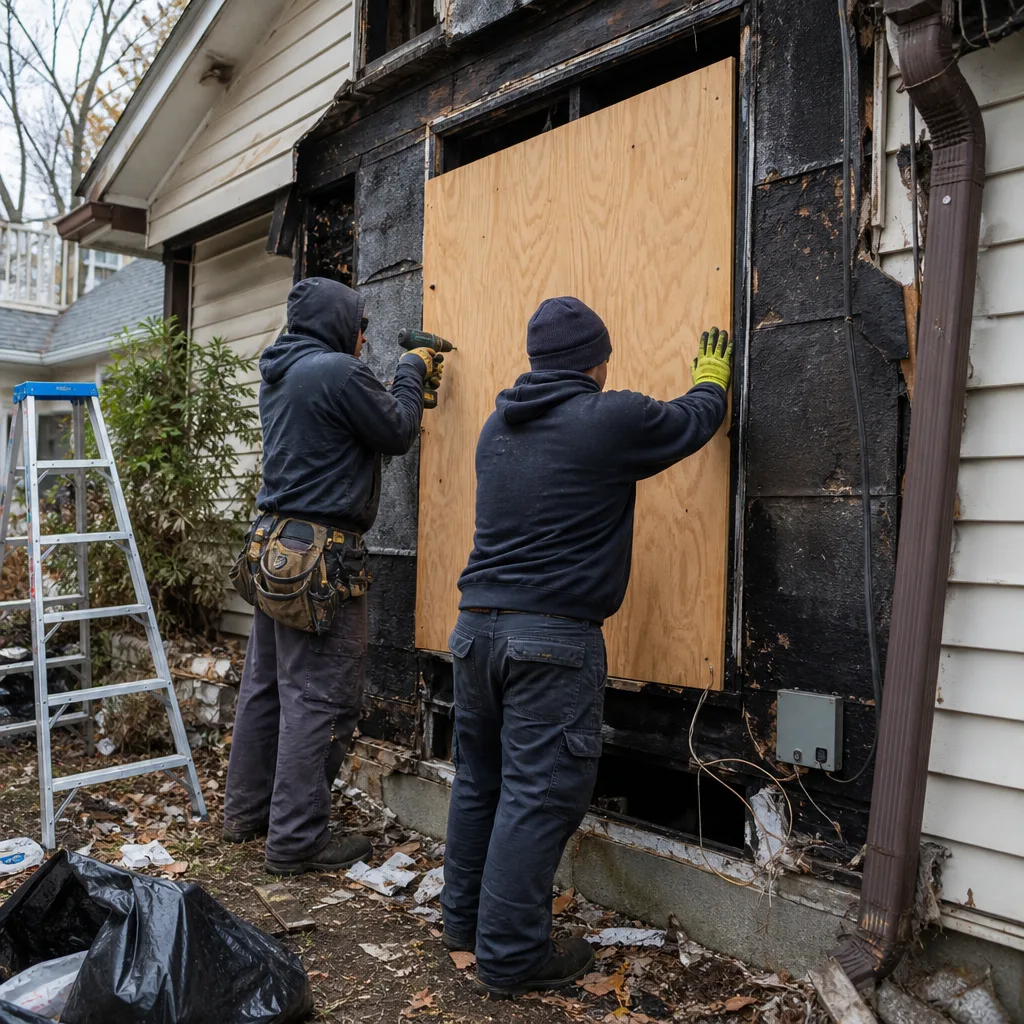
Board-up in Flushing isn’t about keeping rain out - it’s about keeping a nor’easter out. Standard plywood sheeting fails at the first sustained wind off Flushing Bay; we install wind-rated and impact-rated temporary envelopes engineered to the same loads as permanent coastal construction. Our crews carry pressure-treated OSB rated for 110-mph wind exposure, mechanical fasteners with pull-out values documented to the substrate, and tensioned tarps with reinforced perimeter strapping. After a fire on a 1920s rowhouse near Northern Boulevard, we once replaced a competitor’s failed board-up that had peeled at 45-mph gusts and re-wetted three floors of charred structure. The re-scope added $4,200 to a job that should have stayed dry. We document fastener spacing, substrate condition, and wind-load rating in the photo record - evidence your adjuster can read.
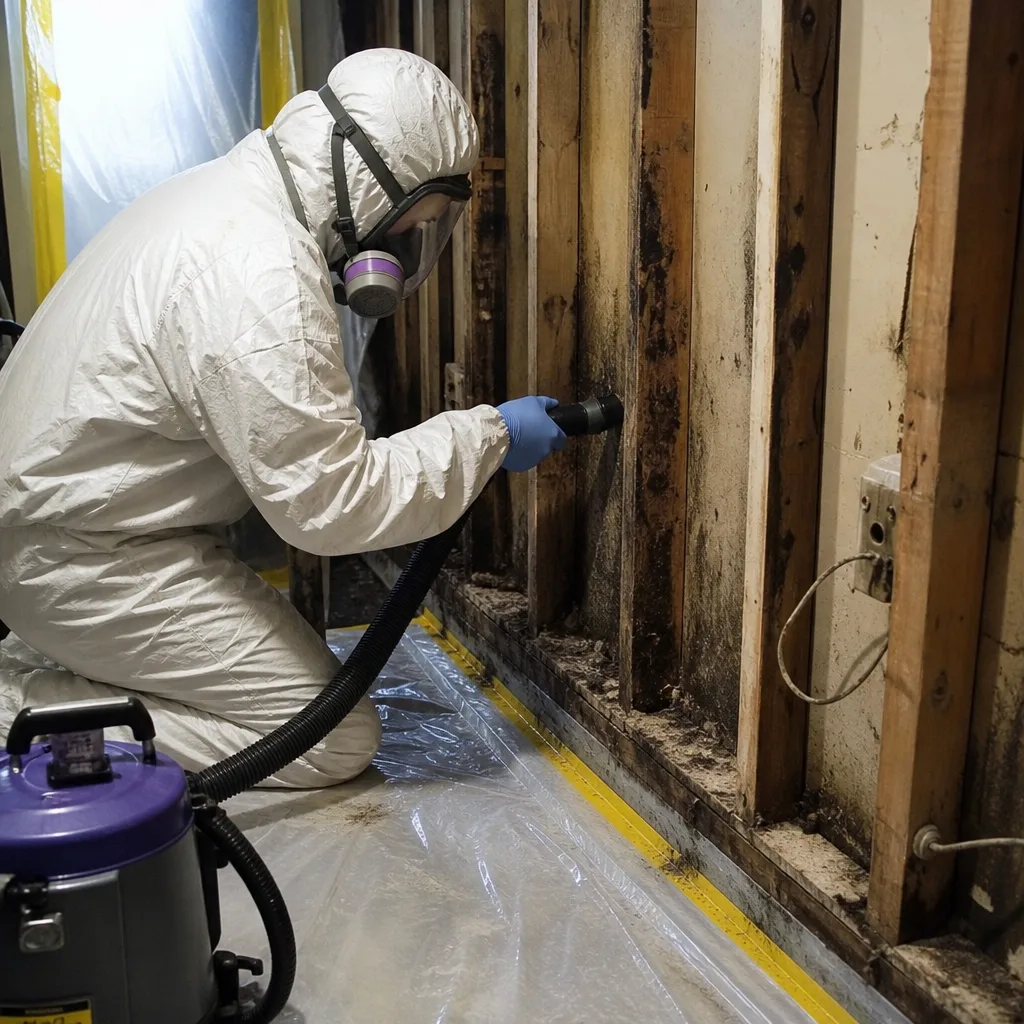
Smoke & Soot Removal
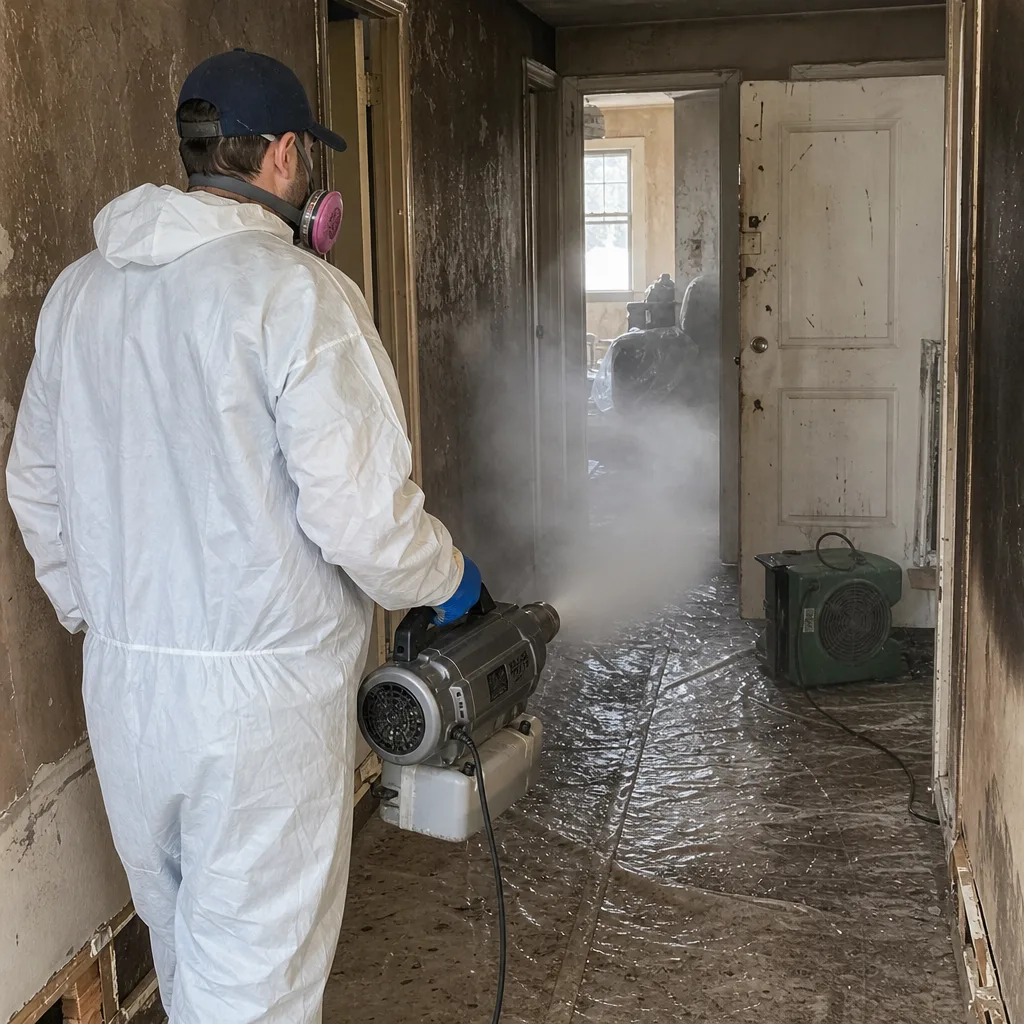
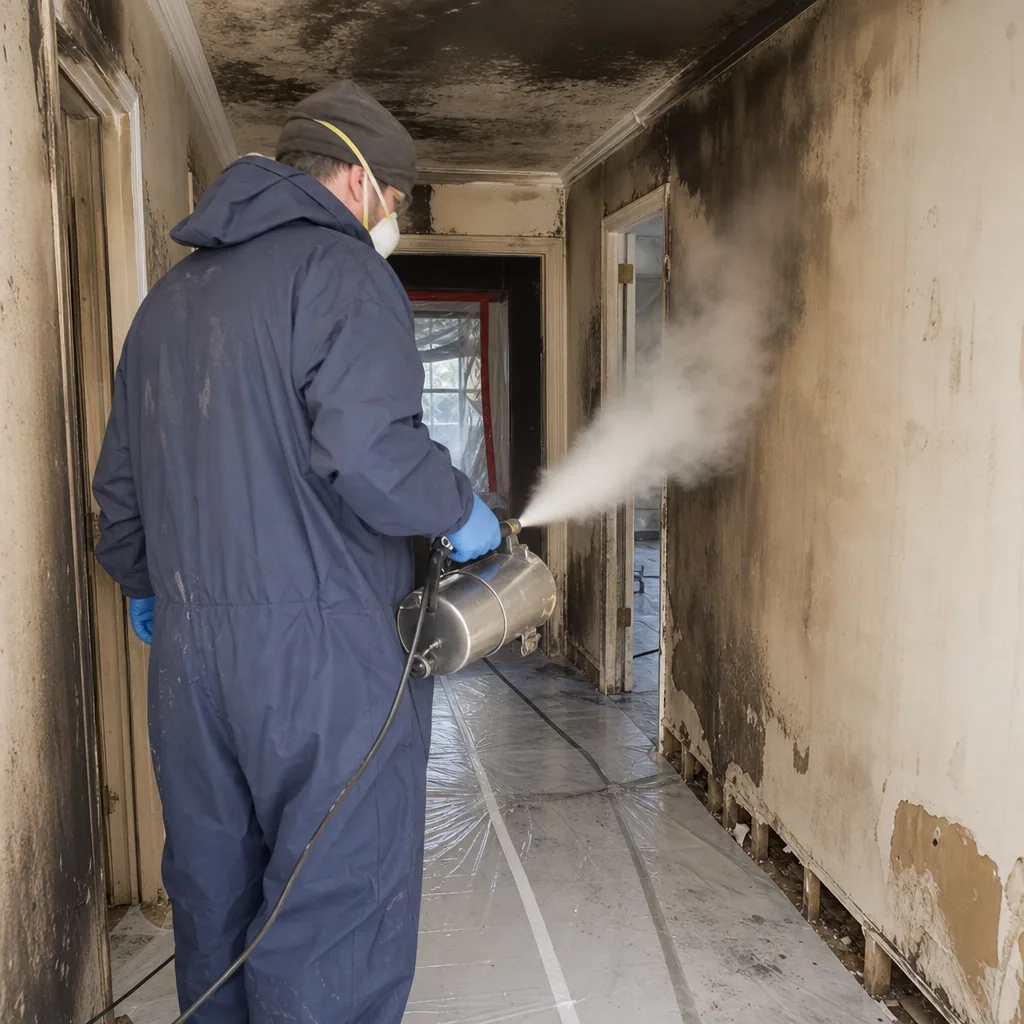
Smoke in Flushing doesn’t stay where the fire started. The pre-war attached stock shares joist bays and party-wall voids that act as horizontal chimneys; we’ve found soot in second-floor bedrooms of units where the fire never burned past the kitchen. Our crews HEPA-vacuum all six sides of every accessible cavity, sponge-clean with trisodium phosphate or citrus-based surfactants depending on the fire’s fuel load, and run particulate counters to verify clearance before we close any wall. In a 1950s attached two-family off Kissena Boulevard near Flushing Creek, a first-floor kitchen fire sent smoke through the party wall into the adjoining unit’s second-floor bedroom; we set up containment in both units, HEPA-vacuumed and sponge-cleaned soot from wall cavities and joist bays, then ran hydroxyl and thermal fogging for odor before sealing the party-wall seams with an antimicrobial treatment. Our crew pulled charred lath and plaster for structural fire repair, logged moisture readings across the shared assembly, and completed a contents pack-out for the source unit - a shared-wall scope typical of Flushing’s dense brick stock that a suburban single-family job never demands.
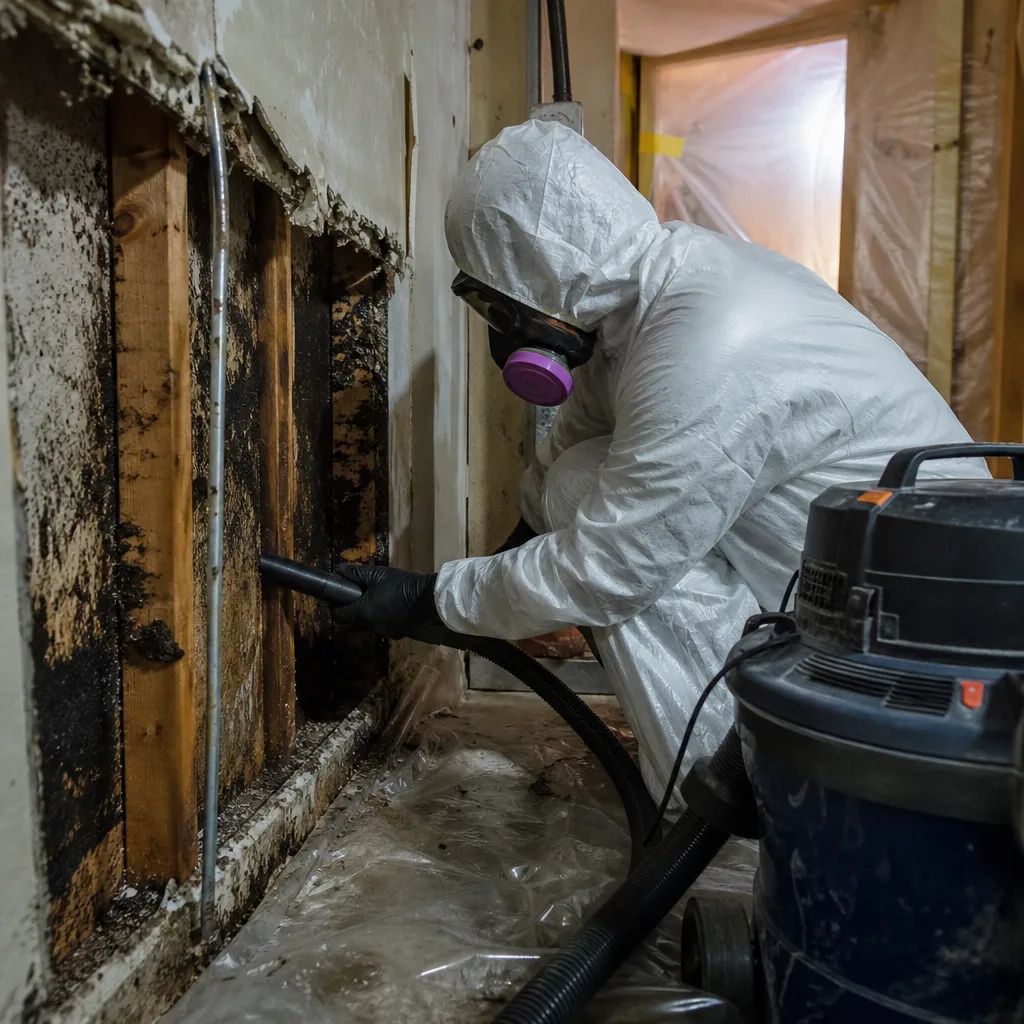
Odor Removal & Deodorization
Thermal fogging and hydroxyl generation are standard tools, but in Flushing the application protocol is dictated by building form. Fogging a source unit without treating the party-wall void, the common basement, and the vertical chases around cast-iron soil stacks means the odor returns when dehumidification is pulled. We map odor migration with moisture meters and borescope inspection, then sequence deodorization from the farthest affected cavity back to the source. Vapor pressure differential - the measurable gap between wet and dry air that determines whether moisture and odor compounds move into or out of your walls - is logged daily until readings stabilize. The Haven Standard requires documentation, not assumption.
Structural Fire Repair
Flushing’s 1920s-1950s brick rowhouses and two-family homes carry charred lath-and-plaster assemblies, compromised floor joists in shared bays, and heat-disturbed cast-iron risers that suburban crews rarely encounter. Our structural fire repair includes engineered assessment of party-wall integrity, replacement of fire-rated assemblies to NYC Building Code, and coordination with your adjuster on code-upgrade coverage. Every square foot of repair is priced in writing before demolition begins. Haven Standard, Clause 1.
Contents Cleaning & Pack-Out
Flushing’s multi-unit buildings demand inventory discipline: unit-specific tagging, photo documentation at pack-out and return, and storage in a climate-controlled facility with 24-hour security. We clean textiles on-site with ultrasonic or dry-cleaning protocols depending on soot type, and electronics with corrosion-inhibiting contact cleaner within 72 hours of exposure. The photo record travels with your contents; your adjuster sees the same images we do.
What happens when you call
- 1
A real person answersNo phone trees - you reach a local pro.
- 2
You get an upfront price rangeHonest numbers before anyone is dispatched.
- 3
A background-checked tech heads outLicensed & insured, dispatched right away.
- 4
You approve before work beginsNothing starts until you say go.
BeforeAfterTrusted Brands We Service in Flushing
Our equipment inventory includes professional-grade drying and deodorization systems from B-Air, Injectidry, Dri-Eaz, Phoenix, and XPOWER - brands specified in IICRC and RIA restoration protocols. We stock HEPA-negative-air machines, hydroxyl generators, and thermal foggers sized for Flushing’s compact multi-unit floor plans, not suburban single-family volumes. Injectidry’s cavity-drying system is particularly critical here: its panelized vacuum drying pulls moisture and odor from joist bays and party-wall voids that conventional air movers cannot reach. Parts and filter stock are maintained locally, so a failed machine doesn’t stall your job while we wait for a warehouse shipment. All work is documented to IICRC, RIA, and IFA standards.
Common Fire & Smoke Damage Restoration Problems We See in Flushing Homes
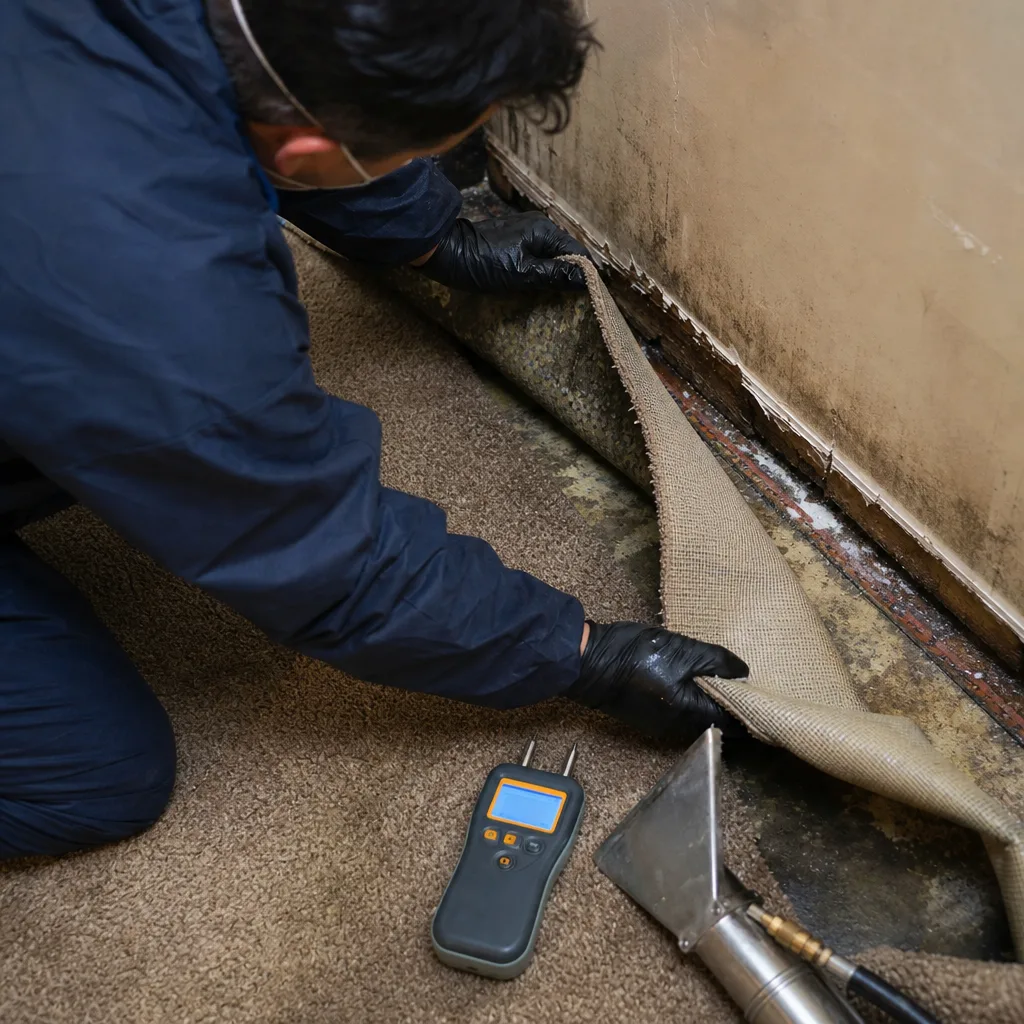
- Party-wall soot migration is missed in the initial scope. Crews scope only the source unit, leave soot in the adjoining occupancy’s joist bays, and the neighbor’s smoke odor returns after the pack-out is closed. We inspect both sides of every shared wall before we write the price.
- Board-up and tarping go up without wind-load or impact ratings. Temporary plywood fails at the first nor’easter off Flushing Bay and re-wets the charred structure. Our wind-rated envelopes are spec’d to coastal exposure standards, with fastener pull-out values documented in the photo record.
- Smoke odor is fogged without addressing the shared party-wall void or the below-grade space. Deodorization never reaches the cavity; the smell returns after dehumidification is pulled. We map migration paths with borescopes and treat every affected void before we call the job dry.
- Category-3 contamination complicates what appears to be a straightforward fire-loss cleanup. Flushing Creek’s tidal backflow and the neighborhood’s combined sewer infrastructure mean basement floor drains can discharge raw sewage during a fire-suppression event or a concurrent storm. A crew expecting soot and water may encounter blackwater - requiring immediate PPE escalation, disposal protocol changes, and reclassification of the entire scope. Our technicians are trained for the pivot.
Pricing for Fire & Smoke Damage Restoration in Flushing, NY
Emergency board-up and tarping in Flushing runs $850-$1,400 for a typical rowhouse or two-family front and rear facade, with wind-rated materials adding 15-25% over standard plywood. Smoke and soot removal for a single unit with party-wall extension into the adjoining occupancy ranges $2,800-$5,200. Odor removal and deodorization with hydroxyl and thermal fogging, including cavity treatment, adds $1,200-$2,400. Contents pack-out, cleaning, and climate-controlled storage runs $3.50-$6.00 per cubic foot per month. Structural fire repair, including charred lath-and-plaster demolition, joist sistering or replacement, and fire-rated reassembly, costs $150-$280 per square foot depending on code-upgrade requirements and party-wall complexity.
What moves the price: the extent of party-wall involvement, the presence of category-3 contamination from combined-sewer backflow, the need for engineered structural assessment, and the fuel load of the fire (protein fires from kitchen grease require more aggressive surfactant protocols than cellulose fires from wood framing). Every price is delivered in writing before work begins. Haven Standard, Clause 1. Estimates are free. Call (516) 687-6900 for an exact quote on your specific loss.
We Also Serve Cities Near Flushing
Our crews respond daily to Fire & Smoke Damage Restoration in Flushing and the surrounding Queens neighborhoods: College Point to the north along the Whitestone Expressway corridor, Bayside to the northeast with its similar pre-war attached stock, Jackson Heights to the west with its own dense multi-unit construction, and Fresh Meadows to the southeast. The building forms vary - Flushing’s creek-adjacent flood exposure and shared-wall density create a specific loss profile that informs how we dispatch, scope, and document every job in the area.
Serving Flushing, NY - Our Local Coverage Area
We’re based in the Flushing area and know this community well. Use the map below to see our service coverage - if you’re nearby, we can almost certainly help.
FAQs - Fire & Smoke Damage Restoration in Flushing
Typically, your homeowner’s policy covers damage to your own dwelling and personal property; your neighbor’s claim falls under their policy, though subrogation may seek recovery from your carrier if negligence is established. We document both units’ damage independently, provide separate written scopes and photo records for each adjuster, and can coordinate with both carriers simultaneously. Our field notes on party-wall void contamination have resolved more than one coverage dispute before it escalated. Call (516) 687-6900 and we’ll walk through the documentation protocol for your specific situation.
Flushing’s exposure to sustained winds off Flushing Bay and the tidal surge risk from Flushing Creek mean a standard plywood board-up often fails before permanent repairs begin. Wind-rated OSB with documented fastener pull-out values maintains the temporary envelope through nor’easter conditions and protects the charred structure from secondary water damage that would otherwise expand the scope and delay your claim. Our photo record includes fastener spacing, substrate condition, and wind-load rating - documentation your adjuster needs to approve the upgraded materials. The modest premium over standard plywood is typically recoverable under most policies’ protective-damage provisions.
Yes, and it’s predictable: Flushing’s pre-war attached stock shares vertical chases around cast-iron soil stacks and common basement spaces that act as collection points for smoke migration. The below-grade space is often the last place homeowners check and the first place odor returns after superficial deodorization. We borescope the stack chases and common basement areas as standard practice on every Flushing fire loss, and we don’t call odor removal complete until vapor pressure differential readings stabilize in the lowest affected cavity. If your basement smells like smoke, the migration path hasn’t been treated - and we can show you exactly where.
Within 24-72 hours for optimal results, though we’ve successfully treated losses where response was delayed by adjuster assignment or permit issues. The critical window is determined by the smoke’s acidity and the humidity in Flushing’s shared-wall cavities: protein residues from kitchen fires hydrolyze in moist air, setting into porous surfaces and becoming progressively harder to neutralize. Our hydroxyl generators can run safely with occupants present, so we often begin deodorization while the structural scope is still being negotiated. Faster initiation means less demolition, lower cost, and a shorter displacement for you and your neighbor. Call (516) 687-6900 to schedule immediate site assessment.
Yes, and we tag by unit with photo documentation at both pack-out and return - never by floor or by building. Multi-unit pack-outs in Flushing require inventory discipline that single-family jobs don’t: each item is barcoded to a specific unit, photographed in context, and stored in segregated vaults. Your adjuster receives the same photo record you do, and we coordinate return delivery by unit to prevent cross-contamination. The Haven Standard requires this protocol on every multi-unit job; it’s not an upsell, it’s included.
Written by Alicia Brennan, Owner at Back to Dry Restoration, serving Flushing since 2011 under The Haven Standard.