
Last updated September 23, 2026
Free visual inspection and a written scope of work before any mitigation begins - photos, moisture readings, and drying logs go in your claim file
The scope we write is the scope we bill. Anything new gets shown to you, in writing, before we touch it.
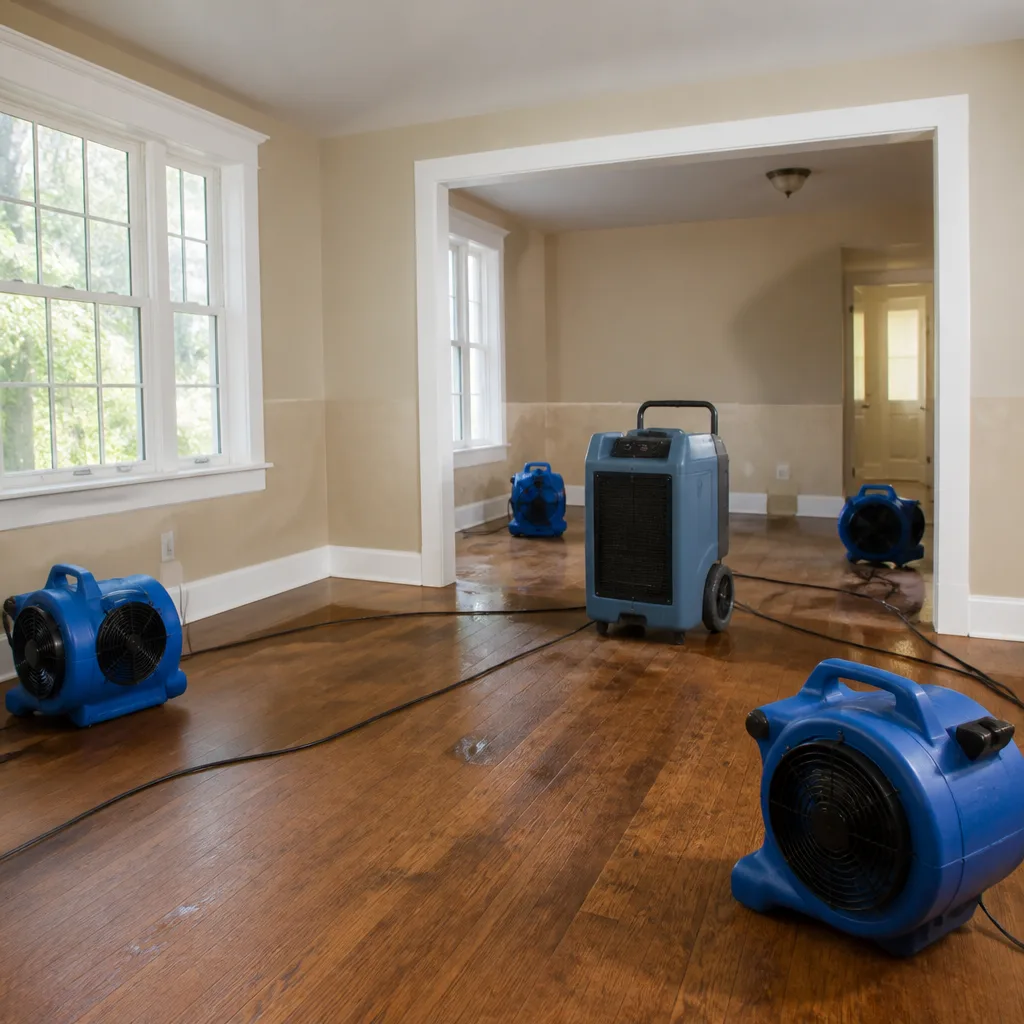
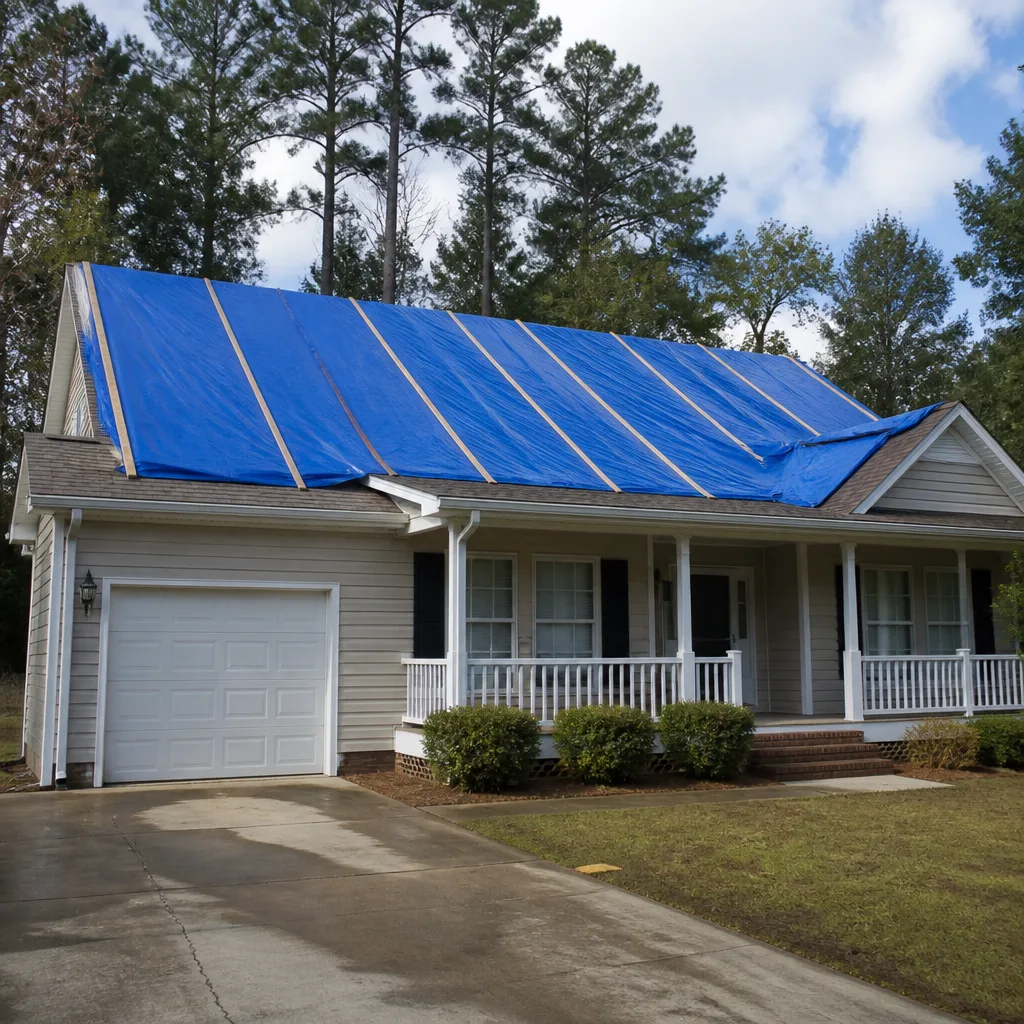
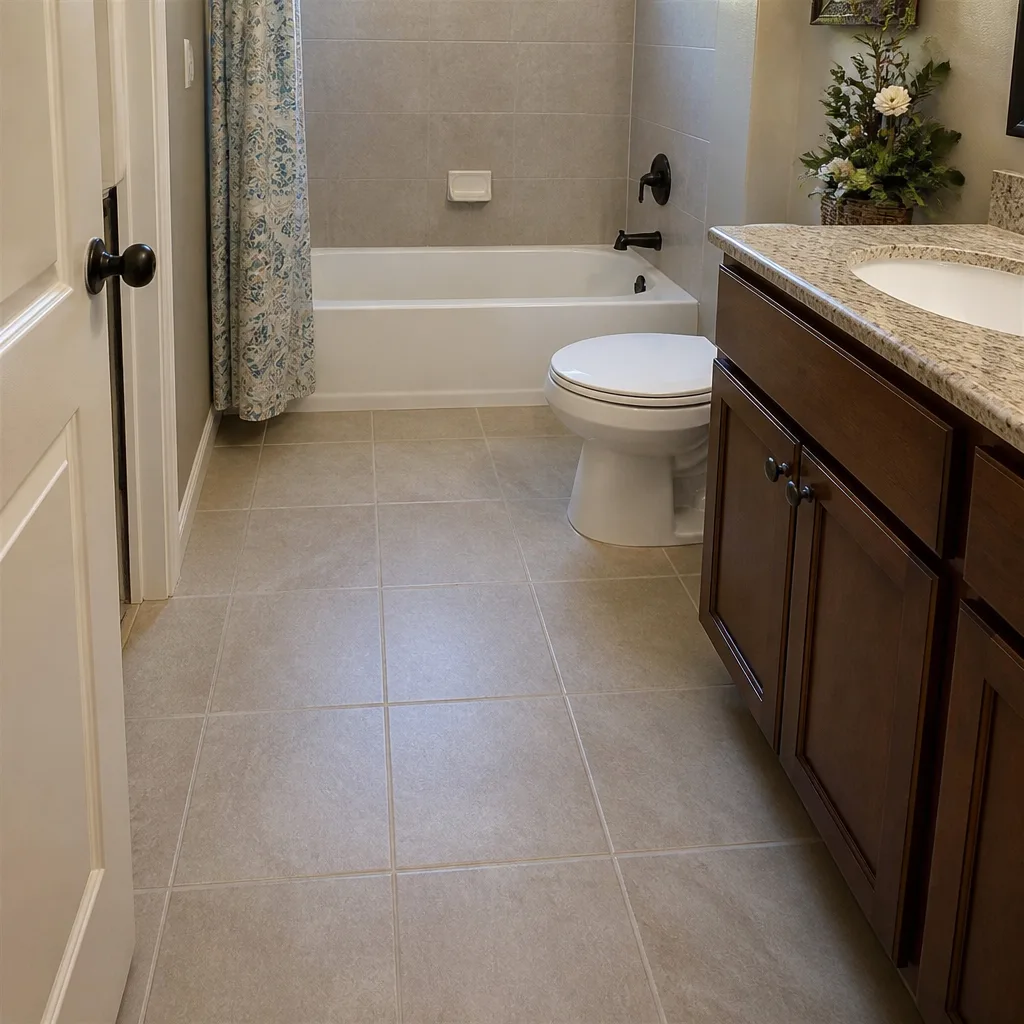

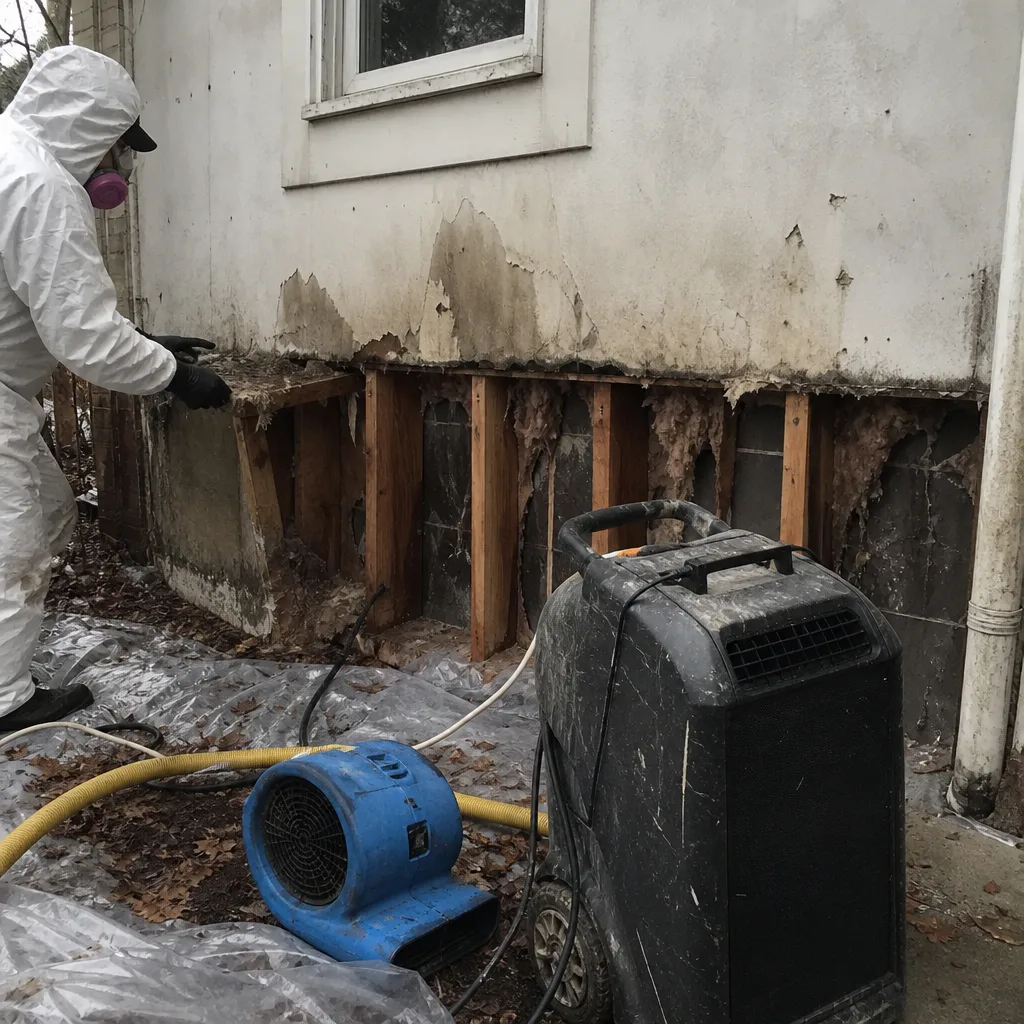 Before
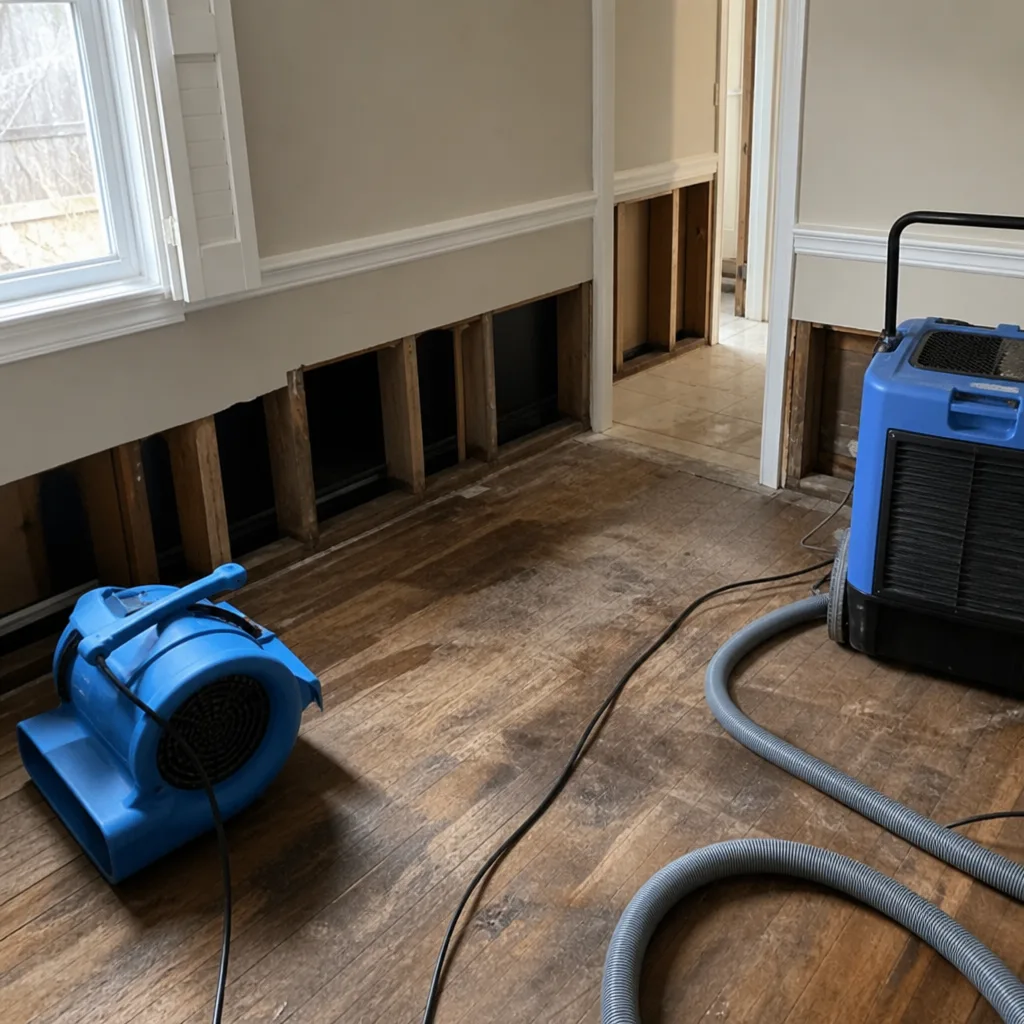 After
After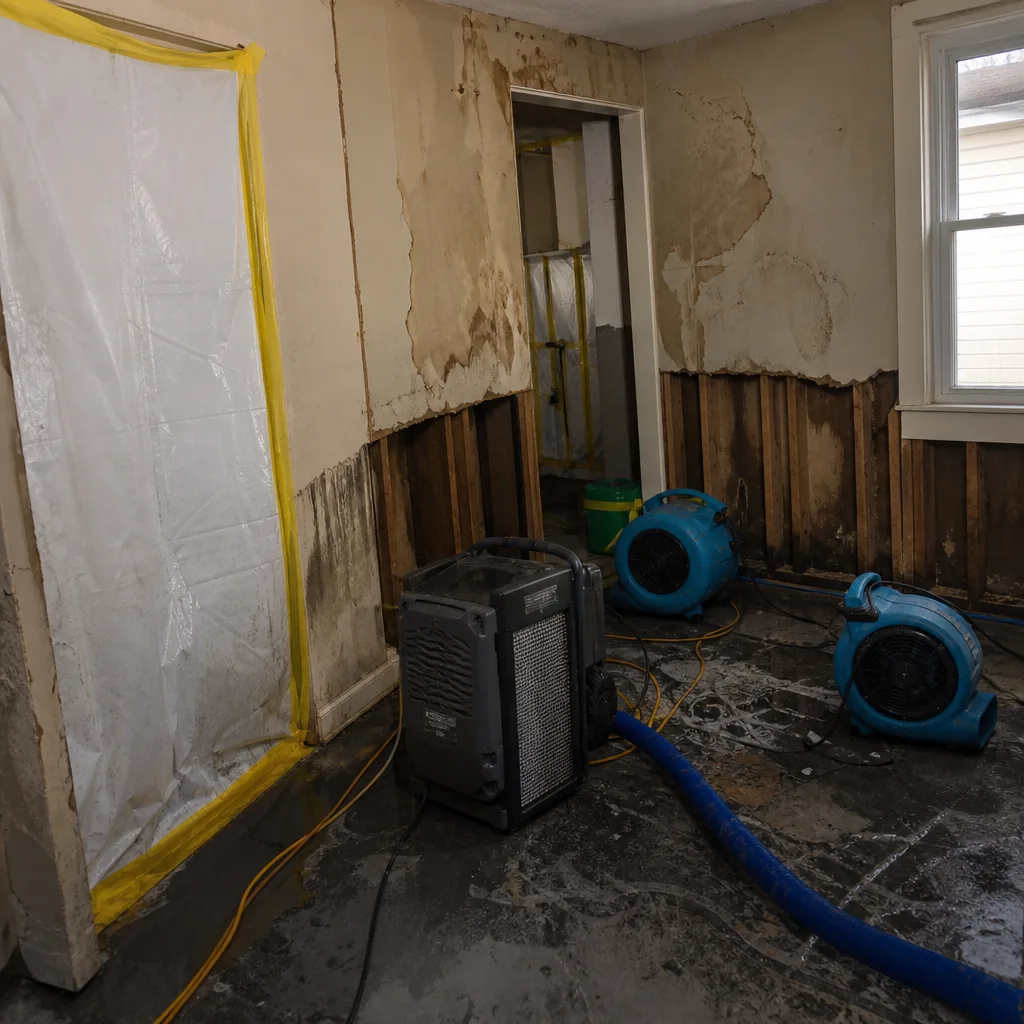 Before
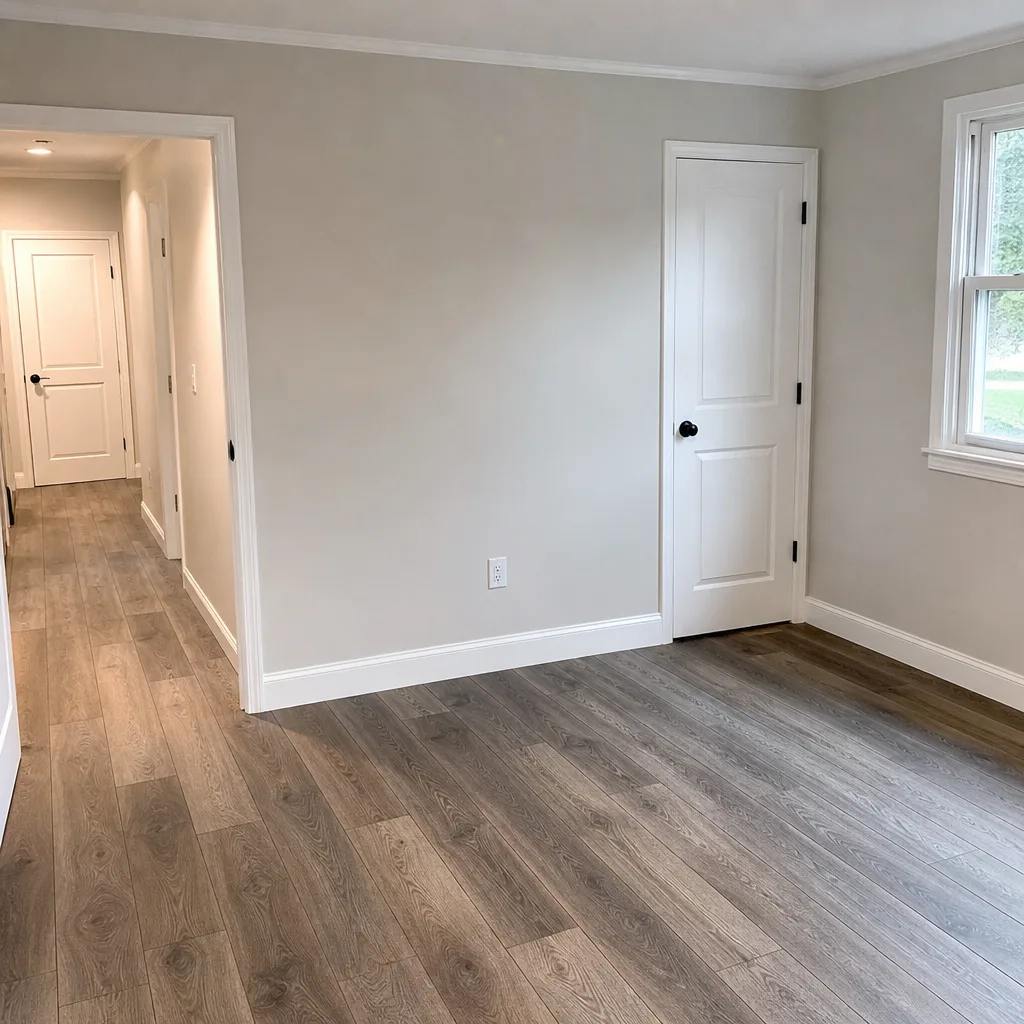 After
After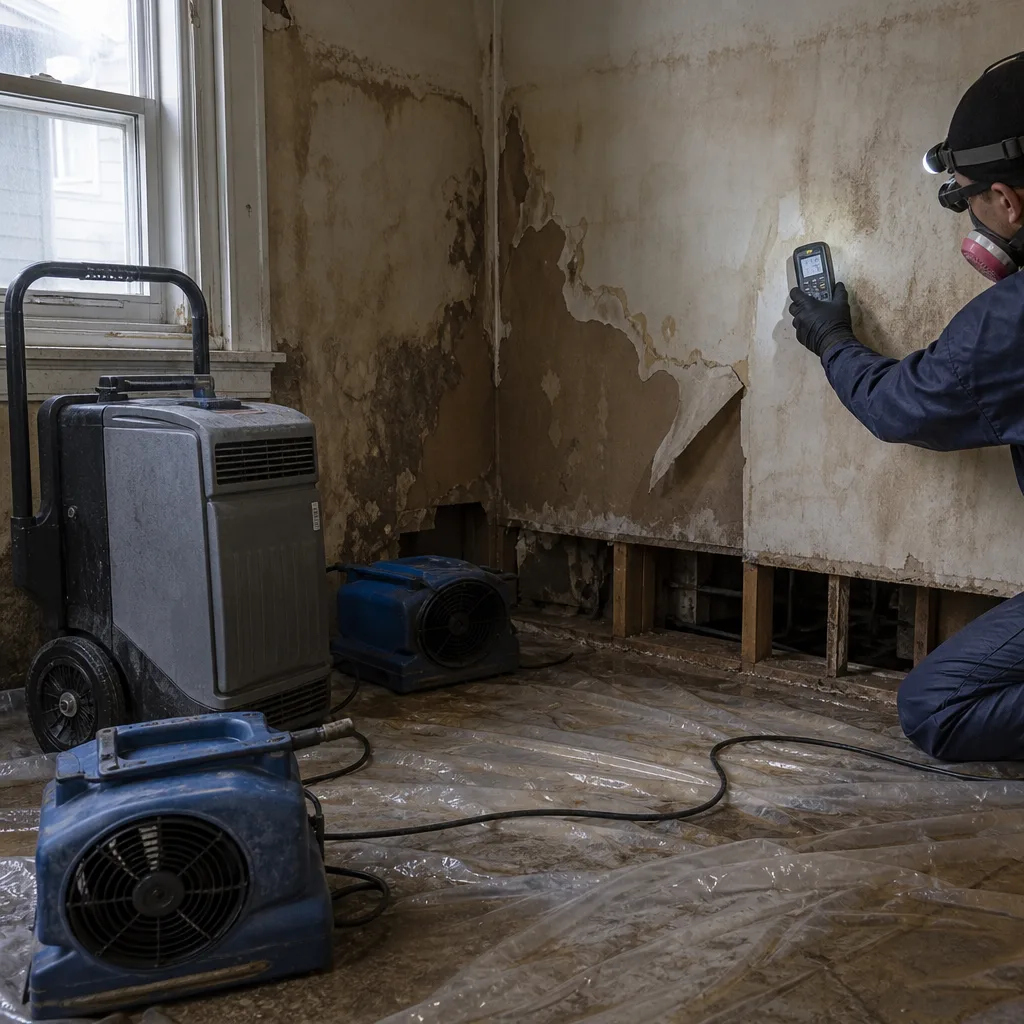 Before
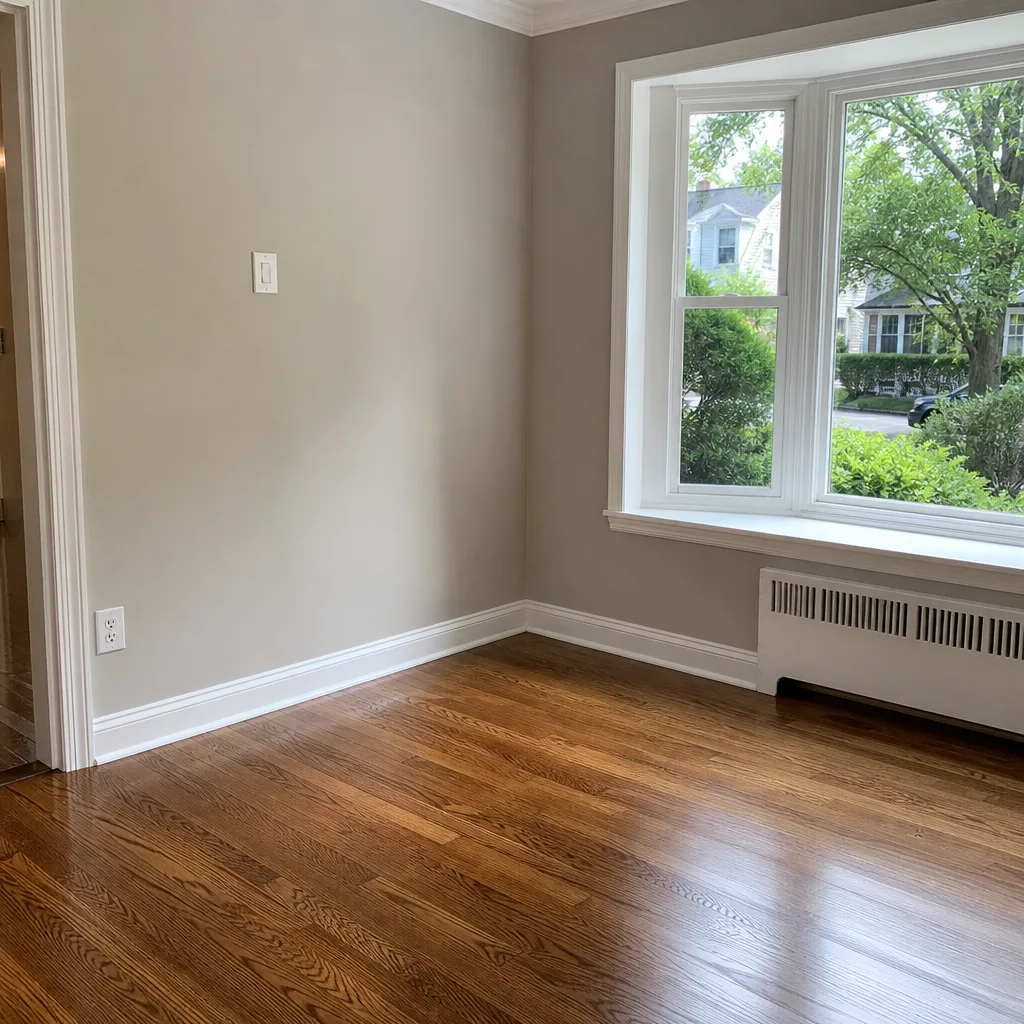 After
AfterDamage Restoration Warning Signs: A Forest Hills Homeowner’s Reference Guide
A relative humidity reading above 60% sustained for more than 48 hours in an interior wall cavity is sufficient to begin mold colonization - but the wall surface may look and feel completely dry to the touch for another three to six weeks. In Forest Hills, where pre-war brick construction and attached row-house party walls create hidden interstitial spaces, we’ve documented thousands of cases where homeowners discovered catastrophic damage only after their insurance carrier denied coverage for “known pre-existing conditions.” This guide names the specific numeric thresholds, measurement methods, and documentation protocols that turn intuition into evidence - so you can act before a warning sign becomes an excluded claim. For more guides & resources on protecting your Forest Hills home, see our blog.
Quick Answer
The warning signs that matter most in Forest Hills homes are measurable, not visible: moisture content above 16% in wood framing, 1% in gypsum drywall, or 4% in concrete; ambient relative humidity sustained above 60% for 48+ hours; and surface temperature differentials of 3°F or more detected by infrared thermography. These thresholds indicate active water intrusion requiring professional assessment, while visible staining, warping, or odor alone may indicate historic damage already subject to policy exclusions. If you’re deciding whether to handle initial steps yourself, read our DIY vs Professional Damage Restoration: The Forest Hills Homeowner’s Decision Guide.
Table of Contents
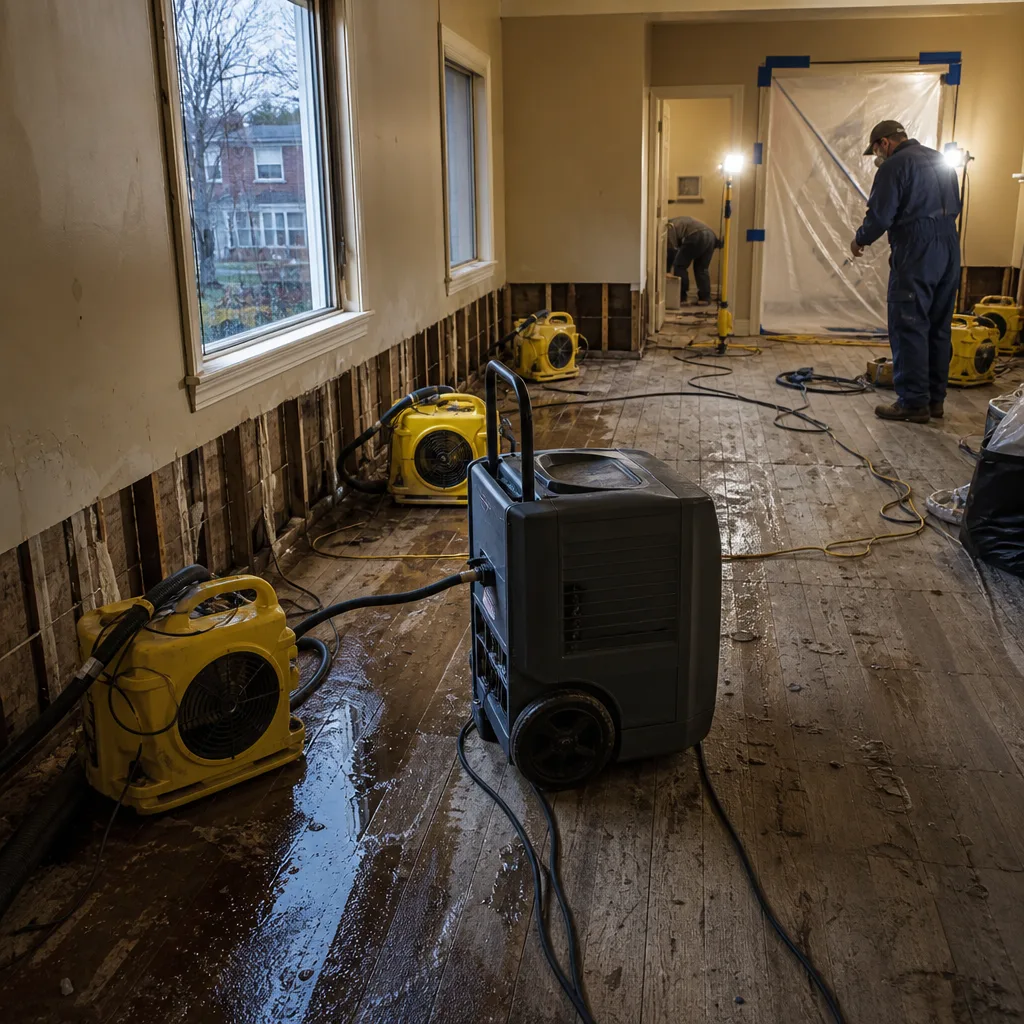
- The Numeric Thresholds That Define a Warning Sign
- Active Intrusion vs. Historic Damage: Why the Distinction Determines Your Coverage
- Forest Hills Structural Indicators: What Pre-War Construction Reveals
- How to Document Discovery Date: Metadata, Scale, and Notation
- Three Warning Signs That Trigger “Known Pre-Existing Condition” Denials
- The Instruments: What to Buy, What to Skip, and How to Read Them
- Forest Hills Seasonal Patterns: When Warning Signs Accelerate
- Common Mistakes to Avoid
- When to Call a Professional
- Frequently Asked Questions
BeforeAfterThe Numeric Thresholds That Define a Warning Sign
Every material in your home has a moisture content percentage that separates normal from problematic. These numbers are not opinions; they’re established by the IICRC S500 and S520 standards that govern water damage restoration and mold remediation. We’ve built our documentation protocols at DryMark Restoration Forest Hills home around these thresholds because they’re what insurers, adjusters, and arbitrators accept as evidence.
Wood framing and structural lumber: Normal equilibrium moisture content in Forest Hills ranges from 6% to 12% depending on season. At 16%, wood reaches the threshold for fungal growth. At 20%, structural integrity begins degrading. We’ve pulled baseboards in Forest Hills row houses where stud bays read 28% - the homeowner smelled nothing, saw nothing, and only called us because a neighboring unit’s leak triggered a building-wide inspection.
Gypsum drywall: Manufactured at approximately 0.5% moisture content. The restoration industry considers drywall salvageable below 1% elevated moisture content (measured with a calibrated pinless meter on the unaffected portion as baseline). Above 1%, gypsum begins losing structural integrity and supporting mold growth on the paper facing. At 4%, it’s designated Category 3 - unsalvageable per IICRC standards.
Concrete and masonry: Basements in Forest Hills pre-war buildings often show 2-3% moisture content normally due to hydrostatic pressure. The critical threshold is 4% - above this, calcium hydroxide begins migrating to the surface as efflorescence, indicating active moisture transport through the capillary structure.
Ambient relative humidity: The 60% threshold for 48+ hours is the mold colonization trigger. But here’s what most guides miss: that measurement must be taken in the affected cavity, not the room. A bedroom at 45% RH can harbor a wall cavity at 75% if there’s a plumbing leak in the party wall. We use Injectidry cavity drying systems with built-in RH sensors to establish actual conditions, not surface assumptions.
Surface temperature differential: Infrared thermography detects evaporative cooling at leak sites. A 3°F differential between a suspect area and a confirmed-dry reference point indicates sufficient moisture for investigation. We’ve identified slab leaks in Forest Hills co-op basements where the temperature differential was the only visible sign - no staining, no odor, no elevation in ambient humidity.
| Material | Normal Range | Warning Threshold | Critical/Action Required |
|---|---|---|---|
| Wood framing | 6-12% | 16% | 20%+ (structural risk) |
| Gypsum drywall | 0.5% | 1% | 4% (Category 3, unsalvageable) |
| Concrete/masonry | 2-3% | 4% | 6%+ (active hydrostatic failure) |
| Air (cavity RH) | 30-50% | 60% for 48+ hours | 70%+ (active colonization) |
| Surface temperature | ±1°F from reference | 3°F differential | 5°F+ (significant moisture) |
Active Intrusion vs. Historic Damage: Why the Distinction Determines Your Coverage
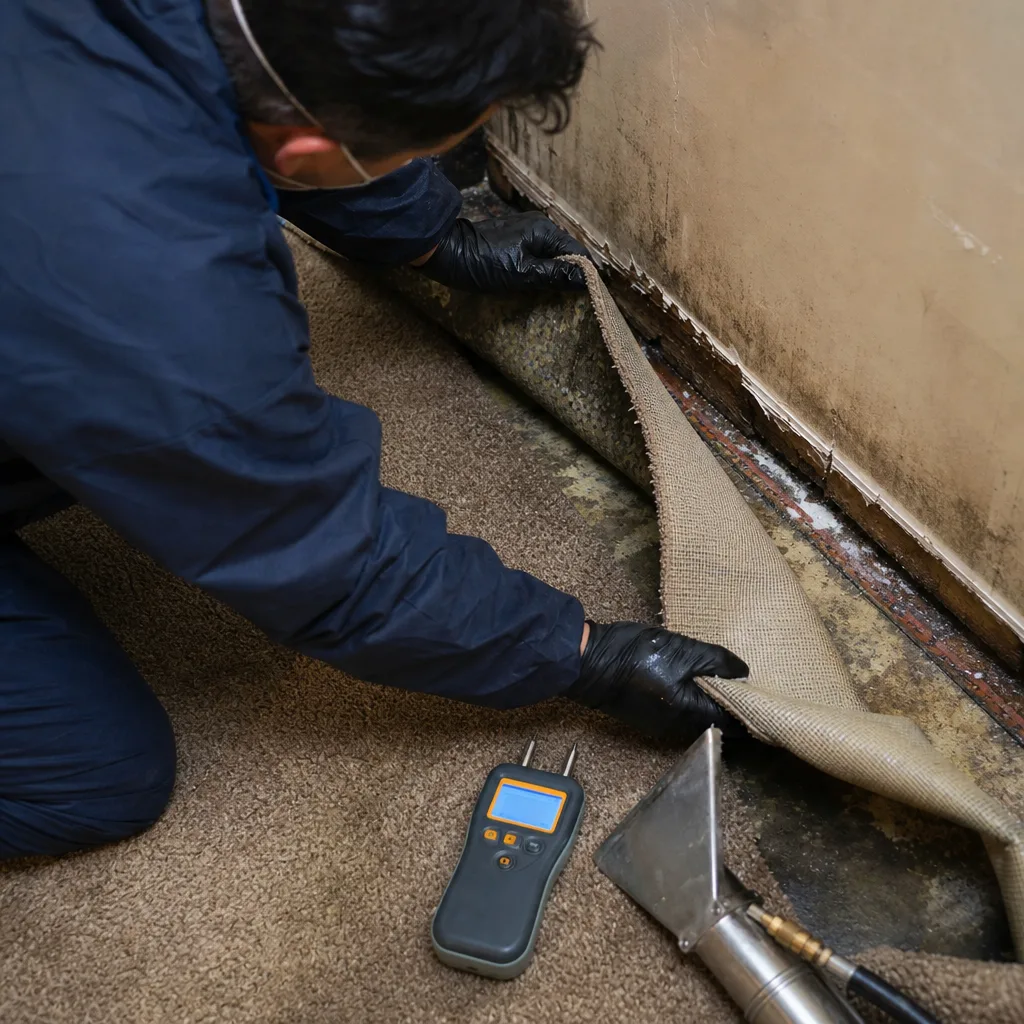
Insurance policies cover sudden and accidental damage. They do not cover damage that existed before the policy period, that the policyholder knew or should have known about, or that resulted from long-term neglect. The difference between a paid claim and a denied claim often comes down to whether you can prove a warning sign indicated active, ongoing intrusion rather than historic, pre-existing damage.
Active intrusion indicators: Moisture content that increases between measurements taken 24-48 hours apart. RH levels that rise during rain events and fall during dry periods. Temperature differentials that appear or intensify with weather changes. Water that returns after cleanup. These patterns demonstrate ongoing water movement - the “sudden and accidental” trigger most policies require.
Historic damage indicators: Staining that doesn’t change with moisture conditions. Efflorescence that’s powdery and unreplenished (indicating the water source has dried). Warping that’s stable over time. Mold that’s dry and dormant. These may indicate a past event that’s already resolved - and if you knew about them, your carrier may classify them as pre-existing.
Here’s where Forest Hills homeowners get caught: many pre-war buildings have chronic humidity issues in basements and behind radiators that create “historic” conditions in one area while an active leak develops elsewhere. A stain under a cast-iron radiator supply line might be ten years old and harmless, while a new leak in the same line is actively saturating the subfloor. Without moisture meter readings and dated photos, you can’t prove which is which.
We document this distinction on every Water Damage Restoration in Forest Hills assessment. Our written scope specifies which materials show active versus historic conditions, with moisture percentages and photo evidence for each. Haven Standard, Clause 1 requires this documentation before any work begins - because a scope without evidence is a claim without support.
Forest Hills Structural Indicators: What Pre-War Construction Reveals
Forest Hills contains one of the highest concentrations of pre-war residential construction in Queens. These buildings - brick row houses, garden apartments, and Tudor-revival co-ops built 1920-1940 - exhibit specific warning signs that post-war construction doesn’t. Understanding these indicators prevents misreading normal aging as damage, and missing genuine damage as character.
Efflorescence patterns on brick party walls: White, crystalline deposits on interior brick indicate moisture moving through masonry and depositing salts at the evaporation surface. In Forest Hills row houses, we see two distinct patterns. A vertical streak pattern typically indicates a roof or parapet leak at the top of the wall - active intrusion requiring immediate attention. A horizontal band pattern at grade level usually indicates rising damp from compromised below-grade waterproofing, often historic and sometimes excluded from coverage. The distinction matters: vertical streaking with fresh, needle-like crystals suggests ongoing water; powdery, easily brushed efflorescence with rounded crystals suggests past events now dry.
Differential settlement cracks in attached foundations: Forest Hills row houses share structural loads across party walls. When one unit’s foundation settles differently from its neighbor, shear cracks appear in the party wall - often misdiagnosed as water damage. True settlement cracks are typically diagonal, wider at top or bottom, and stable over time. Water-related cracks from hydrostatic pressure are more often horizontal, follow mortar joints, and show active moisture at the crack face. We measure crack width with a crack monitor gauge and photograph with a measurement scale; progression of 1/16 inch or more in 30 days indicates active structural movement requiring engineering evaluation, not restoration.
Staining profiles under cast-iron radiator supply lines: Pre-war heating systems in Forest Hills use threaded cast-iron pipe with leaded joints. These lines expand and contract with each heating cycle, eventually loosening joints or cracking at thread roots. The warning sign is a specific staining profile: a narrow vertical streak below the valve or union, often with rust-colored deposits on the pipe itself, distinct from the broader, more diffuse staining from roof leaks. Because these leaks are intermittent (only when the system is pressurized and hot), they often evade detection until the subfloor is compromised. We use borescope inspection through adjacent floor penetrations to assess hidden damage without destructive investigation.
Plaster keys and lath corrosion: Pre-war plaster walls use wood lath with gypsum plaster keyed into the spaces between strips. When moisture enters, the keys dissolve first - the plaster separates from the lath but may not show surface damage for months. The warning sign is a hollow sound when tapped, or slight movement when pressure is applied. Moisture meter readings at the base of these walls often show 2-3% elevation even when the surface appears sound. In Forest Hills garden apartments, we’ve found this condition behind built-in cabinetry where slow plumbing leaks created 40% moisture content in the lath with no visible surface indication.
How to Document Discovery Date: Metadata, Scale, and Notation
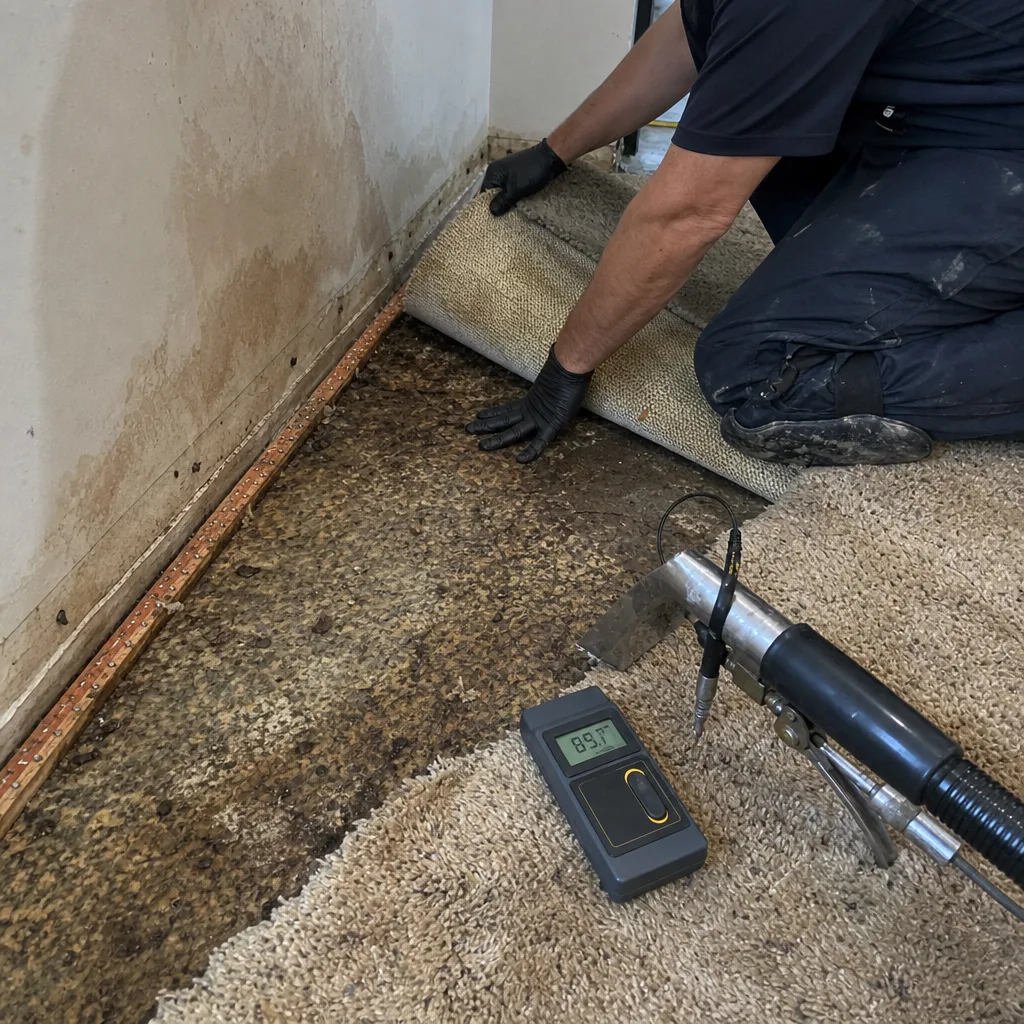
Your insurance policy likely contains a “prompt notice” requirement - you must report damage within a specified period after discovery. The date you noticed a stain matters less than the date you can prove you noticed it. Documentation that establishes discovery date is often the difference between coverage and a “late notice” denial.
- Enable camera metadata. Every smartphone photo contains EXIF data - timestamp, GPS coordinates, device information. Ensure location services are enabled for your camera app. This creates an immutable record of when and where the image was captured. Screenshots don’t carry this metadata; always photograph directly.
- Include a measurement scale. Place a ruler, coin, or printed scale adjacent to the warning sign. This serves two purposes: it demonstrates the actual size of the condition (preventing disputes about magnification or perspective), and it proves the photo was taken at the site, not downloaded from elsewhere. We use a forensic scale with color reference bars; homeowners can use any standard measure.
- Add written notation in the frame. Write the date, time, address, and your name on an index card and include it in the photograph. This creates a contemporaneous record that metadata alone cannot provide. For example: “May 14, 2024, 2:15 PM, 72-15 112th St, Forest Hills, NY - observed staining under radiator supply, bathroom 2B.”
- Take the sequence: wide, medium, close, detail. Wide shot establishes location in the room. Medium shot shows the warning sign in context. Close-up shows the specific condition. Detail shot shows texture, moisture, or material condition. This sequence prevents disputes about what was actually photographed.
- Email the photos to yourself or a cloud account immediately. This creates a third-party timestamp from your email provider or cloud service - additional evidence that the images existed on that date. Don’t wait; upload the same day.
- Record moisture readings if you have instruments. Photograph the meter display with the scale in frame, noting the material tested and the measurement mode (pin, pinless, or thermo-hygrometer). Even a $30 consumer moisture meter from a hardware store creates a dated, measurable record that supports your claim of due diligence.
At DryMark Restoration Forest Hills, every assessment includes a documented photo record on every visit - it’s standard, never an upsell. But the photos you take before calling us establish your discovery timeline, and that timeline protects your coverage.
Three Warning Signs That Trigger “Known Pre-Existing Condition” Denials
We’ve reviewed hundreds of denied claims in our Free Second Opinion service. Three warning signs appear disproportionately in the “known pre-existing condition” section of denial letters. Understanding these - and what documentation rebuts the finding - can save your coverage.
1. Longitudinal staining on ceilings with multiple color generations. A water stain that shows concentric rings of different color - typically brown at the center, yellow at the edges, with possible mold spotting - indicates multiple wet-dry cycles over an extended period. Insurers interpret this as evidence that the leak existed through multiple policy periods, and that the homeowner should have noticed and reported it earlier. Rebuttal: moisture meter readings showing active elevation at the center; infrared imaging showing active temperature differential; and documentation of when the staining was first observed (not when it was first reported). If you can prove the stain was stable and dry until a recent event reactivated it, you may recover coverage for the new damage even if the stain itself is excluded.
2. Fungal growth with established mycelial networks. Surface mold that wipes away easily is recent. Mold that has penetrated substrate, developed dark pigmentation, and shows structured growth patterns (rhizomorphs, sporulation structures) indicates weeks to months of colonization. Insurers routinely deny these as “long-term” or “maintenance-related.” Rebuttal: air sampling showing elevated spore counts in the breathing zone (indicating active, current amplification); ERMI or EMSL dust analysis establishing a baseline; and most importantly, identification of the moisture source that triggered recent growth. If a new leak activated dormant spores, the new growth event may be covered even if historic colonization is not.
3. Efflorescence with salt subflorescence and spalling. Surface efflorescence alone might be recent. But when salts have crystallized beneath the brick surface (subflorescence), expanding and flaking the face (spalling), the process has taken months to years. Insurers classify this as gradual deterioration, not sudden damage. Rebuttal: documentation of a recent change in the moisture pattern - for example, efflorescence that was previously limited to the basement now appearing on the first floor, indicating a new breach in the below-grade waterproofing system. We use calcium carbide testing to determine free moisture in the masonry, establishing whether the current readings represent active transport or residual from past events.
On Mold Remediation in Forest Hills assessments, we specifically document these rebuttal elements when we find conditions that might trigger pre-existing coverage disputes. Haven Standard documentation is designed for the claim that gets scrutinized, not the one that sails through.
The Instruments: What to Buy, What to Skip, and How to Read Them
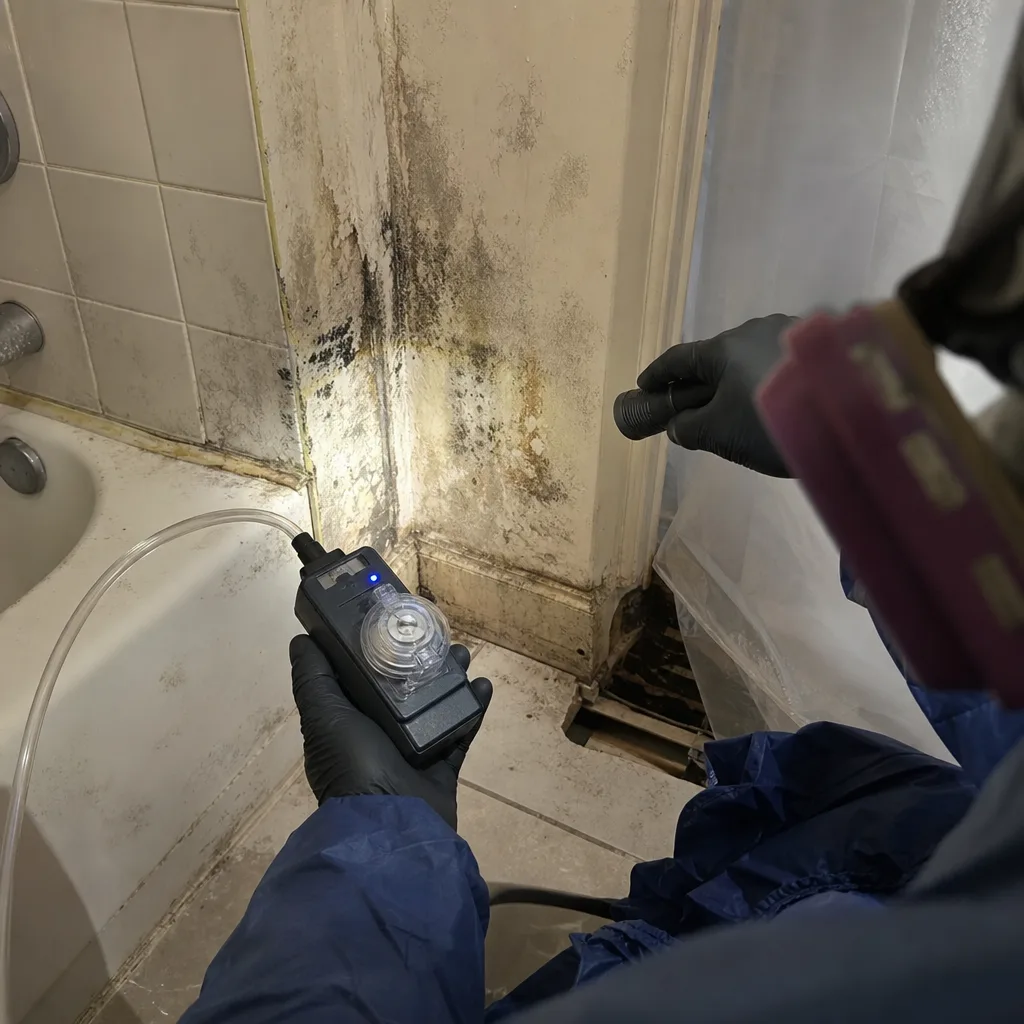
You don’t need professional equipment to establish preliminary evidence. You need the right consumer-grade tools used correctly, and the discipline to record what you find.
Pinless moisture meter ($30-60): Uses electromagnetic waves to detect moisture to a depth of approximately 3/4 inch in wood and drywall. Essential for non-destructive screening. Limitations: cannot distinguish moisture depth, affected by metal fasteners, requires calibration to material type. For Forest Hills pre-war construction, set to “wood” for lath and framing, “drywall” for gypsum board renovations. Take five readings in a grid pattern and average; single readings can mislead.
Thermo-hygrometer ($25-50): Measures ambient temperature and relative humidity. Place in the suspect area for 30 minutes to stabilize, then compare to a reference location three rooms away or on a different floor. A 15% RH difference indicates a moisture source. For cavity measurement, tape the unit to a small fan drawing air from a wall penetration - crude but effective for preliminary assessment.
Infrared thermometer ($20-40): Not true thermography, but useful for spot-checking surface temperatures. Measure the suspect area and a confirmed-dry reference point of the same material. Remember: infrared thermometers read surface temperature, not subsurface conditions. A cold spot might indicate moisture, air infiltration, or missing insulation. Use in conjunction with moisture meter verification.
What to skip: Consumer “mold test kits” with petri dishes. These capture ambient spores that exist in every environment and prove nothing about active growth or health risk. Professional air sampling requires controlled airflow, specific media, and laboratory analysis - not a dish on your countertop. We’ve seen homeowners panic over normal outdoor spore levels and miss genuine moisture problems because they relied on these misleading products.
What professionals use that you can’t buy: Thermal imaging cameras ($2,000-8,000) with sufficient resolution to detect subtle patterns; borescopes for cavity inspection; psychrometric calculators for vapor pressure differential analysis; and most importantly, calibrated meters traceable to NIST standards with documented calibration dates. When our documentation is challenged, we produce calibration certificates. Consumer tools establish reasonable suspicion; professional tools establish evidence.
Forest Hills Seasonal Patterns: When Warning Signs Accelerate
Forest Hills experiences a humid continental climate with significant seasonal variation that affects how and when warning signs appear. Understanding these patterns helps distinguish normal seasonal behavior from genuine damage indicators.
March-April: thaw and driven rain. Frozen ground thaws from the top down, creating a perched water table that pushes hydrostatic pressure against basement walls. Simultaneously, spring storms with wind-driven rain exploit any envelope breach. We see the highest volume of active intrusion calls in these months - often homeowners who noticed “a little dampness” in January now facing full basement flooding. The warning sign to watch: efflorescence that was dormant all winter suddenly producing fresh, needle-like crystals. This indicates active moisture transport, not residual humidity.
July-August: peak humidity, air conditioning stress. Outdoor dew points in Forest Hills regularly reach 70°F+. Air conditioning systems run continuously, and the temperature differential between conditioned spaces and hot, humid attics or crawl spaces creates condensation at thermal bridges. Warning sign: mold growth on ceiling penetrations (light fixtures, smoke detectors) where attic air meets conditioned space. This is often misdiagnosed as a roof leak; it’s actually an insulation or air-sealing failure. Infrared inspection distinguishes the pattern - roof leaks show irregular, gravity-driven patterns; thermal bridging shows symmetrical spots at each penetration.
October-November: heating system startup. Cast-iron radiators and steam systems that sat idle for six months develop leaks at valves, unions, and air vents when pressurized. The warning sign is specific: a brief hiss or knock at startup, followed by a slow, intermittent drip that may evaporate before pooling. By January, the subfloor is saturated. We recommend annual inspection of visible supply lines and valves before heating season, with moisture meter readings at the floor-wall junction below each radiator.
Year-round: attached building dynamics. Forest Hills row houses and garden apartments share structural and mechanical systems with neighbors. Your warning sign might originate in another unit. We’ve documented cases where a leak in a third-floor apartment traveled through party wall cavities to manifest as staining in a first-floor unit two doors away. The warning sign that should prompt immediate neighbor notification: moisture meter readings that increase toward a party wall, with no corresponding plumbing or roof features on your side.
Common Mistakes to Avoid
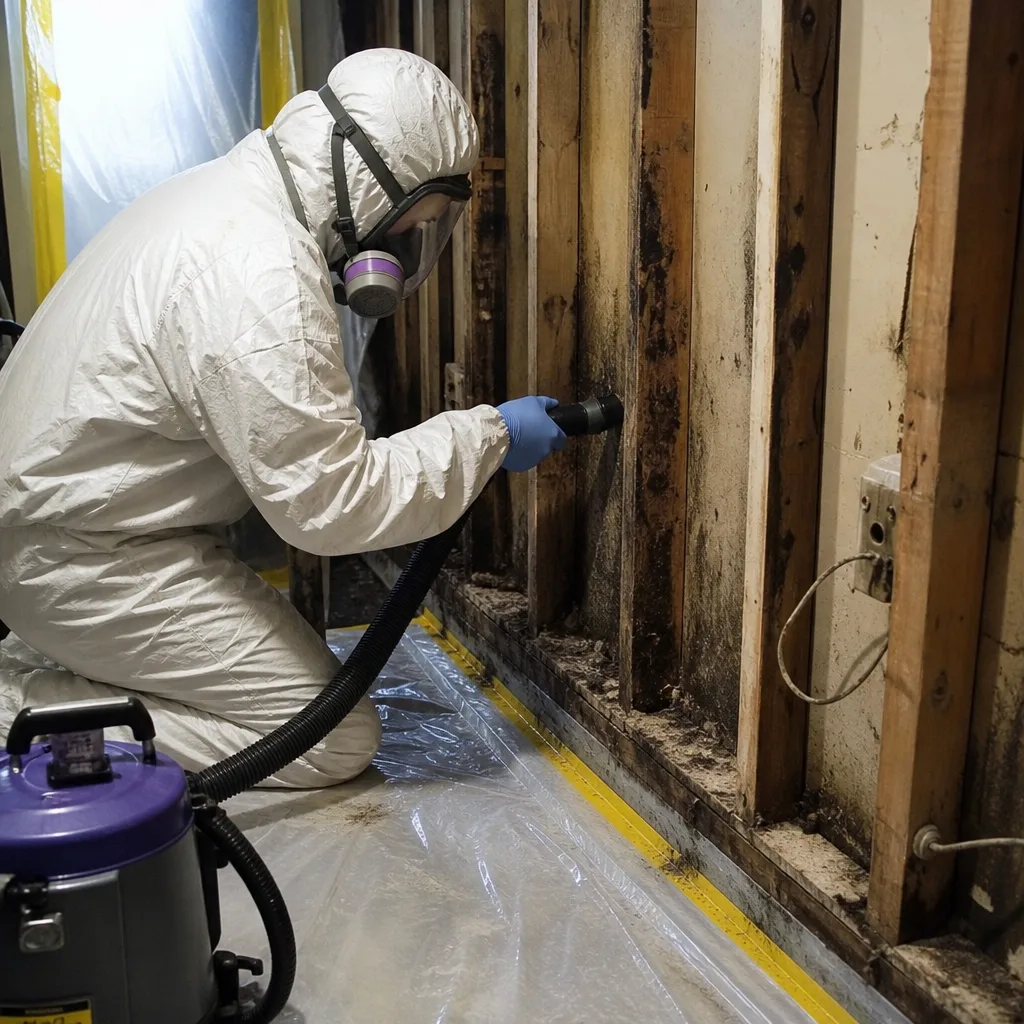
- Assuming “dry to the touch” means dry. Human skin detects surface moisture at approximately 30% RH - far above the 16% wood moisture content or 60% cavity RH that supports mold growth. Always verify with instruments.
- Photographing damage without scale or notation. A close-up of mold or staining proves nothing about when it was discovered, how large it is, or where it was located. Every photo needs context, measurement, and date.
- Cleaning visible mold without identifying the moisture source. Bleach on surface mold removes the symptom and leaves the problem. Within 48-72 hours, regrowth appears - and your insurer may classify the repeated condition as maintenance-related.
- Ignoring party wall symptoms because “it’s not my plumbing.” In Forest Hills attached construction, 30% of water damage we mitigate originates in adjacent units. Delayed notification to neighbors and building management extends damage and complicates coverage.
- Accepting “it’s just old house character.” Pre-war buildings have genuine character - but efflorescence, plaster cracks, and musty basements are not character. They’re measurable conditions with specific thresholds and specific risks.
- Waiting for visible damage before calling. By the time you see staining or warping, the condition has typically progressed through weeks of measurable elevation. The cost difference between mitigation at 16% wood moisture and reconstruction at 28% is often 3-5x.
- Discarding documentation after the repair. Insurance policies have “reopened claims” provisions; latent damage may appear months later. Keep all photos, moisture logs, and written scopes for at least three years - the typical statute of limitations for property claims in New York.
When to Call a Professional
Call for assessment when any measured threshold is exceeded, when you cannot identify the moisture source, when the affected area exceeds 10 square feet of visible mold, or when the condition involves Category 2 or 3 water (dishwasher discharge, washing machine overflow, or any sewage backup). For guidance on selecting qualified help, see How to Hire a Damage Restoration Contractor in Forest Hills: A Step-by-Step Guide. Don’t wait for visible damage - by then, your documentation options narrow and your coverage exposure increases.
Fire & Smoke Damage Restoration in Forest Hills requires immediate professional response for different reasons - smoke and soot are chemically active and cause progressive damage to surfaces and contents. The warning signs for fire-related damage (corrosive residue, odor penetration, HVAC contamination) demand specialized assessment beyond homeowner measurement.
DryMark Restoration Forest Hills offers free estimates in Forest Hills - call (516) 687-6900. Every assessment includes moisture mapping with professional-grade instruments, a documented photo record, and a written scope with pricing before any work begins, per Haven Standard, Clause 1. Our 365-Day Done Right Promise applies to every job we accept.
Frequently Asked Questions
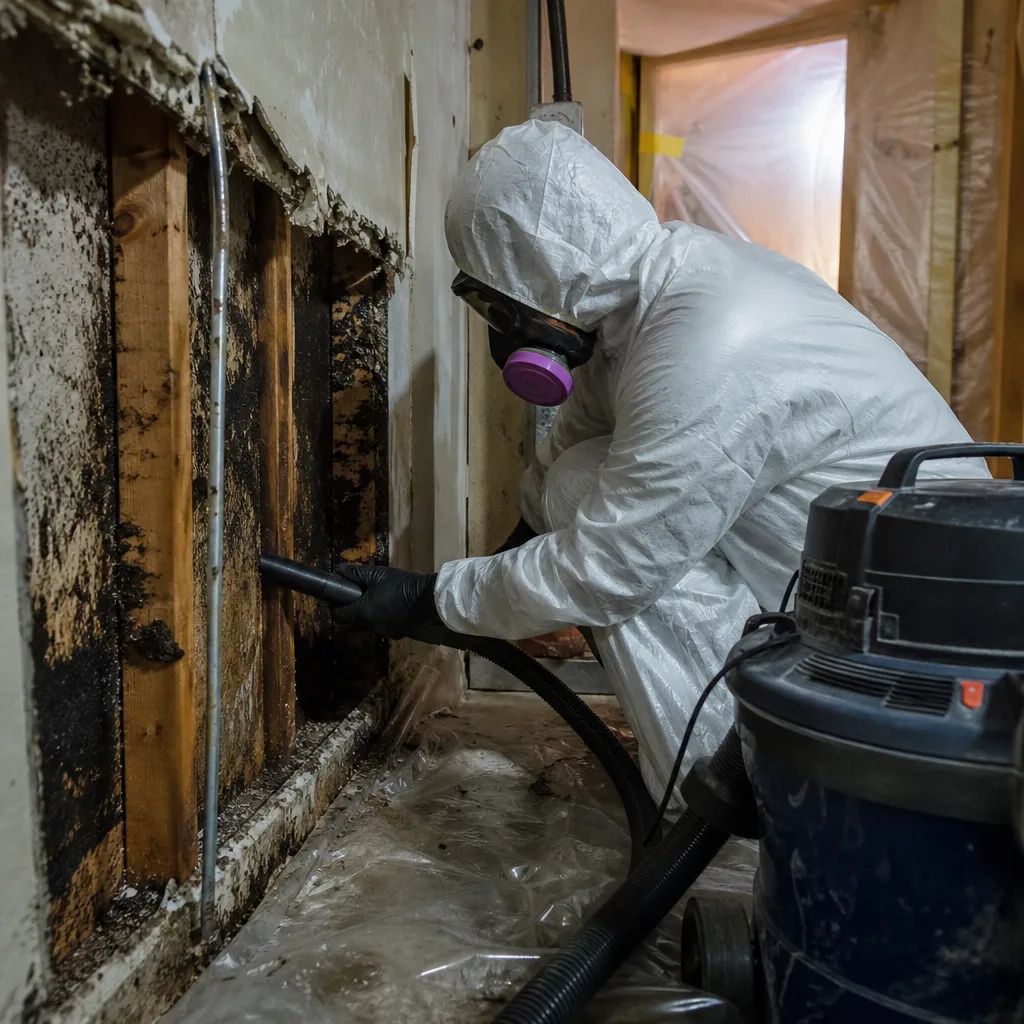
Moisture mapping and written assessment from DryMark Restoration Forest Hills is provided at no charge for homeowners - estimates are free, and we deliver a written scope with pricing before any work begins under Haven Standard, Clause 1. Call (516) 687-6900 to schedule.
Coverage depends on whether you can prove the damage was active and ongoing rather than historic and known. Prompt documentation of moisture readings, dated photographs, and a contemporaneous record of when you discovered the condition supports your position that you acted with due diligence. Delay without documentation strengthens the carrier’s argument for exclusion.
Home inspector readings can support your claim if they include the instrument’s make, model, calibration date, measurement mode, and specific locations tested. However, most home inspections use less precise instruments and don’t document to IICRC standards. Professional restoration assessment with calibrated equipment and standardized reporting carries more weight in coverage disputes.
Live person answers every call, 24 hours a day, 7 days a week - no voicemail trees, no next-business-day callbacks while water is still moving. Emergency dispatch for active water intrusion is available with background-checked, uniformed technicians and professional-grade drying systems from Dri-Eaz, Phoenix, XPOWER, B-Air, and Injectidry.
Any visible mold growth exceeding 10 square feet requires professional assessment per IICRC S520; smaller areas may still indicate hidden colonization in wall cavities. Cleaning surface mold without identifying and eliminating the moisture source guarantees recurrence. Our assessment determines whether the condition requires containment, negative air, and HEPA filtration (remediation) or can be addressed with source removal and drying alone.
Every job includes: initial moisture mapping with psychrometric data; daily drying logs with moisture content percentages; photo documentation on every visit with timestamp and notation; written scope of work with line-item pricing before work begins; and final clearance documentation. This is the documentation package that turns restoration invoices into payable claims - it’s why we were founded by a former adjuster who saw what incomplete documentation costs homeowners.
The Bottom Line
The warning signs that matter in Forest Hills homes are numeric, not narrative. Moisture content percentages, relative humidity readings, and temperature differentials provide evidence that visible symptoms cannot. Document what you find with dated, scaled photographs and instrument readings. Distinguish active intrusion from historic damage before calling your insurer. And understand that pre-war construction in Forest Hills creates specific indicators - efflorescence patterns, settlement cracks, and radiator supply line staining - that require informed interpretation. When thresholds are exceeded or sources cannot be identified, professional assessment with documented evidence protects both your property and your coverage. The cost of measurement is minimal; the cost of documentation failure, measured in denied claims and uncovered reconstruction, is not.
Written by Alicia Brennan, Owner at DryMark Restoration Forest Hills, serving Forest Hills since 2011.