
Last updated September 23, 2026
Free visual inspection and a written scope of work before any mitigation begins - photos, moisture readings, and drying logs go in your claim file
The scope we write is the scope we bill. Anything new gets shown to you, in writing, before we touch it.
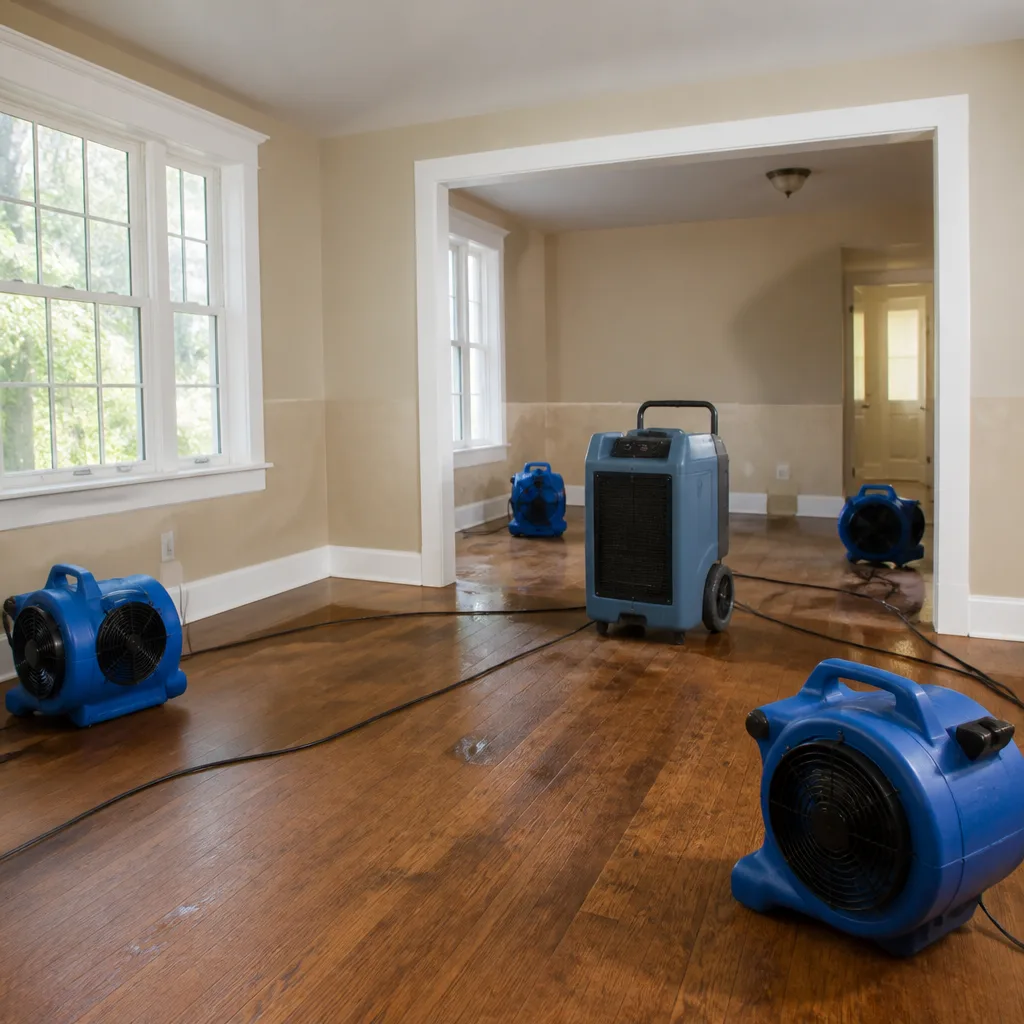
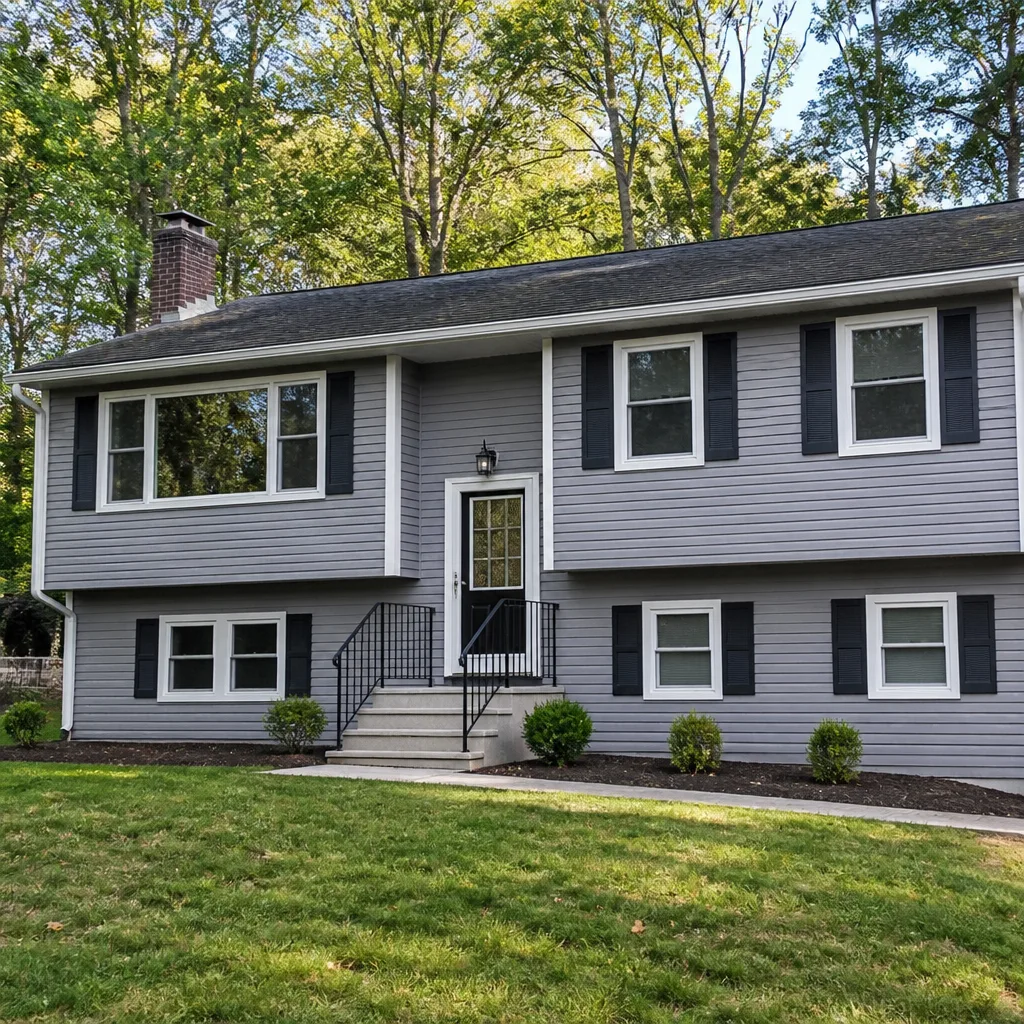
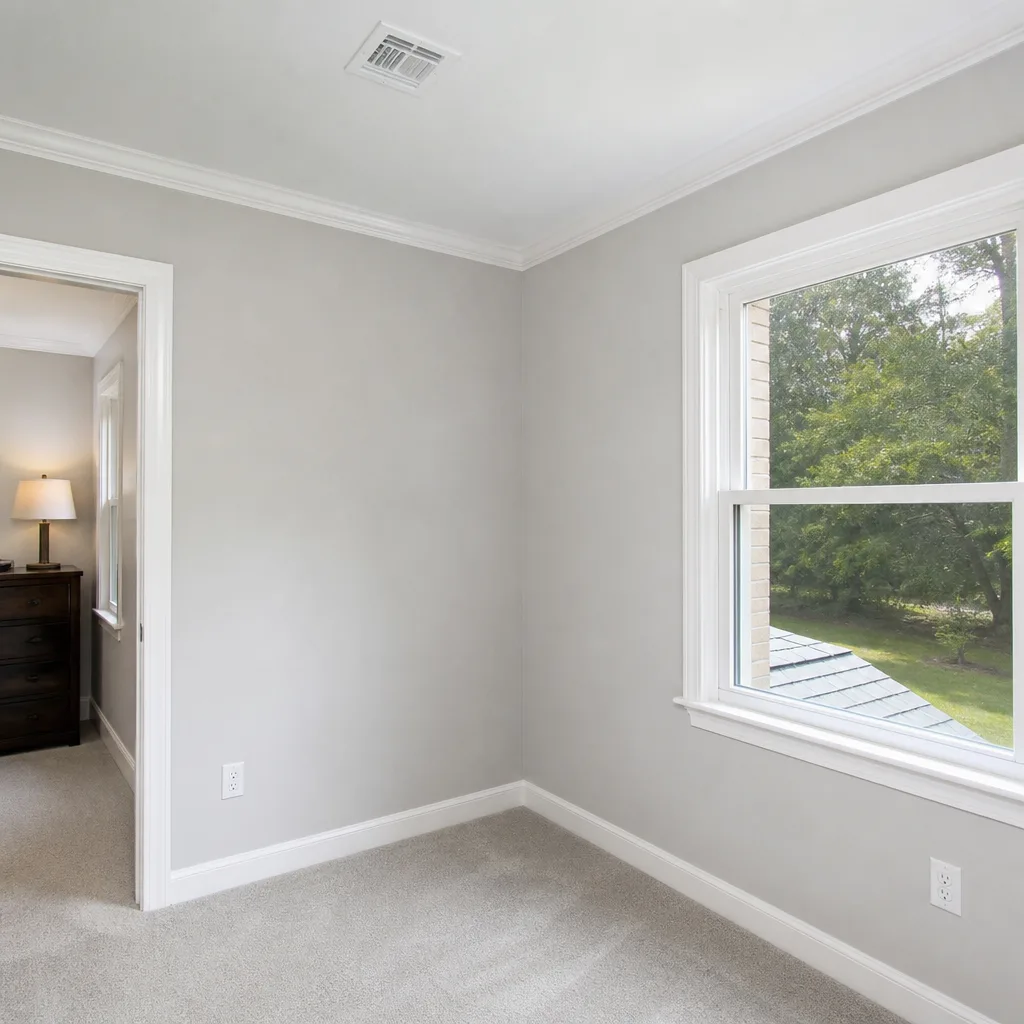
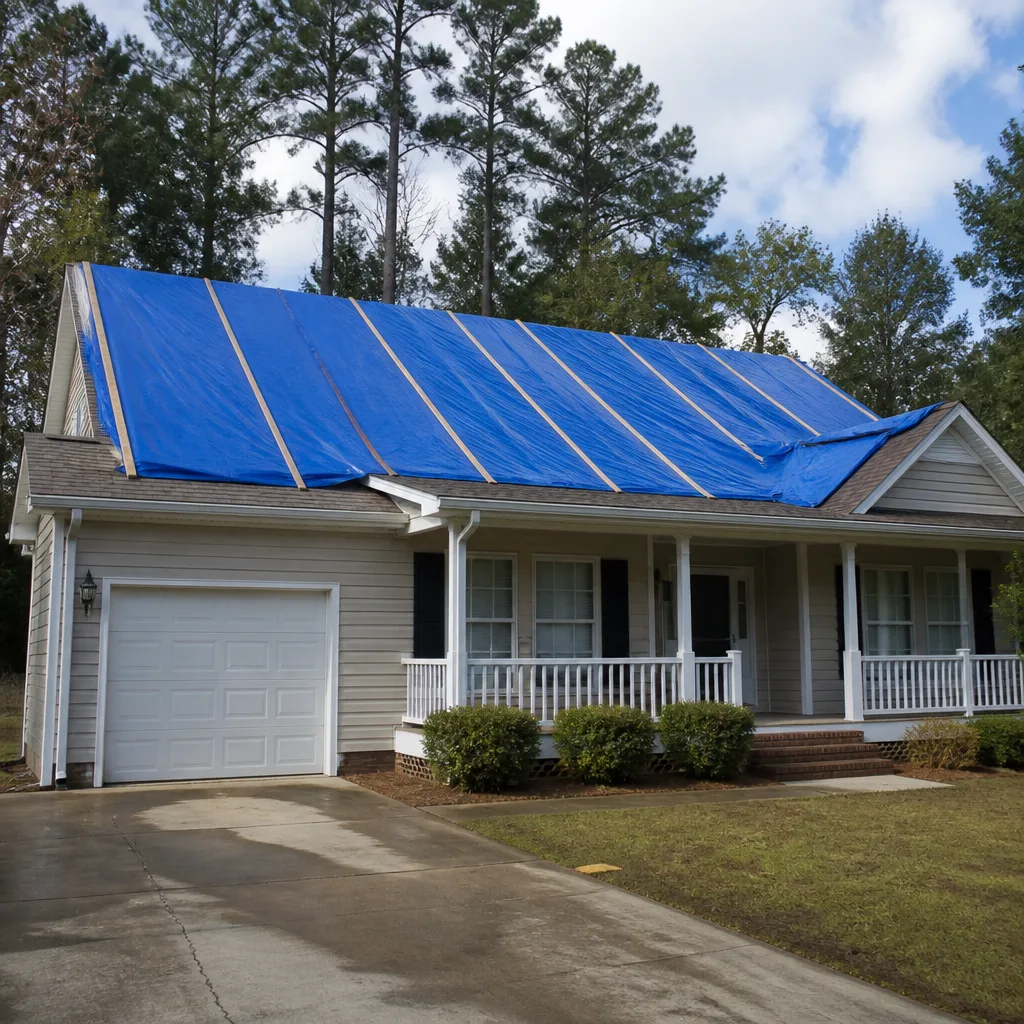
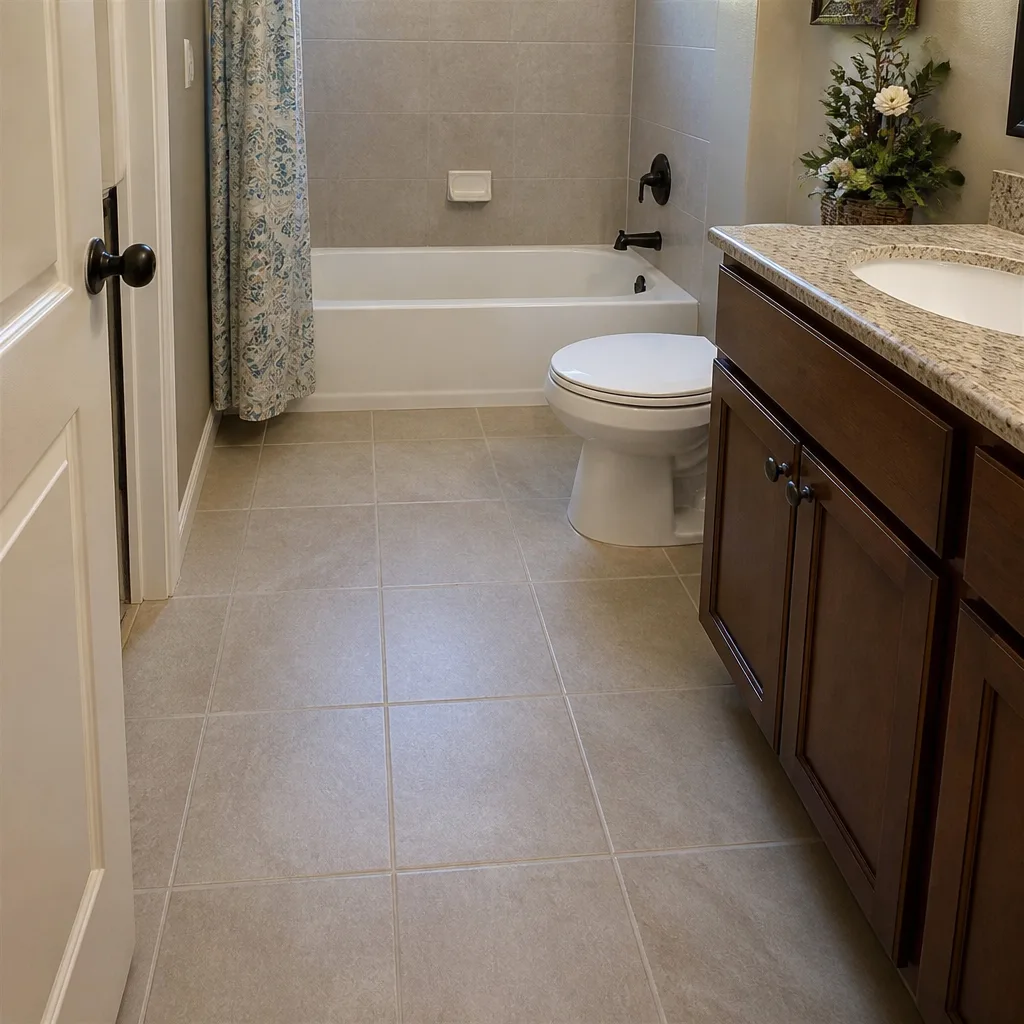
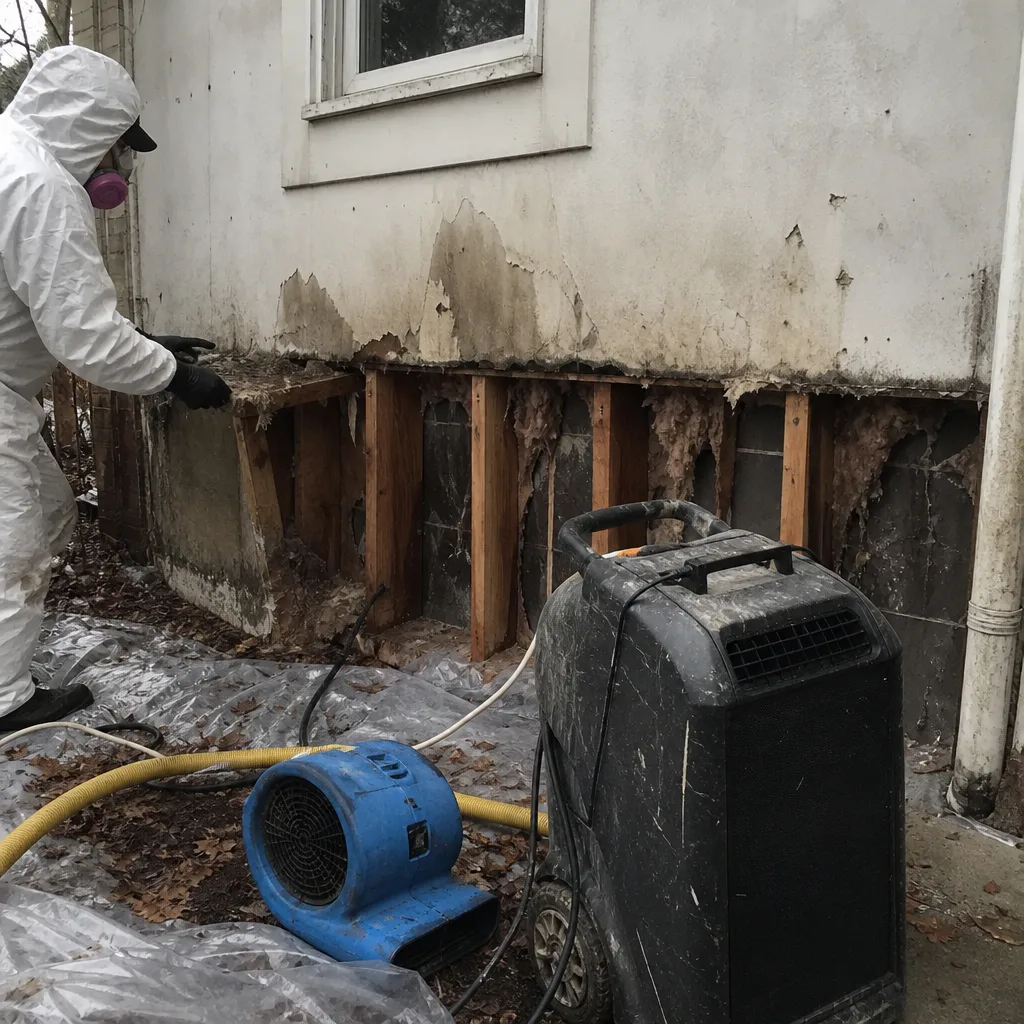 Before
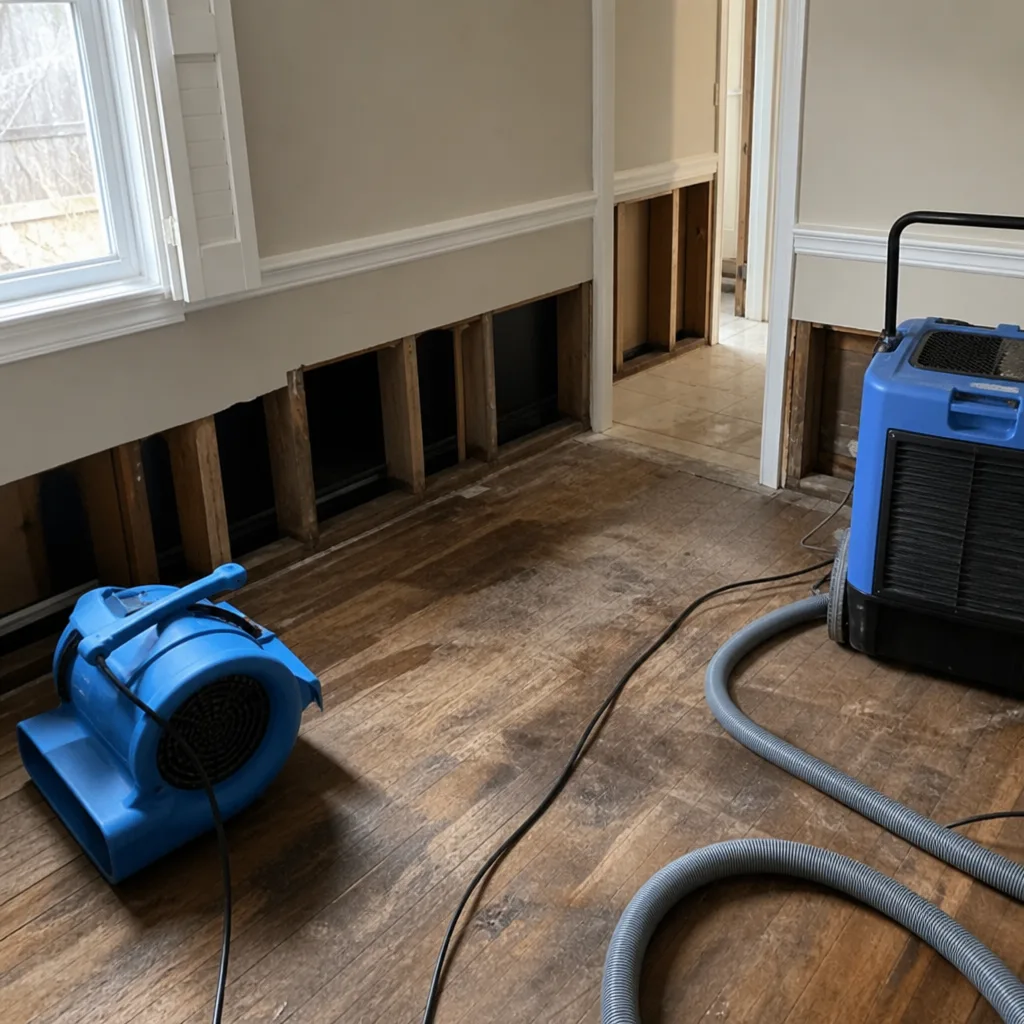 After
After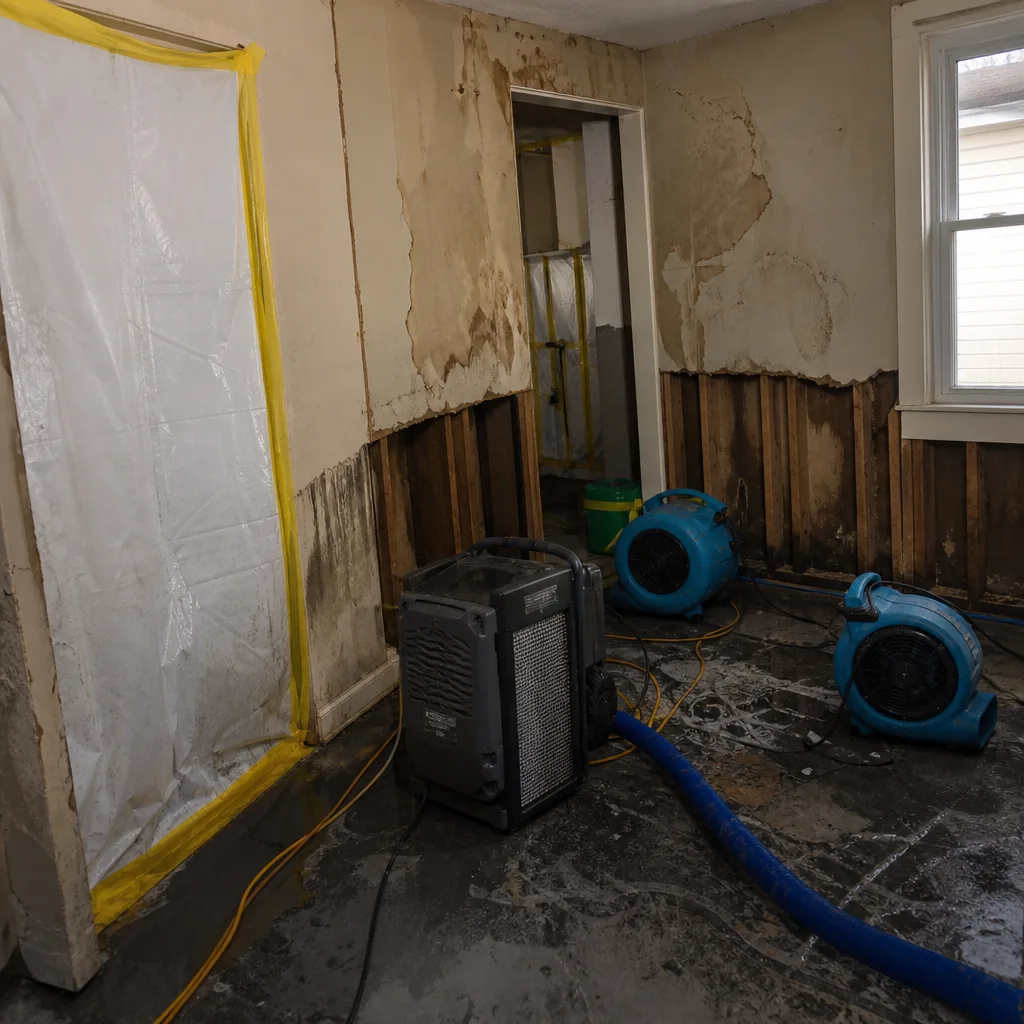 Before
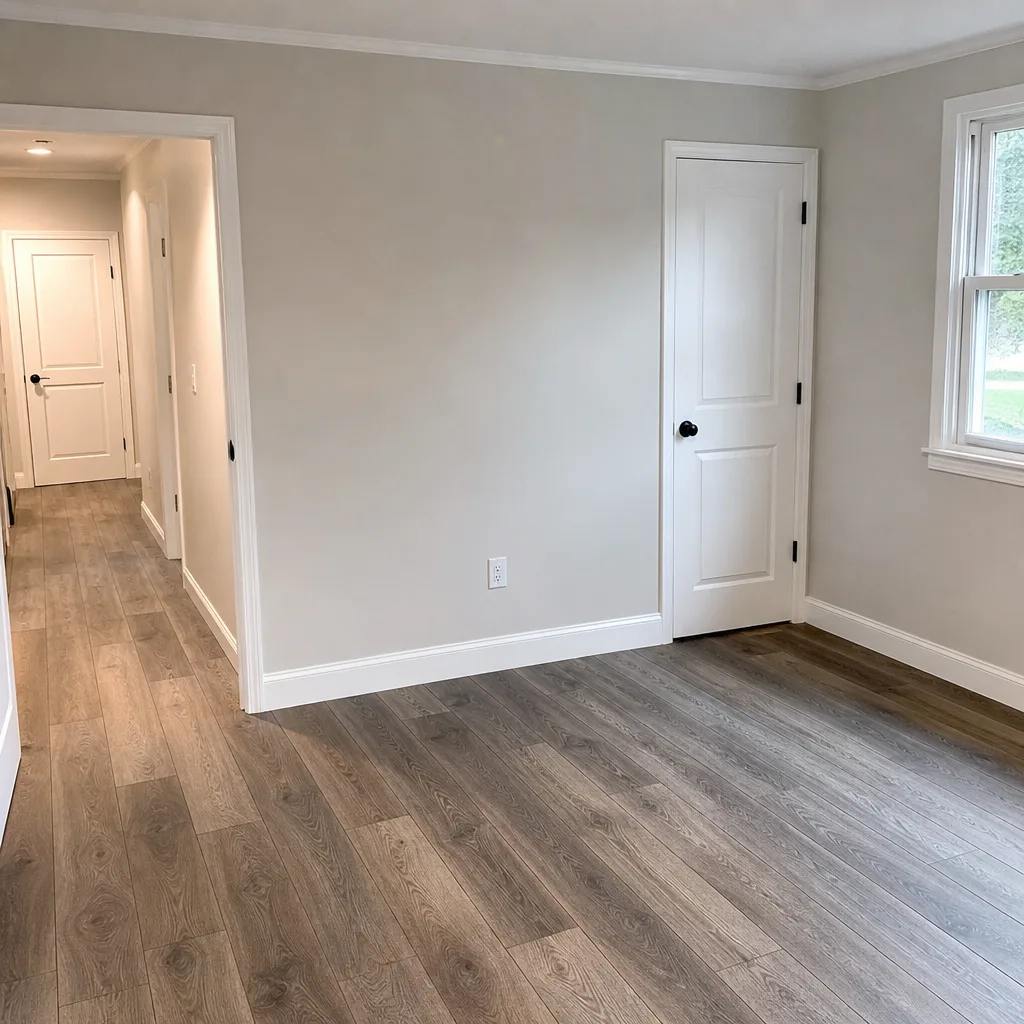 After
After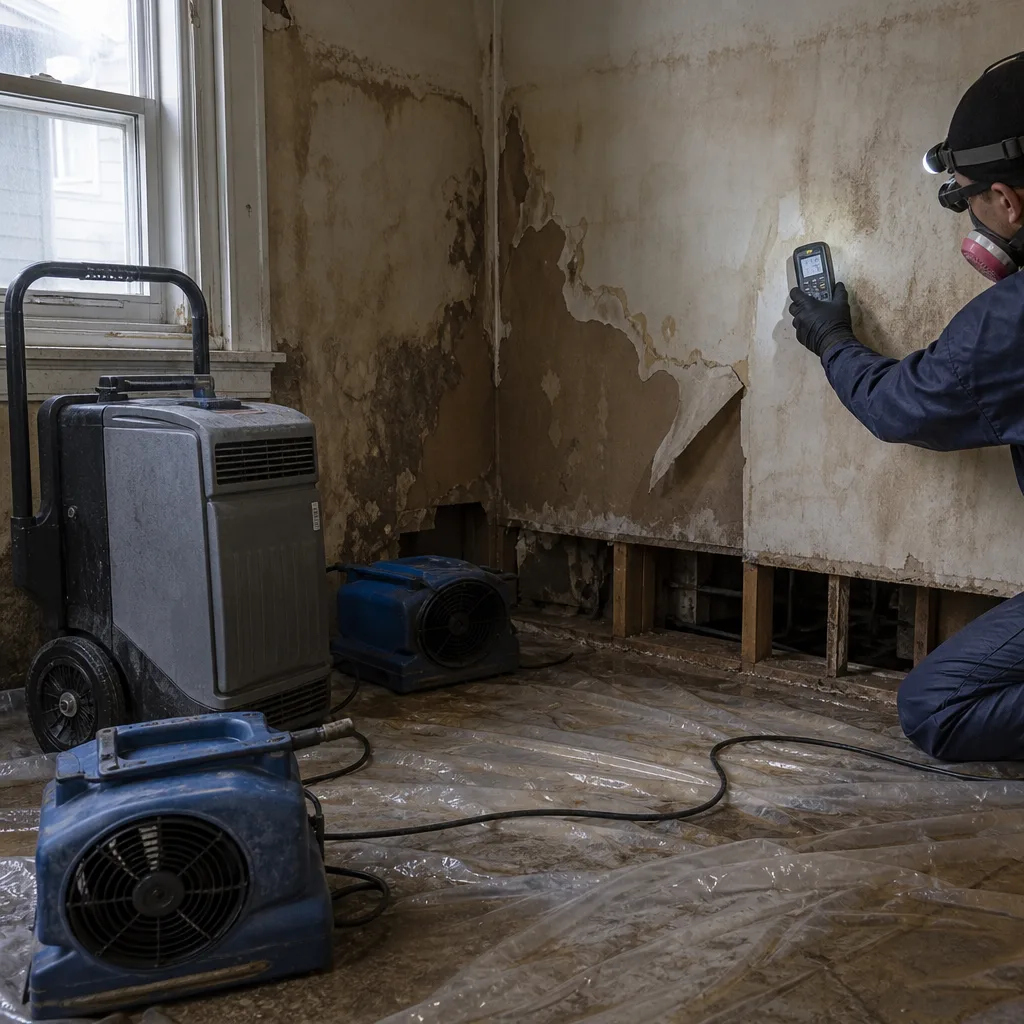 Before
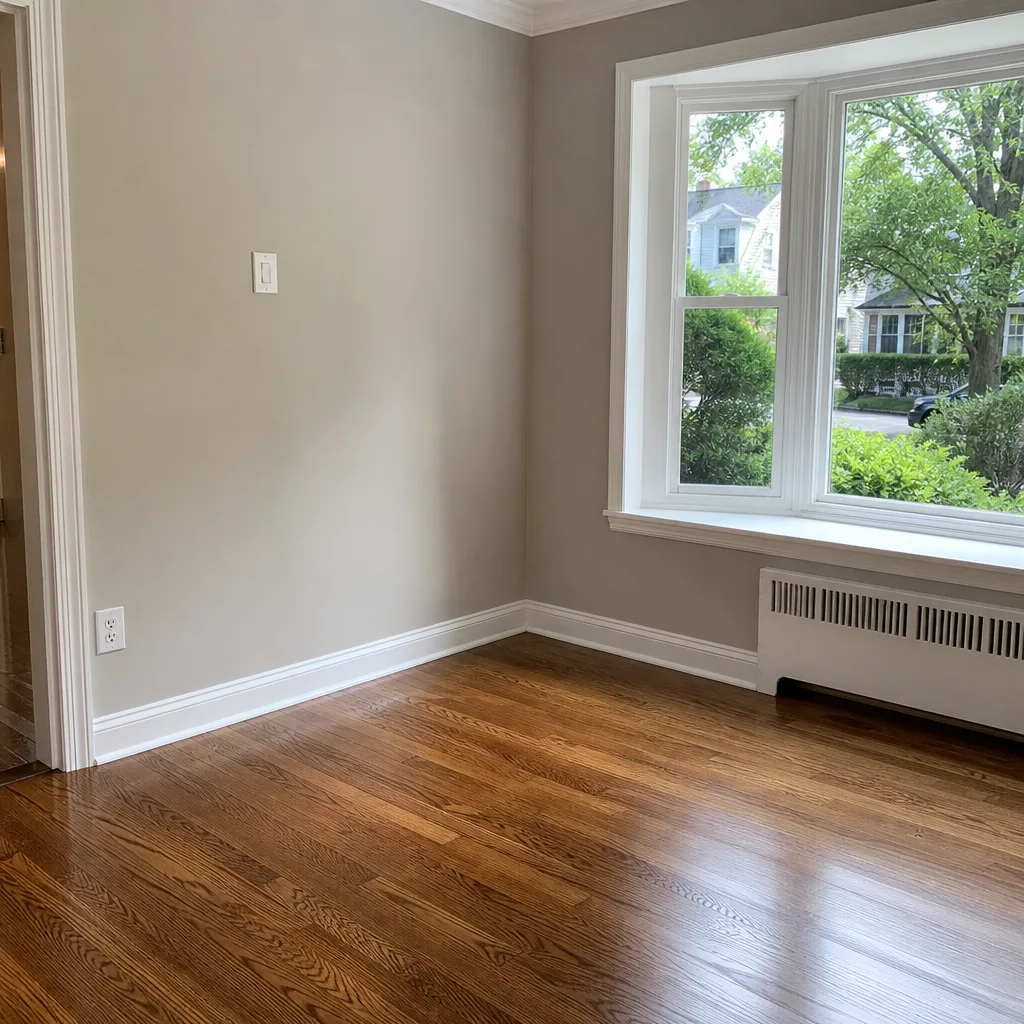 After
AfterDamage Restoration Permits, Codes & Inspections in NY: What You Need to Know
A Forest Hills homeowner settled a $47,000 water damage claim in 2022, dried the structure, replaced the subfloor, and thought the file was closed. At closing two years later, the buyer’s title search surfaced an open NYC Department of Buildings alteration permit triggered by the contractor’s structural work. The violation reduced the sale price by $52,000, more than the original claim. This is not an edge case. In our experience across Queens and Nassau County, unpermitted restoration work creates chain-of-title problems that surface years after the last fan is packed away. This guide maps exactly which restoration scopes trigger NYC permit requirements, how to distinguish the filings that matter, and how to document permit closure before you consider a job finished. For Damage Restoration Warning Signs: A Forest Hills Homeowner’s Reference Guide, see our companion piece.
Quick Answer
Most water, fire, and mold restoration in New York does not require a permit if the work stays within “like-for-like” replacement of finishes. Once the scope touches structural members, electrical systems exposed by demolition, plumbing line relocation, or asbestos-containing materials in pre-1978 buildings, NYC DOB permit and notification requirements apply. The critical step most homeowners miss is confirming permit closure, not just permit approval, before final payment.
Table of Contents
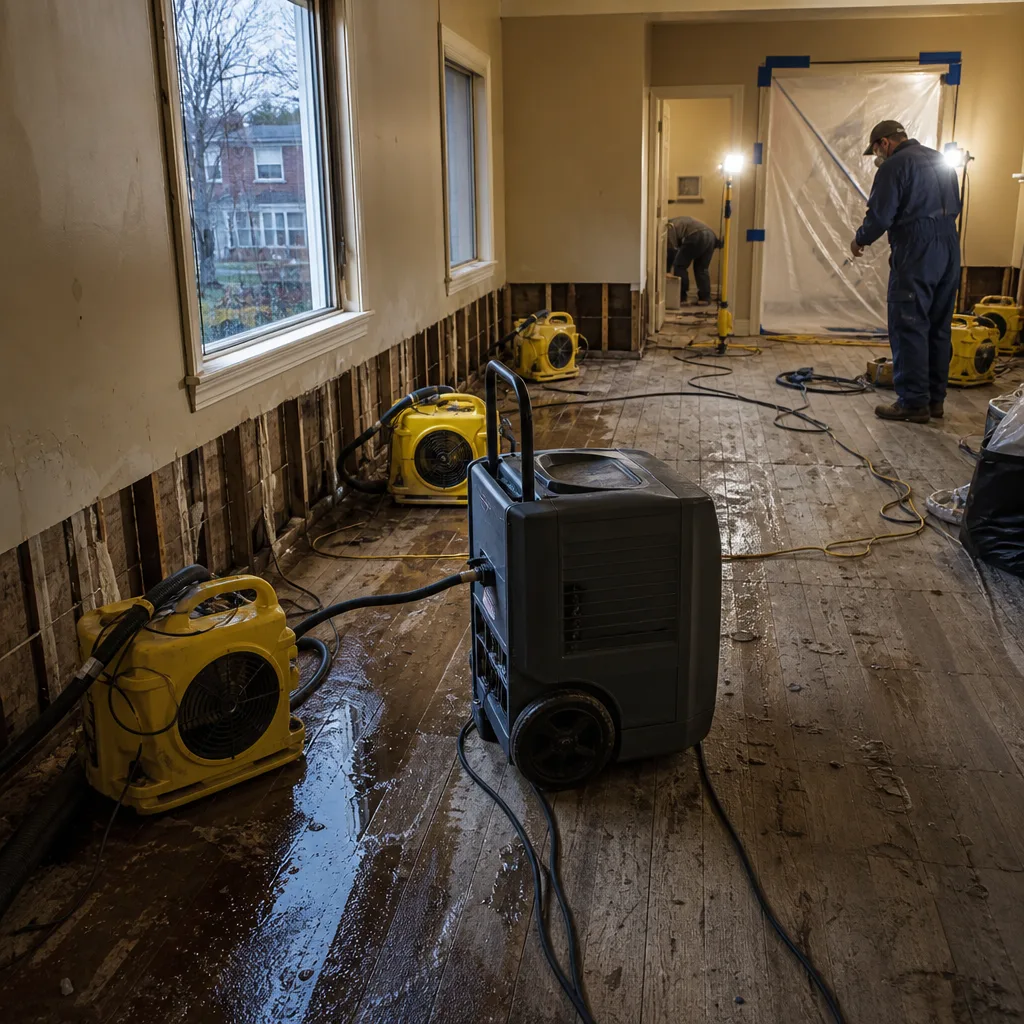
- When Restoration Work Becomes a Permitted Alteration
- Alt-1 vs. Alt-2: Which Filing Applies to Your Job
- Asbestos and Lead-Paint Abatement Notification Requirements
- The DOB Inspection Sequence and Certificate of Completion
- Co-op and Condo Permit Routing in Forest Hills
- Documenting Permits for Your Insurance File
- Common Mistakes to Avoid
- When to Call a Professional
- Frequently Asked Questions
BeforeAfterWhen Restoration Work Becomes a Permitted Alteration
The NYC Department of Buildings does not regulate drying. It regulates what you find after the drying is done. This distinction matters because most restoration contractors understand moisture readings and psychrometric data, the measurement of air temperature, relative humidity, and vapor pressure that determines how fast a structure dries. Fewer understand when those drying decisions cross into regulated alteration territory.
We have documented the following thresholds from DOB filings and job records across Forest Hills, Rego Park, and Kew Gardens:
- Structural member replacement: Removing and replacing floor joists, load-bearing studs, beams, or subflooring that contribute to the building’s structural integrity triggers an Alt-2 filing minimum. In a 2023 Forest Hills co-op job on 108th Street, a burst riser saturated three floors. The replacement of fire-cut joists in the basement required a structural engineer’s letter and DOB sign-off before the building management would release the certificate of occupancy update.
- Electrical work exposed by demolition: Water damage often requires removal of drywall to the electrical box. If the scope includes rewiring, circuit extension, or panel work, an electrical permit attaches to the alteration filing. We see this frequently in post-fire restoration where smoke-damaged romex must be pulled and replaced.
- Plumbing line relocation: Moving a stack, rerouting a waste line, or replacing galvanized supply lines with copper or PEX requires a licensed master plumber’s filing. A 2022 job on Yellowstone Boulevard in Forest Hills involved a failed washing machine hose that required relocating the supply box two feet to meet current code. The $340 restoration became a $2,800 permitted scope.
- HVAC ductwork modification: Replacing ductwork in kind does not require filing. Upsizing, rerouting through fire-rated assemblies, or modifying shared systems in multi-family buildings does.
- Window and exterior door replacement: In NYC, replacing windows in buildings over three stories or in landmark districts requires a filing. Forest Hills Gardens, with its historic district designation, has additional LPC review requirements that add 4-6 weeks to standard timelines.
The “like-for-like” exemption covers finish replacement: drywall, flooring, paint, baseboard, cabinets, and fixtures installed in the same location with the same dimensions. Once the scope modifies the building’s systems, structure, or egress, the exemption disappears.
Climate context matters here. Forest Hills sits at a higher elevation than much of Queens, with basements that stay drier but experience more hydrostatic pressure during freeze-thaw cycles. The result: pipe bursts in January often damage structural members that flat-grade areas would not have exposed. We have written more Alt-2 filings for January jobs in Forest Hills than for any other month.
Alt-1 vs. Alt-2: Which Filing Applies to Your Job
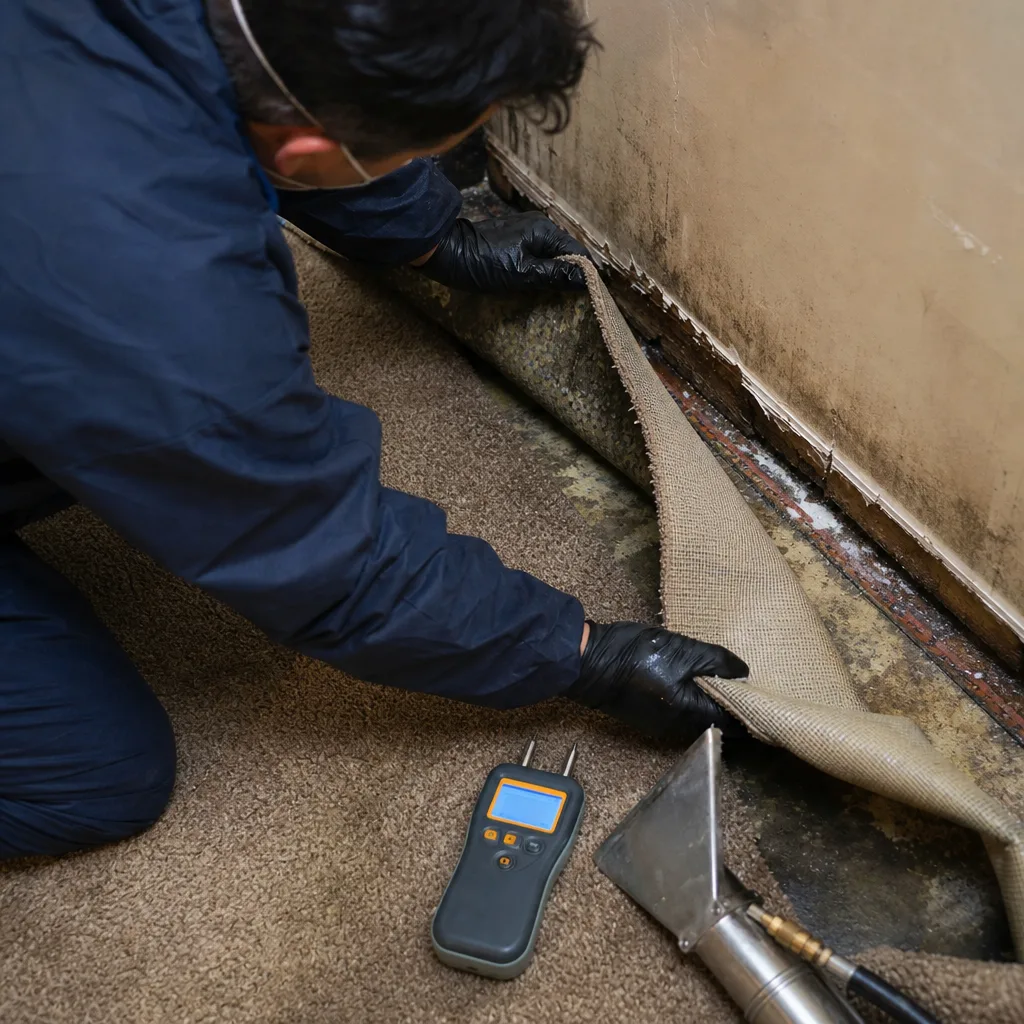
NYC DOB uses two primary alteration classifications. Misunderstanding which applies to restoration work is the most common permit error we correct in competitor files.
Alt-1: Alteration Type I
An Alt-1 filing indicates a change in use, egress, or occupancy type. In restoration, this rarely applies to residential work unless the damage is so extensive that the building’s certificate of occupancy must be amended. We have encountered Alt-1 triggers in two scenarios:
- A fire in a two-family Forest Hills home damaged the second-floor unit so severely that the owner converted it to a single-family occupancy during rebuild. The change from R-2 to R-3 occupancy required full Alt-1 review, including new egress calculations and sprinkler compliance.
- A commercial water loss in a mixed-use building on Austin Street required relocating the retail entrance, which modified the egress path and triggered occupancy review.
Alt-1 filings require a registered architect or professional engineer, full plan review, and multiple inspections. Timeline: 8-16 weeks.
Alt-2: Alteration Type II
Alt-2 covers alterations that do not change use or occupancy. This is the filing that most restoration work requires when it crosses the threshold. Examples from our files:
- Replacement of rotted sill plates and rim joists after prolonged water intrusion
- Electrical panel upgrade required after fire damage to existing service
- Plumbing stack replacement in a pre-war Forest Hills co-op where cast iron failed
- Subfloor replacement exceeding 25% of the floor area in any room
Alt-2 filings require a registered design professional for structural or system work. Minor Alt-2s, such as plumbing fixture replacement without line modification, can sometimes be filed by a licensed master plumber without an architect. The DOB’s DryMark Restoration Forest Hills home project database shows that 73% of restoration-related Alt-2s in Queens in 2023 were filed by the contractor’s retained architect, not the homeowner.
Alt-3: Minor Alterations and Ordinary Repairs
The DOB also recognizes Alt-3, which covers ordinary repairs that do not require a permit. Finish replacement falls here. The boundary between Alt-3 and Alt-2 is where most disputes arise. Our protocol: if the scope involves a trade license (plumbing, electrical), we file Alt-2. If it is purely cosmetic, we document the scope as Alt-3 with photo evidence and a written description. This documentation becomes critical if a future owner or insurer questions the work.
Asbestos and Lead-Paint Abatement Notification Requirements
Pre-1978 buildings dominate Forest Hills, particularly the garden apartment complexes and Tudor-style homes north of Queens Boulevard. Any restoration involving demolition in these structures triggers notification requirements that operate parallel to, and independently of, DOB permits.
NYC Local Law 1 of 2004 (Lead Paint)
Local Law 1 requires lead-safe work practices for renovation, repair, and painting in residential buildings constructed before 1960, and in buildings constructed between 1960 and 1978 where lead paint is known to exist. The law applies to:
- Disturbance of more than two square feet of lead-painted surface per room
- Window replacement or repair
- Demolition that generates dust or debris
The property owner must provide tenants with the EPA’s Renovate Right pamphlet before work begins. Contractors must be EPA RRP-certified. Failure to document this notification creates liability that survives the restoration job. We include the tenant acknowledgment in every insurance file we deliver.
NYC DEP Asbestos Regulations
Asbestos notification operates under a separate threshold. Any demolition or renovation that disturbs asbestos-containing material (ACM) in a building constructed before April 1987 requires:
- A survey by a NYSDOL-licensed asbestos inspector if the scope exceeds the minor repair threshold
- Notification to NYC DEP at least 10 calendar days before disturbance begins
- Use of NYSDOL-licensed abatement contractors for removal of friable ACM exceeding minor quantities
- Air monitoring and clearance sampling by a third-party inspector
The “minor repair” exemption allows disturbance of up to 48 linear feet or 10 square feet of ACM without full abatement protocol. We have seen restoration contractors misapply this exemption repeatedly. In a 2023 Forest Hills job on 71st Avenue, a contractor scraped textured ceiling containing 3% chrysotile across 400 square feet without survey or notification. The DEP violation carried a $25,000 penalty and a stop-work order that delayed the family’s return by six weeks.
Our protocol on every pre-1987 job: suspect materials are sampled before demolition begins. The lab report, with chain-of-custody documentation, goes into the insurance file before the first wall comes down. This is not an upsell. It is the documentation that prevents a restoration job from becoming a regulatory violation.
The DOB Inspection Sequence and Certificate of Completion
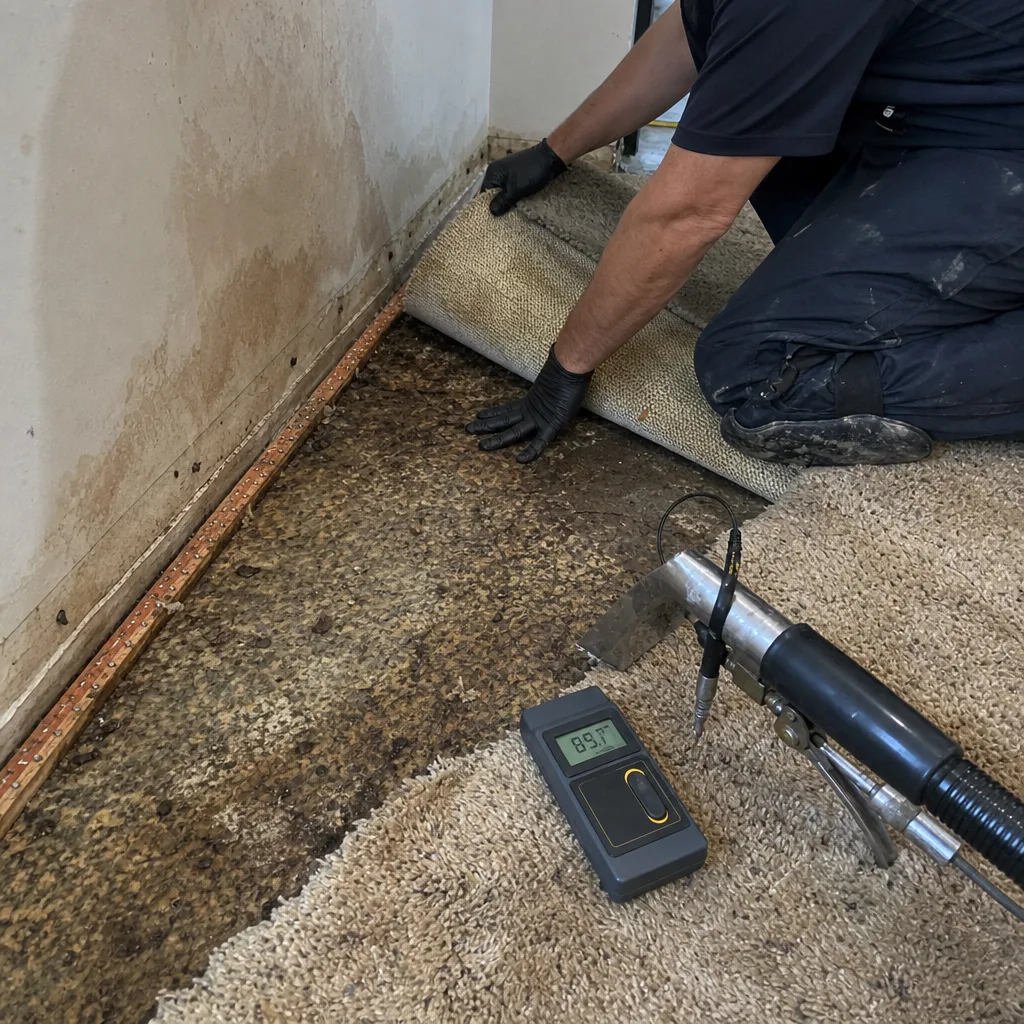
Permit approval is not permit closure. This is the distinction that cost the Forest Hills homeowner $52,000 in the opening example. The contractor had obtained DOB approval for the alteration. He had not obtained the Certificate of Completion or Letter of Completion that closes the permit file.
The standard DOB inspection sequence for restoration-triggered alterations:
- Initial inspection: Verifies that the approved scope matches the work site. For structural work, this includes confirmation that temporary supports are adequate.
- Progress inspections: Required at specified milestones. Electrical rough-in must be inspected before drywall closes. Plumbing pressure tests before concealment. Framing inspection before insulation.
- Final inspection: The DOB inspector verifies that all approved work is complete, code-compliant, and matches the filed plans. This is the inspection that most restoration contractors fail to schedule, particularly when the job “feels done” from a drying perspective.
- Certificate of Completion or Letter of Completion: Issued after final inspection approval. This document closes the permit and removes the violation from the property’s DOB record.
We have learned to treat the Certificate of Completion as a job deliverable, not an administrative afterthought. On every permitted job, our project manager schedules the final inspection before the crew demobilizes. The certificate is scanned into the customer’s file and delivered with the final invoice. For insurance purposes, this document proves that the restoration did not create a code deficiency that the insurer might exclude from future coverage.
The practical timeline: a straightforward Alt-2 with no complications takes 4-8 weeks from filing to certificate. Jobs in Forest Hills that require LPC review add 4-6 weeks. Jobs with asbestos abatement add the 10-day notification plus abatement duration. We communicate these timelines in writing before work begins, under Water Damage Restoration in Forest Hills protocol, so the homeowner can make informed decisions about temporary housing and claim advance timing.
Co-op and Condo Permit Routing in Forest Hills
Forest Hills has one of the highest concentrations of co-operative housing in New York City outside Manhattan. The permit path in these buildings differs fundamentally from single-family homes, and the documentation requirements are stricter because the building, not the unit owner, holds the certificate of occupancy.
Proprietary Lease Obligations
Most Forest Hills co-op proprietary leases require board approval for any work that affects building systems, structural elements, or common areas. This includes:
- Work in walls shared with adjacent units
- Plumbing stack access through common chases
- Electrical panel work in common electrical rooms
- Any work that requires shutoff of building-wide systems
The board approval process typically requires: a scope letter from the contractor, proof of insurance naming the building, a timeline, and sometimes a security deposit. We have seen board applications take 2-4 weeks in buildings like the Forest Hills Co-ops on 108th Street, and 6-8 weeks in smaller self-managed buildings where the board meets monthly.
Building Permit vs. Individual Unit Permit
In most co-ops, the building holds the master DOB filing for any work in common areas or on building systems. The unit owner’s contractor works under the building’s permit. This creates a documentation gap: the unit owner has no direct permit record in their name. Our protocol is to obtain a letter from the building management confirming that the work was performed under the building’s permit, with the permit number and final sign-off date. This letter goes into the insurance file and the customer’s personal records.
Condo Considerations
Condominiums in Forest Hills, such as those along Queens Boulevard, operate under a different legal structure. Unit owners typically hold fee simple title to their units and can obtain individual permits. However, the condominium declaration and bylaws usually require board notification and approval for work affecting common elements. The documentation protocol is similar: written scope, insurance certificates, and proof of permit closure.
Insurance File Documentation
For insurance purposes, board consent is not a courtesy. It is a condition of coverage. Most HO-6 and master policies require that work be performed “with all necessary approvals.” We document board consent with the resolution date, the board member who signed, and the scope as approved. This documentation has prevented claim denials when insurers later question whether the work was properly authorized.
Documenting Permits for Your Insurance File
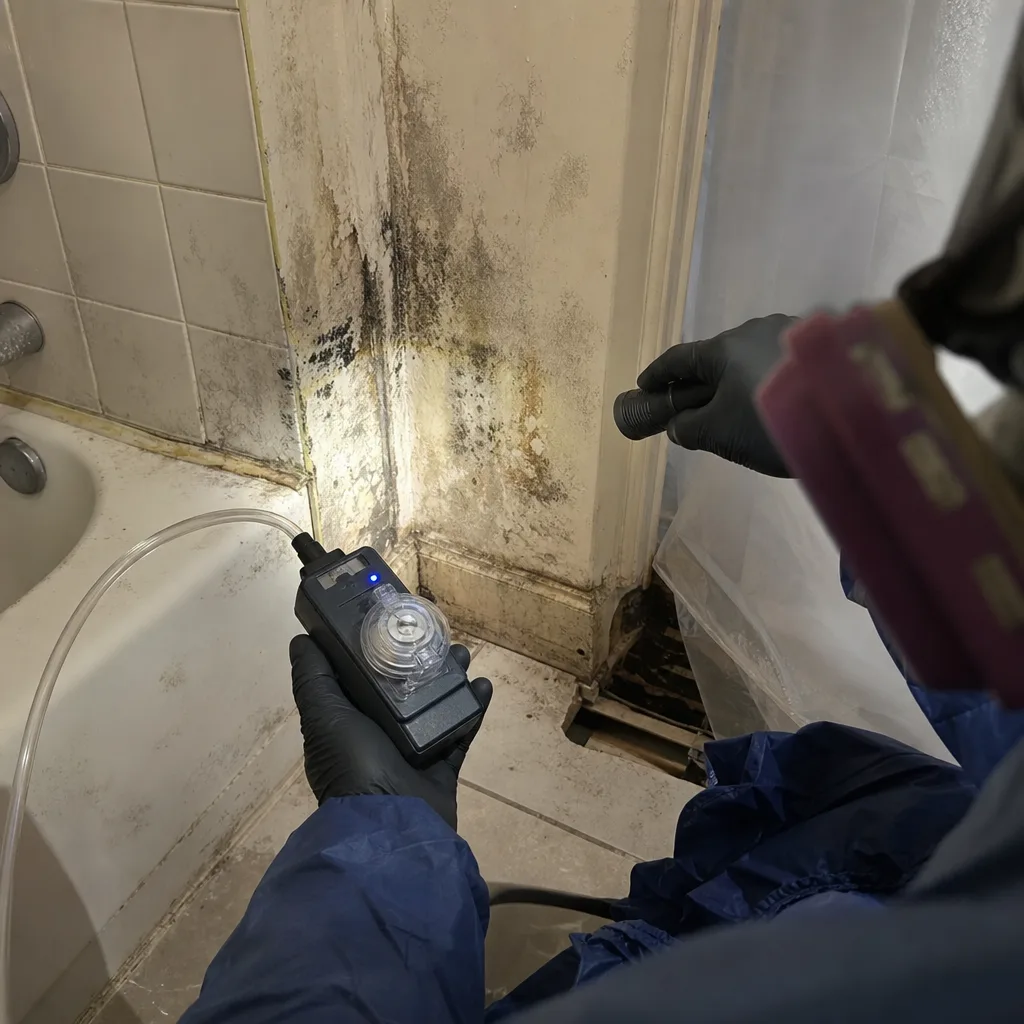
Insurance claims and property records intersect at documentation. The permit file is part of that documentation, and its absence creates vulnerabilities that surface at the worst moments: claim disputes, policy renewals, and property sales.
We deliver the following permit-related documents on every job that crosses the threshold:
- Pre-work scope letter: Identifies whether the job is expected to trigger permit requirements, with the basis for that determination.
- Permit application copies: Filed by our retained architect or the appropriate licensed trade professional, with the DOB job number.
- Inspection records: Dates, inspector names, and results for each required inspection.
- Certificate or Letter of Completion: The document that closes the permit, delivered in PDF and hard copy.
- Board consent documentation: For co-op and condo work, the resolution and approval letter.
- Environmental notifications: Lead paint and asbestos survey reports, with chain of custody, where applicable.
This documentation serves three purposes. First, it satisfies the insurer’s requirement that work be performed to code. Second, it protects the homeowner’s chain of title. Third, it creates a defensible record if a future claim involves the same property. We have used 10-year-old permit files to prove that prior restoration was performed correctly, preventing a coverage exclusion from applying to a subsequent loss.
The equipment we deploy, professional-grade drying systems from Dri-Eaz, Phoenix, XPOWER, B-Air, and Injectidry, produces daily moisture logs that become part of this record. The drying log, the permit file, and the photo record together form what we call the complete claim package: the documentation that turns a restoration invoice into a payable insurance claim without dispute.
Common Mistakes to Avoid
- Assuming the restoration contractor handles permits: Many restoration companies are mitigation specialists, not construction managers. They dry the structure and leave the rebuild to others. If your scope includes structural or system work, confirm in writing who files the permit and who schedules inspections. We specify this in our written scope under Haven Standard, Clause 1.
- Paying in full before permit closure: Final payment should be contingent on delivery of the Certificate of Completion, not just the final walkthrough. We have reviewed competitor files where the homeowner paid $34,000 and received a permit that remained open for 18 months.
- Ignoring co-op board timelines: Starting work before board approval, even in an emergency, can result in fines and required reversal of completed work. In one Forest Hills case, a contractor replaced a wet subfloor before the board’s structural engineer reviewed the scope. The board required removal and reinstallation at the homeowner’s expense.
- Skipping environmental surveys in pre-1978 buildings: The cost of asbestos sampling, typically $400-800, is negligible compared to DEP penalties and project delays. We require sampling on all pre-1987 jobs before demolition begins.
- Failing to document “no permit required” jobs: If the scope stays within Alt-3, create a written record with photos and a scope description. This protects against future claims that work was performed without required permits.
- Not transferring permit records at sale: Permit history stays with the property, not the owner. Deliver complete documentation to the buyer or their attorney. We provide a property file summary on request for any job we have performed.
When to Call a Professional
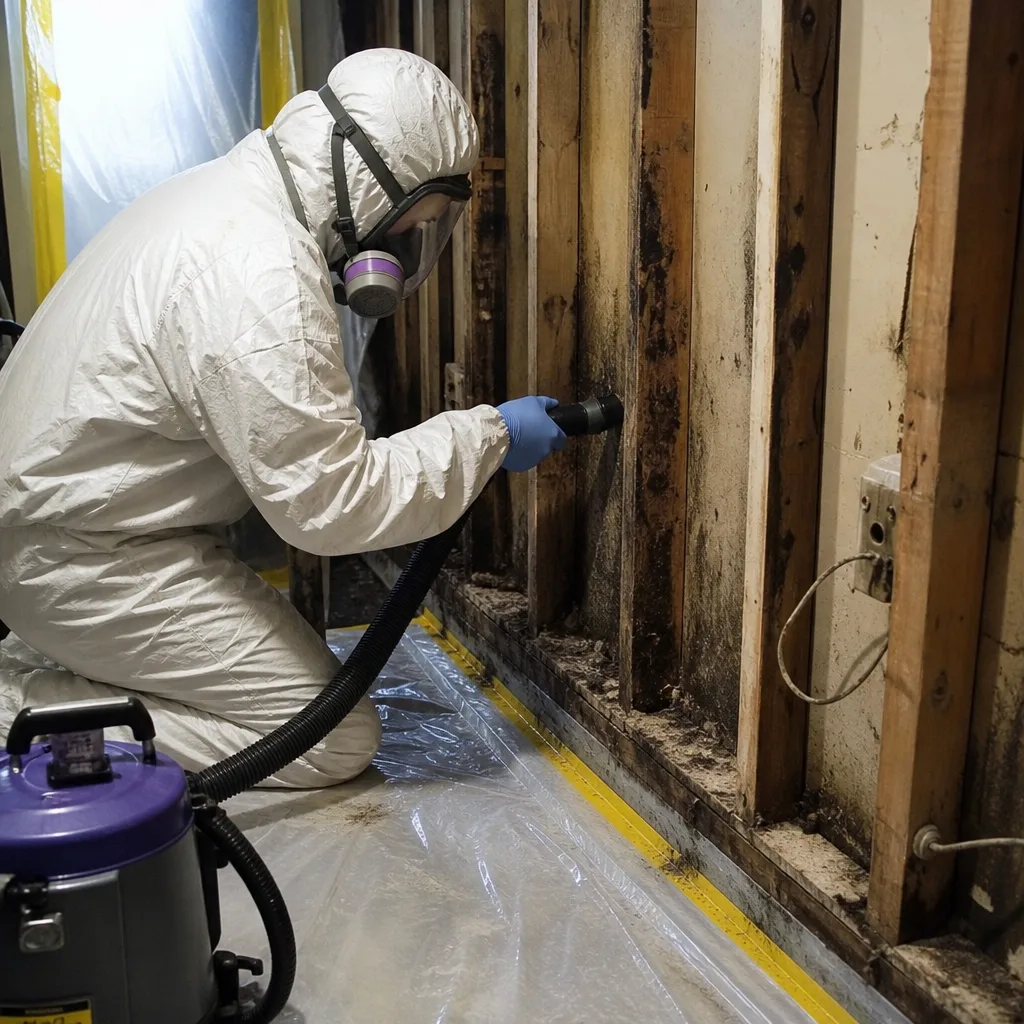
Call a licensed restoration contractor with permit experience when: the damage exposes structural members, electrical, or plumbing; the building was constructed before 1978; you live in a co-op or condo; or your insurer has questioned code compliance on a prior claim. For guidance on selecting the right professional, read How to Hire a Damage Restoration Contractor in Forest Hills: A Step-by-Step Guide. The cost of proper filing is always less than the cost of an open violation.
DryMark Restoration Forest Hills offers free estimates in Forest Hills and across Queens. Every estimate includes a permit assessment: we identify what will require filing, what will not, and what documentation you will receive. Call (516) 687-6900. A live person answers, 24 hours a day, 7 days a week. No voicemail on emergency lines.
Frequently Asked Questions
Not for drying and finish replacement. If the water damage requires replacing structural members, electrical rewiring, or plumbing line relocation, an Alt-2 filing is required. We assess this in our written scope before work begins.
A straightforward Alt-2 takes 4-8 weeks from filing to Certificate of Completion. Jobs requiring LPC review in Forest Hills Gardens add 4-6 weeks. Asbestos abatement adds a mandatory 10-day notification period. We communicate timeline expectations in writing under Haven Standard, Clause 1.
Most standard policies cover “code upgrade” or “ordinance and law” coverage as an additional limit, typically 10-25% of the dwelling coverage. This applies to the cost of bringing damaged elements to current code during restoration, not to permit filing fees themselves. We document code-related scope items separately for adjuster review and coordinate direct billing where the policy allows.
An open permit appears as a violation in title searches and DOB records. Buyers typically require closure as a condition of sale, and the resolution falls on the seller. In the Forest Hills case that opens this guide, the open permit reduced the sale price by more than the original claim. We deliver Certificate of Completion documentation as a standard job deliverable to prevent this outcome.
Mold remediation itself does not require a DOB permit. If the remediation scope includes demolition that triggers asbestos or lead-paint notification, those requirements apply separately. For Mold Remediation in Forest Hills, we include environmental sampling in our pre-work scope when the building age warrants it.
For work in common areas or on building systems, the building typically holds the permit. For work entirely within the unit that does not affect common elements, the unit owner may file individually. The proprietary lease determines the boundary. We obtain board confirmation of the permit path before work begins and document it in the insurance file.
The Bottom Line
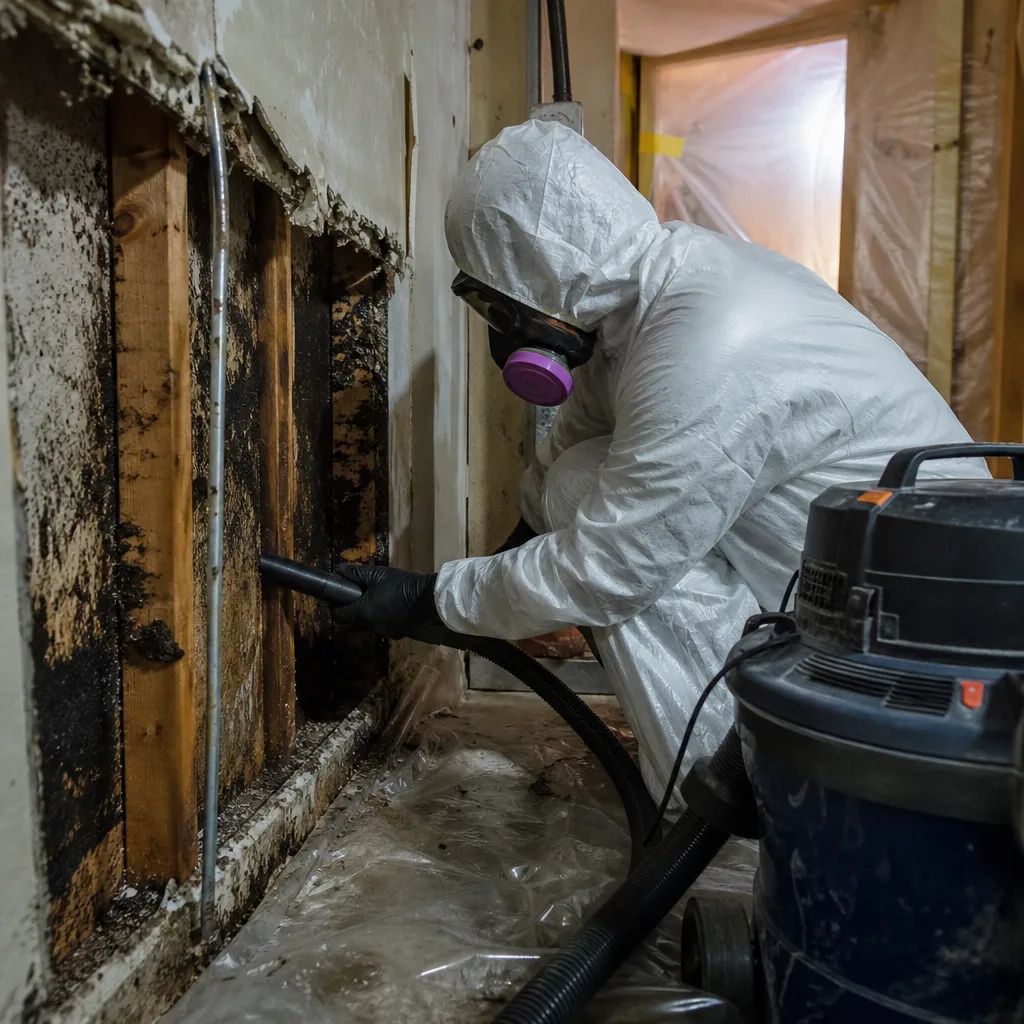
Permits are not an obstacle to restoration. They are a documentation layer that protects the homeowner’s property value and insurance insurability. The critical failure point is not obtaining the permit, it is failing to close it. Every restoration job that crosses the threshold should end with a Certificate of Completion in the homeowner’s file, not just a dry structure. In Forest Hills, where co-op concentration and pre-war building stock complicate every scope, this discipline is the difference between a completed job and a future liability. We have operated under The Haven Standard since 2011 precisely because documentation gaps cost homeowners more than the original damage. Written price before work begins. Photo record on every visit. Permit closure before final payment. These are not marketing claims. They are the clauses that define how we work. Explore more guides & resources on protecting Forest Hills properties.
Written by Alicia Brennan, Owner at DryMark Restoration Forest Hills, serving Forest Hills since 2011.